


 Español
 русский
 عربى
عربى
Don't hesitate to send a message
Search
Recent Post
Newsletter
Why Your Warehouse Needs Demountable and Stackable Steel Pallet Cages
Understanding Steel Pallet Cages and Their Role in Modern Warehousing
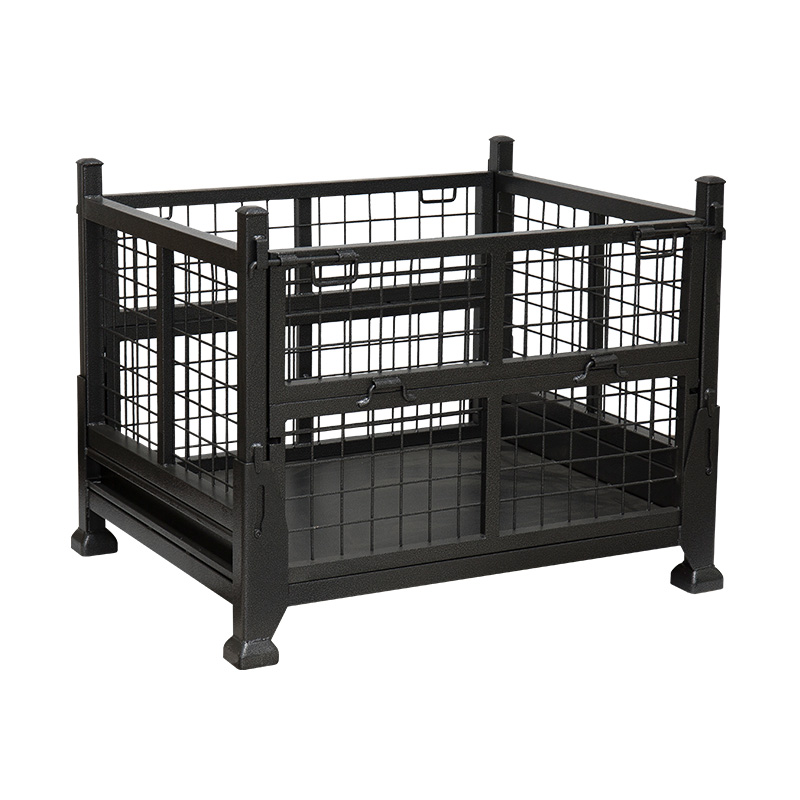
Every warehouse manager eventually faces the same question: how do you store irregular, loose, or fragile goods without losing floor space to bulky, single-purpose containers. Steel pallet cages answer that question directly. Built around a reinforced base and removable or foldable mesh sides, a foldable and collapsible pallet cage gives operators the containment of a bin with the footprint discipline of a standard pallet.
Unlike solid-wall containers, cage pallets use welded wire mesh panels that allow visual inspection of contents at a glance. This matters more than it sounds. A supervisor walking the aisle can confirm stock levels, spot damaged goods, or verify part counts without opening a single door. That visibility, combined with a frame strong enough to support several tons of stacked load, is why this category of pallet post equipment has become a fixture in automotive parts distribution, metal fabrication, agricultural supply, and general logistics.
The defining advantage, though, is what happens when the cage is empty. A rigid steel crate that cannot fold takes up the same volume whether it holds two tons of components or nothing at all. A demountable or collapsible design lets the same unit drop to a fraction of its assembled height, turning wasted air into usable storage or transport capacity the moment the goods ship out.
This is why the category has grown well beyond niche industrial use. Any operation that ships goods out full and receives empty containers back faces a recurring transport cost tied directly to unfolded volume. Fuel, trailer space, and dock time are all consumed by containers that carry nothing but air on the return leg. A steel pallet cage that folds flat turns that wasted trip into a fraction of the cost, and over a full fiscal year, the savings compound across every cycle the fleet completes.
There is also a labor dimension that often gets overlooked during procurement. Rigid crates that cannot be broken down require dedicated storage bays even when empty, and moving them typically still requires a forklift regardless of load status. Collapsible units, once folded, can frequently be handled manually or moved several at a time on a single pallet jack pass, cutting the labor hours spent shuffling empty containers around a yard.
Demountable vs Stackable: Two Design Philosophies Working Together
Two terms get used almost interchangeably in casual conversation, but they describe distinct engineering approaches, and understanding the difference changes how you specify equipment for your facility.
Demountable Pallet Cages
A demountable unit is built from a base plus four separate side panels, typically hinged or pinned so they can be lifted off individually. When empty, the panels lay flat on the base, and several bases can then be stacked directly on top of one another. This design suits operations where cages are assembled and disassembled frequently, since individual panels can be swapped, replaced, or repaired without scrapping the whole unit.
Collapsible or Foldable Pallet Cages
A collapsible design keeps the side panels permanently attached to the base through hinges, so the entire structure folds downward as one connected piece rather than separating into loose parts. This reduces handling steps and eliminates the risk of losing individual panels during storage, which is a common complaint with fully demountable systems in high-turnover environments.
Both approaches share one goal: minimizing the return-trip volume of empty containers. In practice, many facilities standardize on collapsible frames for daily internal cycling and reserve demountable, panel-based cages for heavier or custom loads that need individual side replacement.
Choosing between the two often comes down to how the equipment is actually used day to day rather than a general preference for one design over the other. A facility that ships identical cages back and forth to the same handful of suppliers benefits from the speed of a collapsible unit, since a single worker can fold or unfold it in a matter of seconds without tools. A facility that customizes cage configuration frequently, swapping a damaged panel or upgrading one wall to a solid steel sheet for a specific product line, tends to prefer the flexibility of a fully demountable, panel-based system instead.
Cost also plays a role in the decision. Demountable systems generally allow individual panel replacement at a lower cost than replacing an entire collapsible frame after hinge damage, which matters for operations running large fleets where a small percentage of damaged units is expected every year. Collapsible systems, meanwhile, tend to have a lower per-cycle labor cost since there are fewer loose parts to track, count, and reassemble correctly.
Key Structural Features of Post Pallets and Cage Pallets
Whether you call it a post pallet, a pallet post system, or a cage pallet, the core components remain consistent across manufacturers. Understanding each part helps you evaluate quality before purchase.
- Base frame: usually a welded steel or reinforced pallet-style base rated for forklift or pallet jack entry from at least two sides.
- Corner posts: vertical steel tubes at each corner that carry the compressive load when units are stacked full.
- Mesh side panels: welded wire grids that contain product while allowing airflow and visual access.
- Hinge and locking mechanism: the connection points that let panels fold down or lock upright, and that must hold rigid under transport vibration.
- Drop-front or half-drop gate: an optional lowered panel on one side for easier hand-loading of goods without lifting over the top rail.
Weld quality deserves particular attention during any inspection, since the corner post joints carry nearly all of the compressive load when a stack of loaded cages sits several units high. A poorly finished weld with visible porosity or an uneven bead is often the first place a frame begins to fail under repeated stacking cycles, well before the steel itself shows any sign of fatigue. Buyers evaluating a new supplier should ask for load test documentation covering both static stacking capacity and dynamic capacity under simulated transport vibration, since the two figures can differ substantially and only one of them reflects real-world highway or rail transport conditions.
Collapsible Steel Pallet Crates: Space Savings by the Numbers
The return-on-investment case for collapsible steel crates is almost always made in cubic space rather than unit price. Consider a facility cycling one hundred cage pallets weekly between a production floor and an outbound truck yard.
| Container Type | Assembled Height | Folded or Nested Height | Volume Reduction When Empty |
|---|---|---|---|
| Fixed rigid steel crate | 1650 mm | 1650 mm (no reduction) | 0 percent |
| Demountable post pallet | 1650 mm | approximately 250 mm per base when panels are laid flat | roughly 85 percent |
| Foldable collapsible cage pallet | 1650 mm | approximately 300 mm folded | roughly 80 percent |
Applied across a hundred-unit fleet moving through a standard shipping container or trailer, that difference in folded height can be the deciding factor between needing two return trips or one. Warehouses running frequent empty-container returns to suppliers, or cycling reusable packaging between regional plants, tend to see the fastest payback period on collapsible equipment.
Application Scenarios Across Industries
Cage pallets are rarely industry-specific, but the way each sector uses them differs enough to be worth breaking down.
Automotive and Metal Parts Distribution
Loose components, castings, and small hardware move efficiently in mesh-sided cages, where operators can confirm part counts by sight and where stackability keeps yard storage compact between shipments.
Agricultural Supply Chains
Bulk produce, seed stock, and feed components benefit from the airflow that mesh panels provide, reducing condensation buildup compared to sealed containers during transit.
General Warehousing and Third-Party Logistics
Facilities handling mixed client inventory often standardize on a single cage pallet footprint so that units from different customers can be stacked and stored using the same racking and floor markings, simplifying space planning.
Recycling and Scrap Handling
The open mesh design tolerates irregular, sharp-edged, or heavy scrap material better than closed-wall bins, and the reinforced posts hold up under repeated loading with a forklift or overhead crane.
Retail and Distribution Center Cross-Docking
Cross-dock operations move goods from inbound trailers to outbound trailers with minimal intermediate storage, and a stackable pallet cage lets staging areas hold significantly more inventory in the same footprint during the brief window goods spend on the dock floor. Because units can be identified and inspected through the mesh sides without opening anything, staging errors are easier to catch before goods move to the wrong outbound door.
Selecting the Right Pallet Cage for Your Warehouse
Specifying the wrong configuration is a common and costly mistake. Before ordering, work through the following checklist.
- Load rating: confirm both the static stacking load and the dynamic load rating match your heaviest expected cargo, not your average load.
- Mesh opening size: smaller openings suit fine or loose parts; larger openings improve airflow and reduce weight for bulkier goods.
- Fold mechanism type: decide between fully demountable panels and hinged collapsible sides based on how often units are assembled and disassembled.
- Gate configuration: a drop-front or half-drop gate speeds manual loading; a full four-sided fixed mesh wall favors security and load containment.
- Corrosion protection: powder coating or galvanized finishing matters significantly for outdoor yard storage or humid environments.
- Forklift entry points: verify the base allows entry from the number of sides your material handling equipment requires.
A well-specified collapsible pallet crate should match your heaviest realistic load, not a catalog average, and should fold down small enough to justify the storage savings on paper.
Maintenance and Handling Best Practices
Steel pallet cages are durable, but a few habits extend service life meaningfully.
- Inspect hinge pins and locking clips on a quarterly basis, since these small components see the most repeated mechanical stress.
- Avoid stacking beyond the rated height even when units appear structurally sound, as stacking limits account for dynamic forces during transport, not just static weight.
- Store folded units under cover where possible to slow corrosion at weld points, particularly in coastal or high-humidity regions.
- Train forklift operators on correct entry points, since off-center lifts are a leading cause of frame warping over time.
- Replace damaged mesh panels rather than continuing to use a bent or torn section, since a compromised panel reduces the load rating of the entire unit.
A pallet cage fleet maintained on a defined inspection schedule typically outlasts an unmanaged fleet by several years, since most structural failures begin as small, unaddressed hinge or weld issues rather than sudden overload.
Tracking each unit individually, even with a simple stenciled asset number, makes this kind of scheduled inspection far easier to enforce across a large fleet. Facilities running hundreds of cages benefit from tagging each base with an identification number so inspection dates, repair history, and retirement decisions can be logged consistently rather than relying on visual memory of which units were checked last. This same tagging approach also helps identify whether damage is concentrated among units handled by a specific operator or dock, which can point to a training gap rather than a manufacturing defect.
How Cage Pallets Compare to Alternative Storage Systems
Procurement teams frequently weigh steel pallet cages against plastic bulk containers, corrugated pallet boxes, and traditional wooden crates. Each option carries tradeoffs worth understanding before a fleet-wide decision is made.
| Storage System | Typical Load Capacity | Reusability | Best Fit |
|---|---|---|---|
| Steel pallet cage | High, often over 1000 kilograms per unit | Very high, designed for years of cycling | Heavy, irregular, or metal goods |
| Plastic bulk container | Moderate | High, but prone to cracking under repeated heavy loads | Lighter parts, food-adjacent goods |
| Corrugated pallet box | Low to moderate | Low, typically single or limited use | Light, one-way shipments |
| Wooden crate | Moderate to high | Moderate, subject to splintering and moisture damage | Custom one-off packaging needs |
Steel cage systems generally win out wherever a container needs to survive years of repeated loading, outdoor exposure, or heavy point loads from metal parts and machinery components. The upfront cost per unit is higher than a corrugated box, but the effective cost per cycle drops sharply once a cage pallet completes dozens or hundreds of load and return trips over its service life.
Estimating Return on Investment for a Cage Pallet Fleet
A useful way to frame the purchase decision is to think in terms of cost per cycle rather than sticker price. A single-use corrugated pallet box might cost a fraction of a steel cage pallet, but if it is discarded after one shipment, its effective cost per trip is the full purchase price. A steel pallet cage rated for hundreds of load cycles spreads its higher upfront cost across every one of those trips.
Facilities converting from disposable packaging to a reusable steel pallet cage fleet typically recover the price difference within the first one to two years of operation, depending on cycle frequency, and continue to see savings for the remaining service life of the equipment, which commonly runs a decade or longer with proper maintenance.
Beyond direct material cost, reusable steel systems also reduce disposal and waste handling expenses, since there is no recurring stream of broken-down cardboard or splintered wood requiring removal from the receiving dock. For facilities operating under sustainability reporting requirements, this shift also reduces the volume of single-use packaging waste reported each year.
Frequently Asked Questions
Q1: What is the difference between a pallet cage and a standard wire container?
A pallet cage is specifically designed with a pallet-compatible base for forklift and pallet jack handling, while some wire containers are built without pallet-style base clearance and require different handling equipment.
Q2: Can foldable pallet cages be stacked while assembled and loaded?
Yes, most collapsible cage pallets are rated for stacking while loaded, provided the total stacked weight stays within the manufacturer's specified static load limit for the base unit.
Q3: How much floor space do collapsible cages actually save when empty?
Folded units typically drop to around 15 to 20 percent of their assembled height, meaning a stack of empty cages can occupy roughly one fifth of the space required when those same units are upright and in use.
Q4: Are mesh-sided cages suitable for outdoor storage?
With appropriate galvanized or powder-coated finishing, mesh-sided cages hold up well outdoors, though prolonged exposure to standing water at the base should still be avoided to limit corrosion.
Q5: How do I know if a pallet cage needs to be retired from service?
Warning signs include visible weld cracks, bent corner posts that no longer sit flush during stacking, and hinge mechanisms that no longer lock securely under load.
Q6: Do collapsible pallet cages require special training to fold and unfold?
Most collapsible designs are built for single-operator use without tools, and new staff typically become comfortable with the folding sequence after a short walkthrough rather than formal certification.
Q7: Can pallet cages be customized with additional gates or partitions?
Many suppliers offer optional internal dividers, additional drop-front gates, or lids as configurable add-ons, which can be specified at order time to match specific product handling needs.
Related products
-
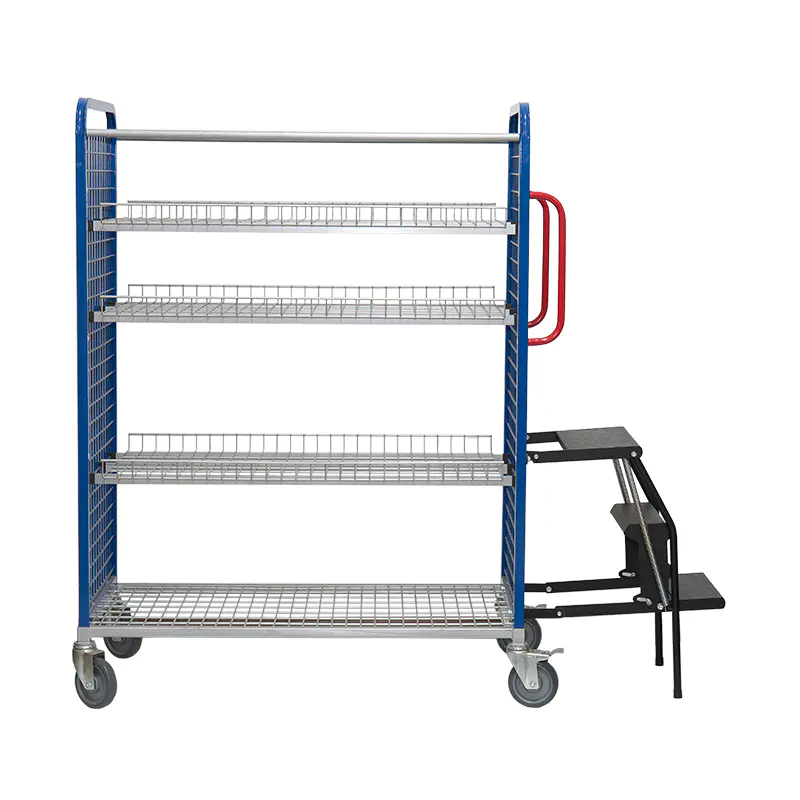
Product specification:This Warehouse wire mesh Multi-Tier Order Picking Trolley adopts a chassis and side panel structur...
See Details -
Foldable pallet cages are an important tool in factory logistics. They play an important role in transportation, distrib...
See Details -
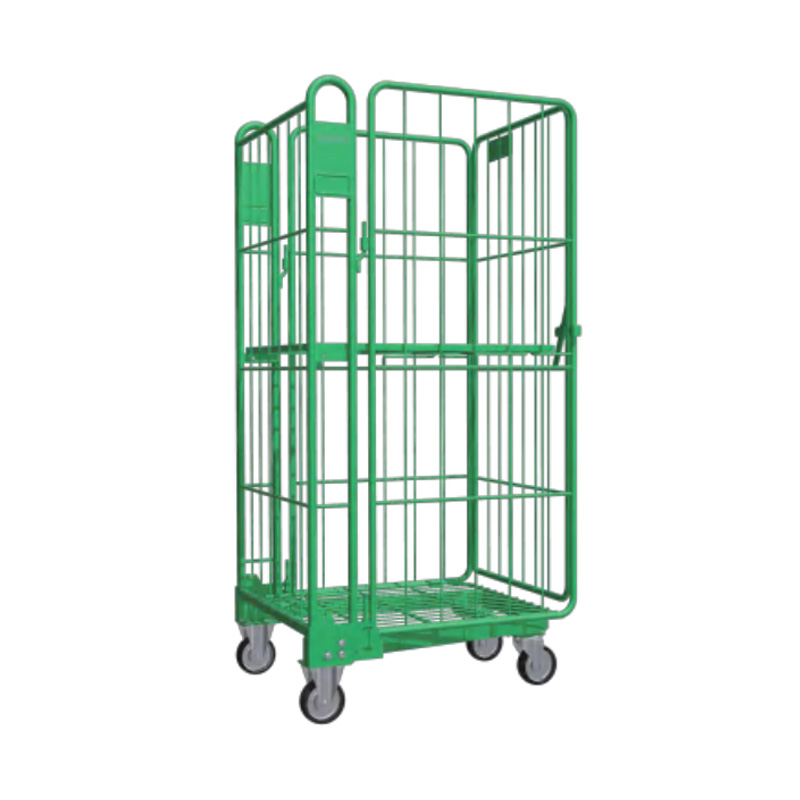
Product specification:The chassis is made of a square tube frame, with a bottom metal sheet tray that can be folded up a...
See Details -
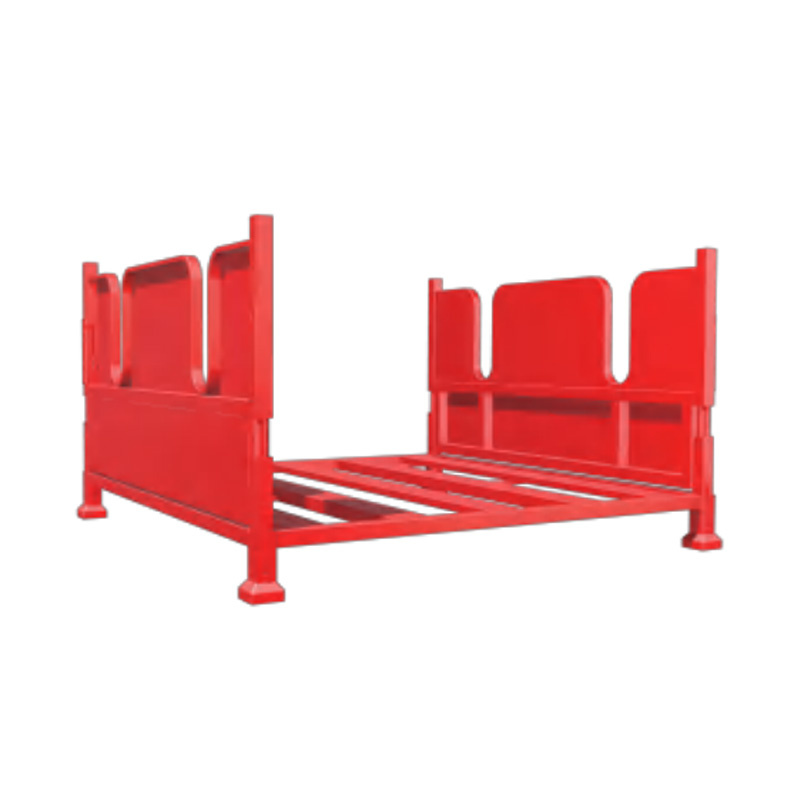
Stacking rack, also known as Qiaogu rack or stacking rackIt is a transportation and storage device derived from pallets ...
See Details -
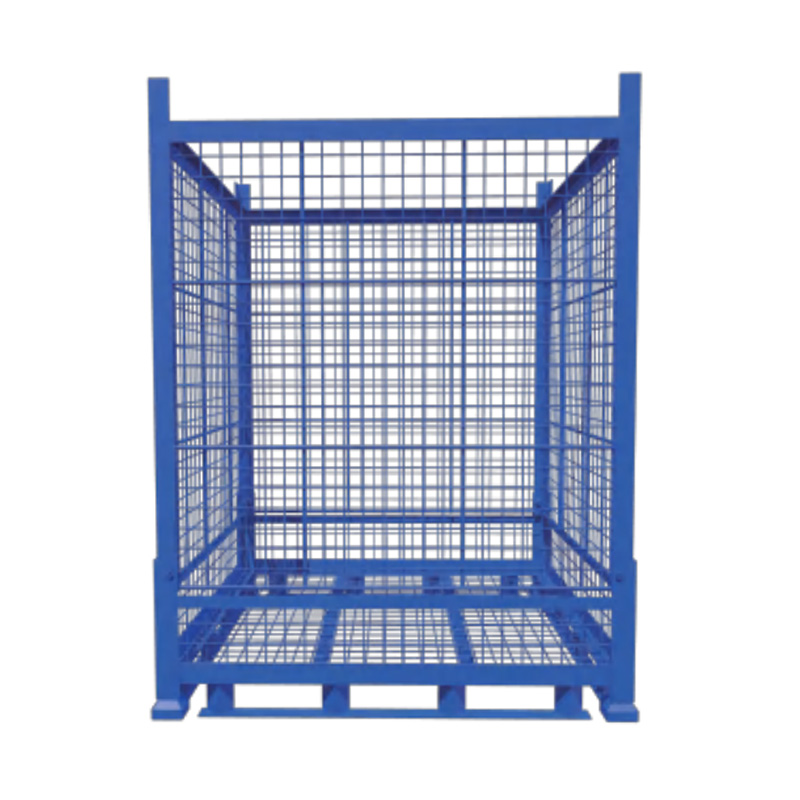
Product specification:Container structure made of L-Type plate frame with 50×50 wire mesh, with base support.Surface tre...
See Details

Information
-
Building B5, No. 138, Weixi Road, Weixi Village, Weitang Town, Xiangcheng District, Suzhou City, China.
-
Tel:
+86-13862140414
+86-13951110334 -
Phone: +86-512-65905480
