


 Español
 русский
 عربى
عربى
Don't hesitate to send a message
Search
Recent Post
Newsletter
Why Nestable and Foldable Roll Containers Are Redefining Warehouse Space Efficiency
Understanding Space Constraints in Modern Warehousing
Storage density has become one of the defining pressures in warehouse and distribution center operations. As rental rates for industrial floor space continue to climb in most metropolitan logistics corridors, operators are forced to reconsider every piece of equipment that occupies a footprint without directly contributing to throughput. Rolling cages and material handling carts are frequently the largest contributors to wasted cubic volume, particularly when they sit empty between delivery cycles.
A standard rigid roll cage, once emptied, still occupies its full assembled footprint. Multiply that by dozens or hundreds of units stored in a staging yard or returned from retail locations, and the accumulated floor space loss becomes a measurable operating cost. This is the core problem that the galvanized nestable foldable roll container is designed to solve, by allowing empty units to collapse or stack into a fraction of their working volume.
Warehouse consultants commonly point to empty-return logistics as an overlooked expense line. When empty carts travel back through the same transport network that delivered goods, every non-collapsible unit consumes trailer space that could otherwise carry revenue-generating freight. Reducing that wasted volume is where nesting and folding mechanisms create measurable value.
Beyond floor space rental, idle rigid equipment also affects yard planning. Forklift and pallet jack routes must be drawn around stacked or scattered empty cages, which can slow down staging operations during peak receiving hours. When empty units can be consolidated into a compact block through nesting or folding, the freed aisle space often translates directly into faster turnaround for incoming shipments, since staff spend less time navigating around parked equipment.
What Makes a Roll Container Nestable and Foldable
The terms nestable and foldable describe two distinct but often combined space-saving mechanisms in roll container design.
Nestable Construction
A nestable frame is built with a tapered or sloped profile so that one empty unit can slide partially inside another when both are wheeled together. This is the same principle used in stacking chairs or shopping carts, scaled up to an industrial frame rated for hundreds of kilograms of load. Nesting does not require disassembly; the operator simply pushes one unit into the next, and the overall footprint of a group of units shrinks dramatically compared to storing them side by side.
Foldable Construction
A foldable unit uses hinged side panels, a collapsible base, or a folding A-frame structure that allows the cage to be flattened into a slim profile when not carrying goods. Depending on the frame type, folded height can be reduced to a small fraction of the assembled height, which is particularly useful for operations with limited vertical storage clearance, such as mezzanine levels or delivery vans.
Combined Nestable and Foldable Systems
Many modern warehouse cage trolleys combine both principles: a foldable panel structure mounted on a nestable base frame. This hybrid approach gives operators flexibility to either fold units flat for transport in vans and containers, or nest multiple units together for compact yard storage, depending on which workflow is more relevant at a given stage of the supply chain.
The choice between the two mechanisms is rarely about which is objectively superior; it is about matching the collapsing method to how quickly and how often the equipment needs to change state. Folding requires an active step from an operator each time a unit is emptied, while nesting can happen almost passively as units are simply pushed together during normal yard movement. Facilities that process high volumes of returns each day often find that a fully manual folding step, repeated hundreds of times, adds measurable labor time, which is why some operations favor nestable frames for high-frequency cycles and reserve folding for units destined for long-term storage or over-the-road transport.
Comparing Roll Container Formats for Space Efficiency
The table below outlines how different roll container formats typically compare in terms of stored footprint, mobility, and suitability for different warehouse workflows.
| Container Format | Empty Storage Footprint | Assembly Required | Best Suited For |
|---|---|---|---|
| Rigid roll cage | Full footprint at all times | None | High-turnover fixed routes |
| Nestable A-frame roll cage | Reduced by partial telescoping | None, slides together | Yard staging, return logistics |
| Foldable warehouse trolley | Flattened when empty | Manual fold and unfold | Van transport, mezzanine storage |
| 4 wheels folding roll container | Flattened plus compact wheel base | Manual fold and unfold | Retail delivery, reverse logistics |
Operations that combine retail delivery with return handling generally benefit most from formats that fold flat, since empty units must travel back through the same transport network without consuming the space of outbound freight.
It is also worth noting that container format choice interacts with trailer loading strategy. Rigid cages typically require dedicated straps or partitions to prevent shifting during transit, since their footprint cannot change to fill gaps. Foldable and nestable formats, by contrast, can often be consolidated into a single stable block at the front or rear of a trailer, reducing the need for additional securing hardware and simplifying the loading sequence for drivers handling multiple stops in a single route.
How the 4 Wheels Folding Design Improves Maneuverability
Wheel configuration has a direct impact on how easily a roll container can be positioned in tight aisles, loading docks, and delivery vehicles. A typical 4 wheels folding roll containers setup uses two fixed wheels and two swivel casters, which allows the unit to be pushed in a straight line for long transport runs while still permitting tight turns during final positioning.
- Swivel casters at the front allow rotation in place, useful for navigating narrow store aisles or loading dock corners.
- Fixed rear wheels maintain directional stability when the cage is loaded and being pushed over longer distances.
- Wheel locks, where fitted, prevent unintended movement during loading or when the unit is parked on a sloped ramp.
- Wheel diameter affects rolling resistance, with larger diameters generally easier to push over uneven yard surfaces or expansion joints in concrete flooring.
The folding mechanism itself typically does not interfere with wheel function, since the base frame and axle assembly remain rigid while only the side panels and top frame collapse. This separation of structural and mobility components is part of why folding designs can maintain load ratings comparable to rigid alternatives.
Caster placement also affects how a loaded unit behaves on ramps and dock levelers. A wider wheel base generally improves stability when a container is loaded unevenly, reducing the risk of tipping when crossing the gap between a dock leveler and a trailer bed. For facilities with frequent dock-to-trailer transfers, operators often prioritize wheel base width and caster swivel range as highly as they prioritize the folding mechanism itself, since day-to-day handling safety depends more on rolling stability than on how compact the unit becomes once emptied.
Structural Design of the Folding A-Frame
The folding mechanism in most nestable A-frame roll cage designs relies on a hinge system positioned at the midpoint of the vertical uprights, allowing the top frame to pivot down toward the base without disconnecting any panel. The diagram below illustrates the basic sequence from assembled to folded position.
Because the base frame and wheel assembly remain fixed throughout the sequence, the folding process can typically be completed by a single operator in under a minute, without tools or removable pins that could be misplaced during repeated use.
Space Optimization Through Nested Storage Ratios
The practical benefit of nesting or folding is best expressed as a storage ratio, comparing how much floor or yard space a group of empty units occupies relative to the same group fully assembled and standing separately.
Typical Storage Ratio Improvements
- Rigid cages stored side by side: baseline footprint, no reduction.
- Nestable A-frame cages slid together: footprint commonly reduced by roughly half to two thirds depending on taper angle.
- Foldable trolleys flattened and stacked: footprint commonly reduced to a small fraction of assembled height.
For operations managing return logistics across many retail locations, this ratio directly affects how many empty units can be consolidated onto a single return trailer, which in turn reduces the number of empty-return trips required per week.
Warehouse space is rarely limited by inbound freight volume alone; the accumulation of idle equipment between cycles is frequently the larger, less visible driver of storage overflow.
Maintenance and Durability of the Galvanized Finish
Galvanizing applies a protective zinc coating to steel components, which is particularly relevant for roll containers that move between indoor warehouse floors and outdoor loading yards where humidity and temperature swings accelerate corrosion. A properly galvanized frame resists surface rust far longer than untreated or simply painted steel, especially at weld points and frame joints where paint coatings are most prone to chipping.
| Maintenance Task | Recommended Frequency | Purpose |
|---|---|---|
| Wheel and caster inspection | Monthly | Check for debris buildup and bearing wear |
| Hinge and fold-point lubrication | Quarterly | Maintain smooth folding action |
| Frame surface inspection | Semi-annually | Identify coating damage before rust spreads |
| Load capacity verification | Annually | Confirm structural integrity under rated load |
Routine inspection schedules like this extend the operational life of collapsible rolling cart fleets significantly, since most early failures originate at moving joints rather than the flat panel surfaces.
Galvanizing methods themselves vary in coating thickness and application process, which affects long-term corrosion resistance. Hot-dip galvanizing generally produces a thicker, more durable coating than electro-galvanizing, making it a common choice for frames expected to spend significant time outdoors or in coastal climates where salt exposure accelerates corrosion. Facilities operating primarily indoors in controlled climates may find a lighter coating adequate, which can also reduce overall unit weight and make manual folding easier for staff.
Cost and Efficiency Impact of Reduced Empty-Return Volume
Transport cost per trailer is largely fixed regardless of how full that trailer is, which means every cubic meter of empty-return volume saved through nesting or folding directly reduces the effective cost of moving idle equipment back through the supply chain.
Where the Savings Typically Show Up
- Fewer dedicated return trips required to consolidate the same number of empty units.
- Reduced need for temporary overflow storage during peak return periods, such as post-holiday retail cycles.
- Lower handling labor per unit, since compact stacks or nested groups can often be moved with a single pallet jack pass instead of individual cart pushes.
- Improved trailer utilization on backhaul routes, allowing return legs to be combined more easily with other freight.
These savings compound over a fleet lifecycle. A facility managing several hundred units across multiple store locations can see meaningful reductions in weekly transport frequency once empty units are consistently folded or nested before pickup, rather than left in their assembled state awaiting collection.
Fuel consumption and vehicle emissions per unit moved also tend to decrease as trailer utilization improves, since fewer round trips are needed to move the same total number of empty containers. Operations tracking sustainability metrics alongside cost metrics often find that return-logistics efficiency contributes to both goals simultaneously, without requiring separate initiatives to achieve each one, making the case for upgraded equipment easier to justify internally.
Selecting the Right Configuration for Your Operation
Choosing between nestable, foldable, or combined designs depends heavily on the specific logistics pattern an operation follows. The questions below can help narrow down the most suitable configuration.
Key Selection Factors
- Return frequency: Operations with frequent empty returns benefit most from foldable designs that minimize return-trip trailer volume.
- Yard storage duration: Facilities that store idle units for extended periods benefit from nestable designs that reduce standing footprint without requiring manual folding each time.
- Vertical clearance: Operations with low ceiling storage areas or van transport should prioritize maximum folded height reduction.
- Load type: Heavier or irregularly shaped goods may require reinforced base frames, which can influence how far a unit is able to nest or fold.
Workflow Matching
Retail replenishment networks that cycle containers daily between distribution centers and stores tend to favor foldable warehouse trolley formats, since folding can be performed quickly at each stop. Manufacturing and industrial yards that accumulate containers over longer intervals often favor nestable formats, since units can simply be pushed together without any folding step at all.
Sizing the Fleet to Actual Demand
An often overlooked step in the selection process is right-sizing the total fleet count once space efficiency improves. Operations that previously kept a large buffer of rigid units on hand to compensate for slow, space-consuming returns can sometimes reduce their total unit count after switching to nestable or foldable formats, since the same storage footprint can now accommodate a larger effective inventory of collapsed units. This reduces upfront capital investment in new equipment even as handling capacity increases.
Visualizing the Compact Storage Advantage
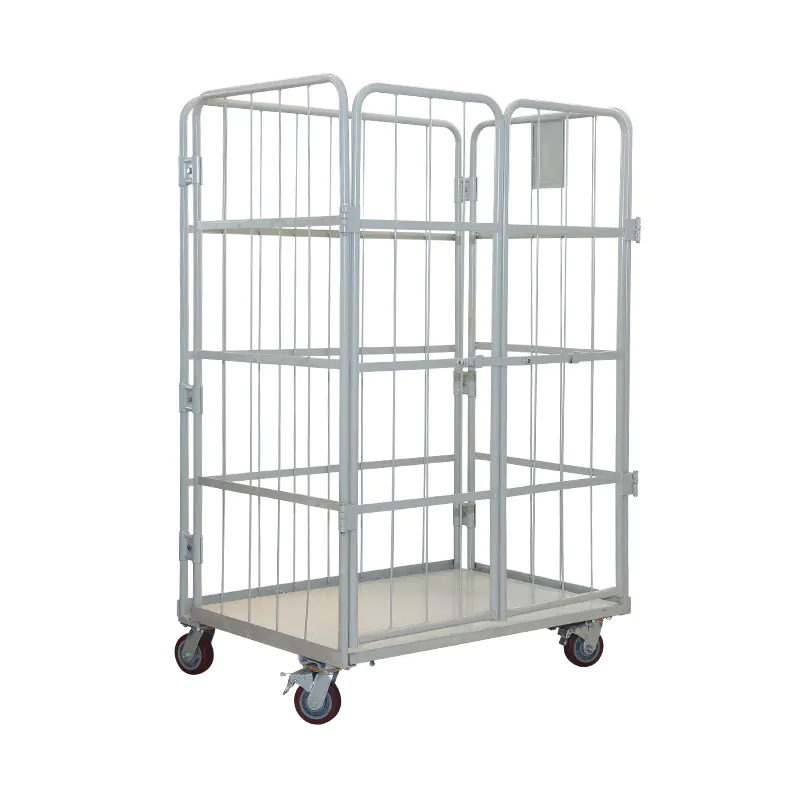
The image below shows a representative example of a galvanized frame designed for both nesting and folding, illustrating the reinforced base and hinge points discussed throughout this article.
When evaluating nestable roll containers for a specific facility, it is worth requesting frame load ratings and folded dimensions directly from the supplier, since these figures vary depending on gauge thickness and reinforcement pattern.
It is also useful to ask how the folded or nested profile interacts with existing racking and doorway clearances at a given facility, since a unit that folds compactly on paper may still be too wide or too tall to pass through a specific dock door or elevator opening. Confirming these dimensions before large-scale procurement helps avoid costly reconfiguration of storage areas after equipment has already arrived.
Frequently Asked Questions
Q1: What is the difference between a nestable and a foldable roll container?
A nestable container is designed with a tapered frame so empty units slide partially inside one another without any folding action, while a foldable container uses hinged panels that collapse flat. Some designs combine both mechanisms in a single frame.
Q2: How much floor space can folding roll containers actually save?
The exact reduction depends on frame design and taper angle, but flattened units generally occupy only a small fraction of their assembled height, and nested units commonly reduce combined footprint by roughly half or more compared to standing them side by side.
Q3: Does the folding mechanism reduce load capacity compared to rigid cages?
Not necessarily. Since the base frame and wheel assembly typically remain rigid throughout the folding sequence, load ratings on quality folding units can be comparable to rigid alternatives, provided the hinge points are properly maintained.
Q4: Why is galvanized steel preferred for warehouse cage trolleys?
Galvanizing provides a zinc coating that resists corrosion far better than untreated steel, which matters for equipment that regularly moves between indoor storage and outdoor loading yards where humidity accelerates rust formation.
Q5: Can 4 wheels folding roll containers be used for outdoor storage?
Yes, provided the frame has a corrosion-resistant finish such as galvanizing. Wheel components should also be inspected regularly, since outdoor debris and moisture can affect caster performance over time.
Q6: How often should folding hinges be maintained?
A quarterly lubrication schedule is generally sufficient for most operations, though high-frequency use environments may benefit from more frequent inspection to catch early signs of joint wear.
Related products
-
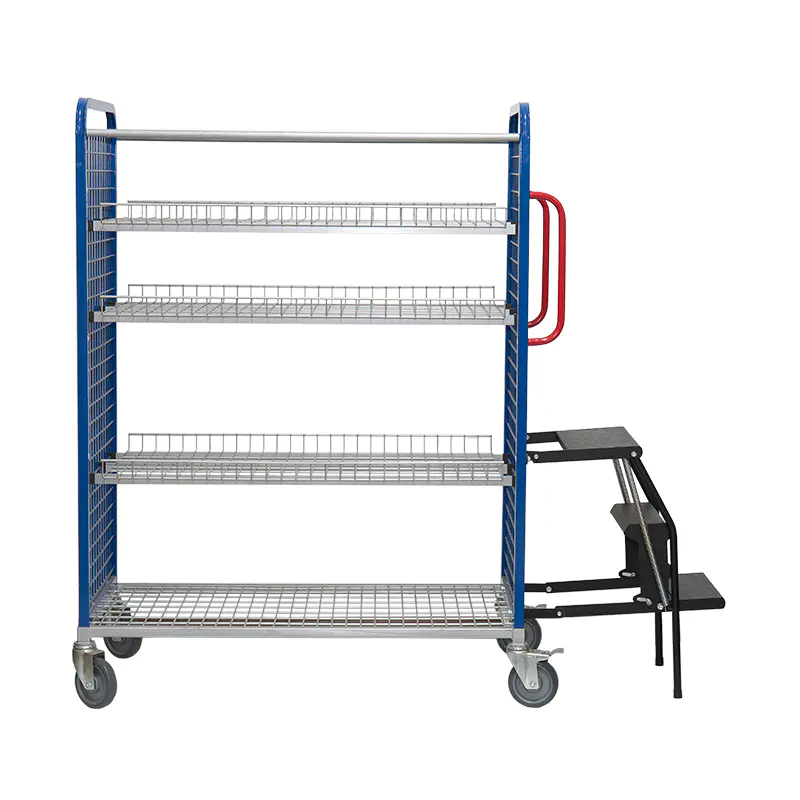
Product specification:This Warehouse wire mesh Multi-Tier Order Picking Trolley adopts a chassis and side panel structur...
See Details -
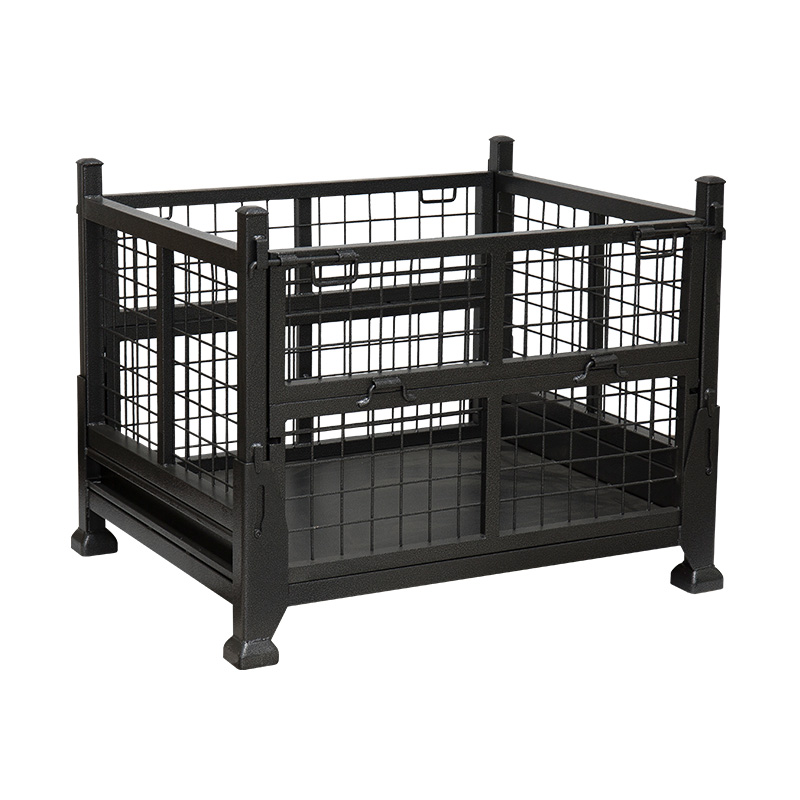
Foldable pallet cages are an important tool in factory logistics. They play an important role in transportation, distrib...
See Details -
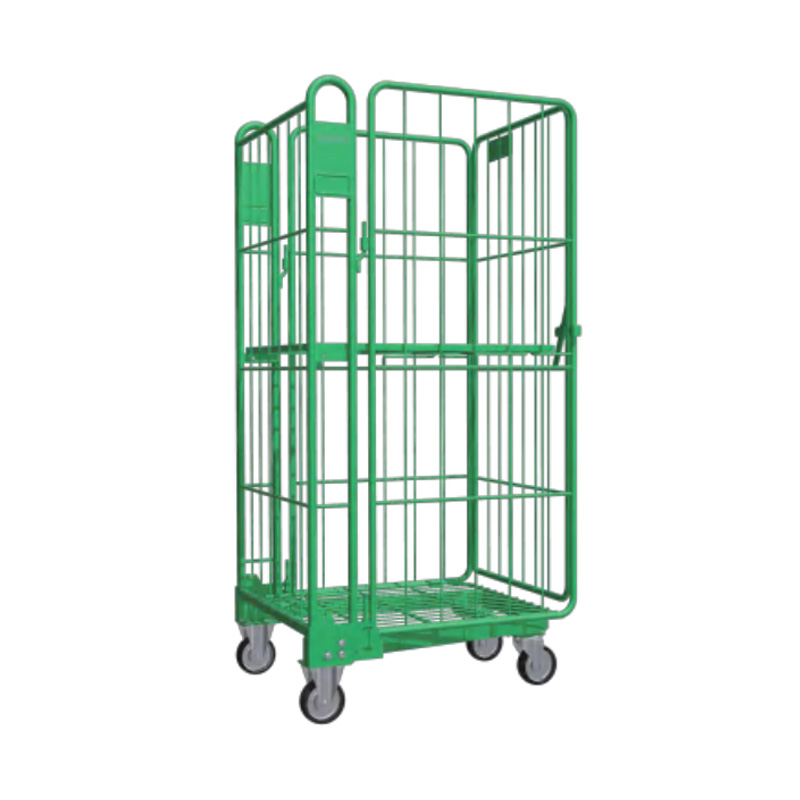
Product specification:The chassis is made of a square tube frame, with a bottom metal sheet tray that can be folded up a...
See Details -
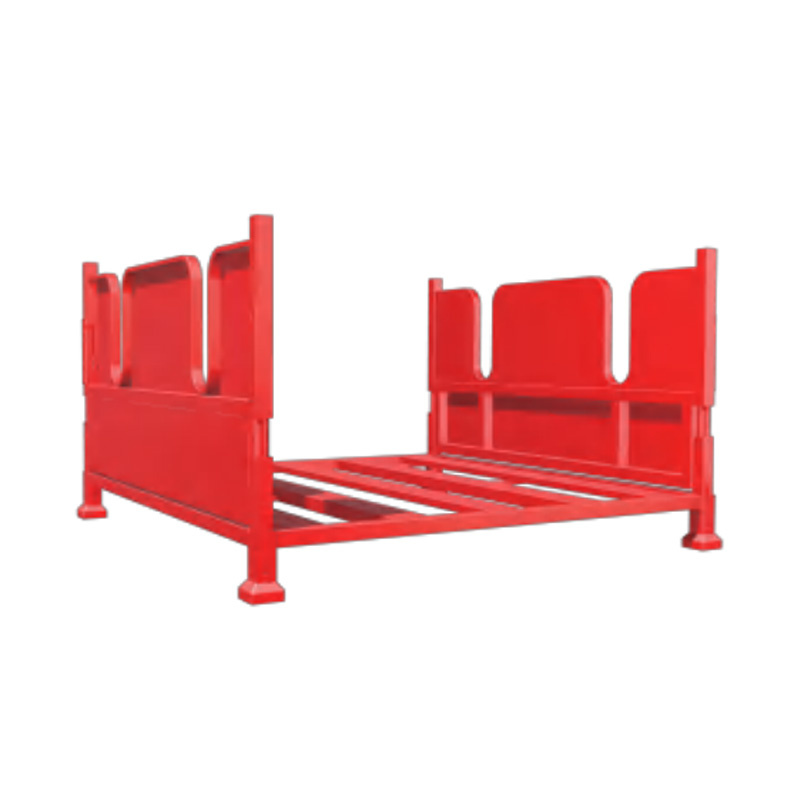
Stacking rack, also known as Qiaogu rack or stacking rackIt is a transportation and storage device derived from pallets ...
See Details -
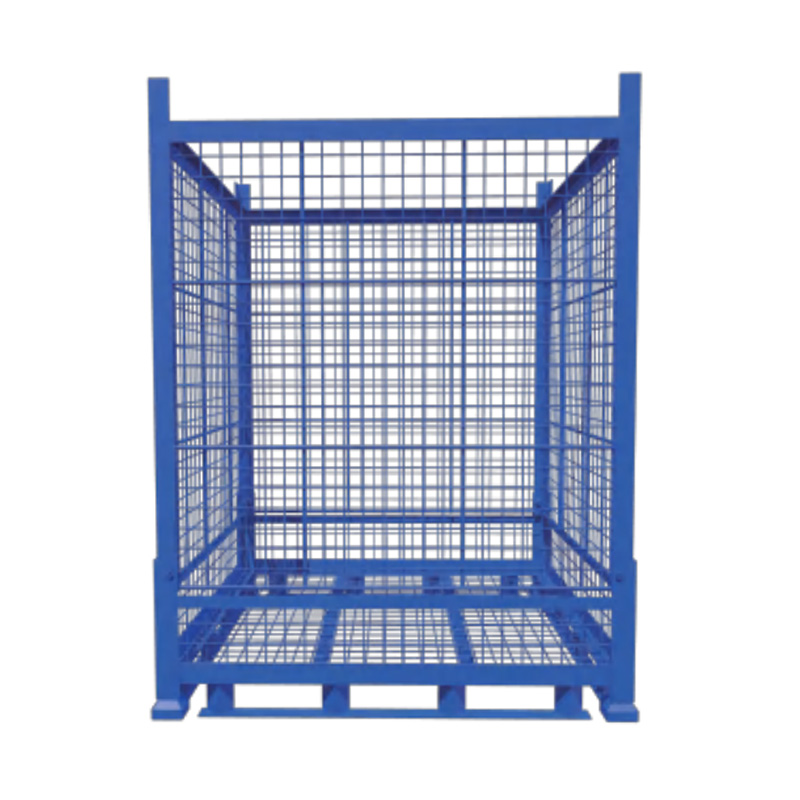
Product specification:Container structure made of L-Type plate frame with 50×50 wire mesh, with base support.Surface tre...
See Details

Information
-
Building B5, No. 138, Weixi Road, Weixi Village, Weitang Town, Xiangcheng District, Suzhou City, China.
-
Tel:
+86-13862140414
+86-13951110334 -
Phone: +86-512-65905480
