


 Español
 русский
 عربى
عربى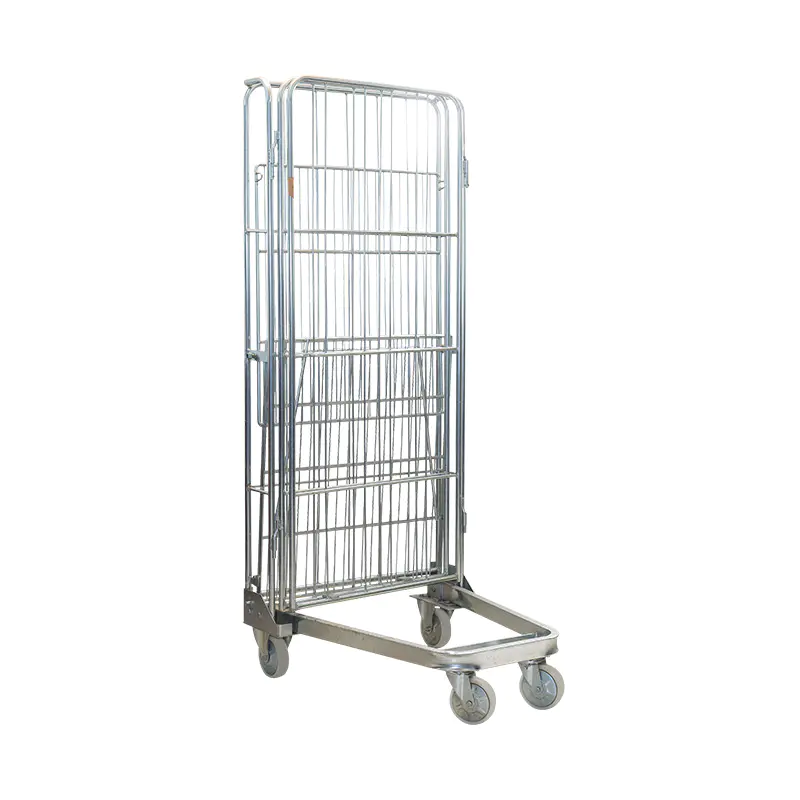
Don't hesitate to send a message
Search
Recent Post
Newsletter
What Is a Stillage and How Does It Optimize Industrial Material Handling?
Walk through any modern distribution center, automotive plant, or food processing facility and you will almost certainly encounter a stillage — even if you do not know it by that name. These rugged, stackable steel containers are fundamental to how heavy industry moves, stores, and protects components at every stage of the supply chain. Yet despite their ubiquity, many logistics professionals are still unclear on exactly what a stillage is, how it differs from a standard pallet, and when it is the right tool for the job.
This guide breaks down the stillage from first principles: its definition, construction types, load capacities, industry applications, and the measurable advantages it delivers over conventional storage methods. Whether you are specifying equipment for a new facility or looking to optimize an existing warehouse operation, the information here will help you make a fully informed decision.
Key Insight: Industrial facilities that switch from flat pallets to stillage cage systems report average floor space savings of 30 to 45 percent through vertical stacking — without investing in racking infrastructure.
Defining the Stillage: More Than Just a Box
A stillage is a rigid, free-standing industrial container — typically fabricated from steel — designed to transport, store, and protect goods that require containment beyond what a flat pallet can offer. Unlike a pallet, which merely elevates a load for forklift access, a stillage encloses the load on multiple sides, provides structural rigidity for stacking, and often incorporates features such as collapsible walls, forklift pockets, and wire mesh panels.
The word originates from the brewing industry, where a stillage was a low wooden frame used to keep barrels off the ground. Modern industrial stillages bear little resemblance to that ancestor, having evolved into precision-engineered steel structures capable of bearing loads from 500 kg to well over 3,000 kg per unit.
Core Structural Elements
- Base frame: Heavy-gauge steel tube or channel section with integrated forklift entry pockets on two or four sides.
- Corner posts: Vertical uprights that transfer stacking loads directly down through the structure, protecting the contents from compressive force.
- Panels: Solid sheet steel, expanded metal, or welded wire mesh depending on ventilation and visibility requirements.
- Stacking pins and sockets: Male-female locating features at the top and bottom corners that prevent lateral movement when units are stacked.
- Gate or drop-front: Hinged access panel on one or more sides for hand-picking or loading without fully unstacking the unit.
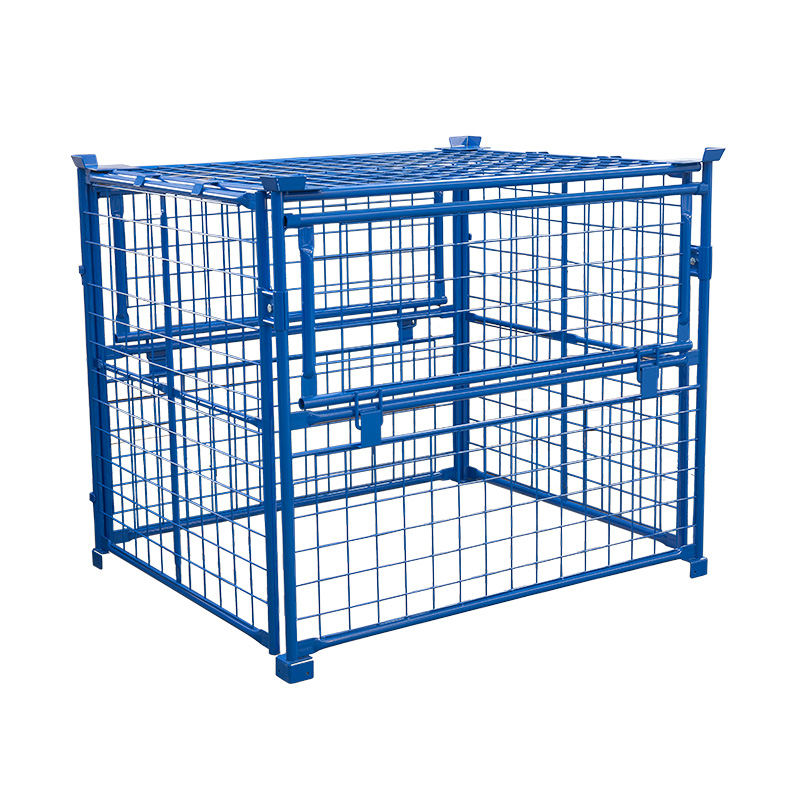
A heavy-duty steel stillage cage ready for forklift handling in a distribution facility.
Stillage vs Pallet: A Direct Comparison
The stillage vs pallet question is one of the most common in logistics procurement. Both devices elevate loads for forklift handling, but their capabilities diverge significantly in almost every other dimension. The table below provides a structured side-by-side view.
| Criterion | Flat Pallet | Steel Stillage / Cage |
|---|---|---|
| Load containment | None — load must be strapped or shrink-wrapped | Full on 3 to 5 sides; no secondary restraint needed |
| Stacking ability | Limited to product strength | 3 to 6 high via corner post system |
| Typical capacity | 500 kg – 1,500 kg | 500 kg – 3,000+ kg |
| Service life | 3–5 years (timber); 5–8 years (plastic) | 15–25 years (steel, repaired/repainted) |
| Return logistics | Low cost, flat stacking | Collapsible models reduce return volume by up to 75% |
| Parts visibility | Full (no enclosure) | High with wire mesh panels; reduced with solid sheet |
| Hygiene / cleanability | Poor (timber absorbs moisture) | Excellent (galvanized or powder-coated steel) |
| Initial unit cost | Low | Medium to high — offset by lifespan |
The conclusion is not that one solution is universally superior. Flat pallets remain the right choice for unitized, stable loads moving through single-use supply chains. Stillages and cages justify their higher unit cost wherever containment, stacking density, or durability are genuine operational requirements.
Types of Industrial Stillage: Matching Design to Duty
The term stillage cage encompasses a broad family of products. Understanding the key variants allows specifiers to match the design precisely to the operational duty cycle.
Fixed-Side Stillage
All four sides are permanently welded. Maximum rigidity and load capacity. Suited to captive loops within a single facility where return logistics are not a concern.
Typical capacity: 1,000 – 3,500 kg
Collapsible / Folding Stillage
Sides fold inward when empty, reducing the unit to roughly 25% of its loaded volume. Ideal for closed-loop supplier-to-production flows where return transport cost matters.
Typical capacity: 500 – 1,500 kg
Wire Mesh Stillage Box
Panels fabricated from welded wire mesh. Allows full visual inventory without opening the unit, promotes air circulation, and reduces weight versus solid-panel equivalents. A Warehouse Storage Wire Mesh Pallet Cage of this type is widely used in e-commerce sortation and automotive component storage.
Typical capacity: 500 – 1,000 kg
Nestable Stillage
Corner post geometry allows empty units to nest inside one another (not stack). Offers a compact empty-return footprint without the mechanical complexity of folding sides.
Typical capacity: 300 – 800 kg
Stackable Post Pallet
A hybrid between an open pallet and a stillage. Corner posts provide stacking capability and product protection, but the open sides allow crane or side-loading. Common in sheet metal and glass industries.
Typical capacity: 1,500 – 4,000 kg
Custom / Bespoke Stillage
Engineered to hold a specific component — engine subframes, door panels, turbine blades. Internal dunnage (foam, polyethylene) protects surface-critical parts. Widely used in aerospace and premium automotive supply chains.
Typical capacity: Project-specific
How a Metal Stillage Is Manufactured
Understanding manufacturing helps buyers evaluate quality and negotiate specifications intelligently. A metal stillage or steel stillage typically moves through the following production stages.
Material Grades and Their Significance
The structural steel used for stillage fabrication is typically S235 or S355 grade. S355 offers roughly 50 percent higher yield strength than S235, allowing thinner wall sections — and therefore lighter units — without sacrificing load capacity. This matters in facilities that handle stillages manually or where forklift payload limits are a consideration.
Surface treatment choices include:
- Hot-dip galvanizing: 85–100 micron zinc coating; best corrosion resistance; suited to outdoor storage, cold stores, or wash-down environments.
- Powder coating: 60–80 micron epoxy or polyester layer; wide colour range for rack identification; less resistant to abrasion than galvanizing.
- Shot-blast and paint: Economical for captive indoor use; requires periodic touch-up maintenance.
- Electro-galvanizing: Thin uniform coating (5–25 microns); mainly aesthetic rather than protective.
Industrial Stillage Storage Solutions by Sector
The versatility of the stillage format means it has found a home in industries as diverse as food production and aerospace. The following sector profiles illustrate the specific demands each environment places on stillage design.
Automotive Manufacturing
Automotive tier-1 and tier-2 suppliers are among the heaviest users of bespoke industrial stillage storage solutions. Body panels, sub-frames, and powertrain components arrive at assembly lines in purpose-designed stillages that orient each part for robot or manual pick exactly as required. Internal dunnage — foam profiles, polyethylene saddles — prevents surface damage that would cause costly rework. Automotive stillages typically complete 200 to 500 load cycles per year and are designed accordingly.
Food and Beverage Processing
In food environments, hygiene is paramount. Galvanized or stainless steel stillages with open wire mesh panels allow thorough cleaning and rapid drainage. They are used to move produce, packaging materials, and finished goods between processing zones. Many food-grade stillages omit horizontal ledges and internal corners where contamination can accumulate. Typical load is 300 to 800 kg of product in sealed secondary packaging.
Pharmaceuticals and Medical Devices
Cleanroom-compatible stillages are fabricated from electropolished stainless steel, eliminating surface micro-roughness that harbours particulate contamination. These units are validated for use under GMP (Good Manufacturing Practice) frameworks and carry load plates with traceability codes that link back to material certificates and weld inspection records.
Retail and E-Commerce Logistics
High-throughput sortation hubs use wire mesh roll cages — a sub-type of the stillage family — to consolidate parcels by delivery route. These units are typically 1,000 kg capacity with a hinged rear door, solid or mesh sides, and castors for manual movement within the hub. Studies of hub operations show that replacing cardboard carton consolidation with mesh roll cages reduces sortation errors by 18 to 22 percent through improved parcel visibility.
Construction and Heavy Industry
Structural fasteners, rebar couplers, flanges, and machined castings are routinely transported in heavy-duty steel stillages rated to 2,000 kg or above. The open corner-post design allows crane lifting via sling or spreader bar, making these units compatible with both forklift and overhead handling systems on congested construction sites.
Stillage Load Capacity: What the Numbers Mean
Every stillage carries a rated Safe Working Load (SWL) stamped or welded onto the unit. This figure represents the maximum load the unit is designed to carry in normal use, typically with a safety factor of 2:1 against the calculated failure load. What is less commonly understood is that stacking multiplies the structural demand on lower units.
2:1
Minimum safety factor (load to SWL ratio)
4 high
Typical maximum stack height for standard stillages
25 yrs
Expected service life of heavy-duty steel stillage
75%
Volume reduction when collapsible stillage is folded
When specifying a stillage, the load capacity of the bottom unit in a stack determines the maximum stack height, not the capacity of a single unit in isolation. A stillage rated at 1,000 kg SWL in a stack of four is bearing the weight of three fully loaded units above it — potentially 3,000 kg. Procurement teams should confirm that the manufacturer's stated stacking capacity includes this compounded load scenario.
Dynamic vs Static Loading
SWL figures usually refer to static loading — a stillage sitting on flat ground or racking. Dynamic loading during forklift travel introduces additional forces. On smooth concrete floors the dynamic load factor is approximately 1.3x static; on uneven yard surfaces or ramps it can reach 2.0x. High-traffic facilities should specify dynamic SWL ratings or apply a conservative margin to static figures.
Wire Mesh Stillage Box: Visibility as a Feature
The wire mesh stillage box deserves particular attention because its defining characteristic — open wire panels — creates operational advantages that solid-sided containers cannot replicate.
From a warehouse management perspective, the ability to count and identify contents without opening or unstacking a unit can eliminate a significant source of non-value-added labour. In a facility handling 5,000 stillage movements per day, reducing the average handling time by just 15 seconds per unit saves more than 20 hours of labour daily.
Wire mesh panels are typically manufactured from 4 mm to 6 mm diameter mild steel rod, spot-welded at each intersection to form a grid of 50 x 50 mm to 100 x 100 mm apertures. Galvanized wire mesh offers additional corrosion resistance and is the default specification for food and external storage environments. For a range of ready-engineered solutions, the stillage cage product range covers standard and custom mesh configurations.
Specifying a Heavy Duty Steel Stillage: A Practical Checklist
Procurement of heavy duty steel stillages requires a structured approach. The following checklist covers the critical specification parameters that should be confirmed before any order is placed.
- Gross load (kg): Maximum weight of product plus any dunnage or secondary packaging. Add 10% margin for variation.
- Stack height: Maximum number of units to be stacked. Confirm the manufacturer's stacking SWL covers the cumulative load on the bottom unit.
- External dimensions (L x W x H): Must align with floor grid, racking beam spacing, and vehicle deck dimensions. Standard sizes range from 800 x 600 mm to 1,200 x 1,000 mm footprint.
- Internal clearance (H): Product height plus any required handling clearance. For crane-lifted components, allow additional headroom for slings.
- Forklift pocket dimensions: Match to the tine width and spread of forklifts in use. Pockets on two sides (one direction) or four sides (two directions) based on site layout.
- Panel type: Wire mesh, solid sheet, or open-sided. Driven by visibility, ventilation, and security requirements.
- Access: Drop-front, hinged gate, removable side, or full open-top. Driven by the pick method (manual, robotic, crane).
- Surface finish: Hot-dip galvanized, powder-coated, or painted. Driven by environment (wash-down, outdoor, cleanroom).
- Return logistics: Collapsible, nestable, or fixed. Driven by return transport cost and frequency.
- Identification: Load plate, colour coding, RFID pocket, or barcode panel. Required for asset tracking and compliance.
"The most common specification error is under-sizing the stacking SWL. Buyers focus on the load per unit and overlook the compounding effect of stacking — an error that can result in structural failure and serious injury."
— Material Handling Industry Safety Guidance, 2023Stillage Maintenance and Inspection Regime
A steel stillage in continuous service should be subject to a formal inspection regime. Industry best practice, aligned with LOLER (Lifting Operations and Lifting Equipment Regulations) where applicable, recommends the following schedule:
| Inspection Type | Frequency | Key Checks | Action if Failed |
|---|---|---|---|
| Pre-use visual | Every use | Bent posts, cracked welds, missing pins, damaged base | Remove from service immediately |
| Periodic detailed | Quarterly | Weld integrity, corrosion depth, pin wear, panel deformation | Tag for repair or scrap |
| Thorough examination | Annually | Load test, dimensional check, SWL plate legibility | Re-certify or condemn |
| Post-incident | After any impact or overload event | Full structural inspection by competent person | Do not return to service until cleared |
Common maintenance tasks include weld repair of cracked corner post joints, replacement of worn or bent stacking pins, touch-up painting of damaged powder coat, and re-stamping of obliterated load plates. A stillage that receives timely maintenance can realistically achieve a 25-year service life, delivering a total cost of ownership far below that of plastic or timber alternatives.
Environmental and Sustainability Considerations
Sustainability pressures are driving logistics teams to reconsider disposable or short-life packaging in favour of returnable transit equipment (RTE). Steel stillages occupy a strong position in this conversation for several reasons.
- Material recyclability: At end of service life, steel stillages are 100 percent recyclable through established steel scrap streams. No sorting or separation of materials is required.
- Elimination of single-use packaging: A closed-loop stillage programme removes the need for corrugated cardboard, stretch film, and timber dunnage on every load cycle — materials that are largely non-recoverable once used in an industrial context.
- Carbon accounting: Life cycle analyses consistently show that a steel stillage completing 400 load cycles delivers a carbon footprint per-trip 60 to 75 percent lower than equivalent single-use packaging.
- Repairability: Unlike plastics, steel can be welded, bent back, and re-coated. This extends product life and defers the energy cost of replacement manufacture.
Sustainability note: A single steel stillage completing 300 load cycles over its life saves an estimated 450 kg of corrugated cardboard and 90 kg of stretch film from entering the waste stream.
Frequently Asked Questions
Q1: What is a stillage used for in a warehouse?
A stillage is used to transport, store, and protect industrial goods that require containment, stacking, or protection beyond what a flat pallet provides. In a warehouse context, stillages allow vertical space to be utilised through safe stacking, reduce the need for secondary restraint such as stretch film, and protect contents from impact during forklift handling. They are particularly common in automotive, food, pharmaceutical, and heavy industry supply chains.
Q2: What is the difference between a stillage and a cage?
The terms are frequently used interchangeably, and in practice there is no universally agreed distinction. Some suppliers use "stillage" to refer to open-topped or partially open containers and "cage" to describe units with a roof or all-sides enclosure. Others use both terms to mean the same product. What matters more than terminology is the specific configuration — panel type, gate position, stacking pins, and load rating — which should always be verified against your operational requirements.
Q3: How much weight can a standard steel stillage hold?
Standard steel stillages are available in Safe Working Load ratings from approximately 500 kg to over 3,000 kg. The most common specification for general industrial use is 1,000 kg SWL. Heavy-duty post pallets used in structural engineering or steel stockholding can be rated to 4,000 kg or above. Always check both the single-unit SWL and the stacking SWL, as these may differ significantly.
Q4: Can stillages be used for outdoor storage?
Yes, provided the surface finish is appropriate. Hot-dip galvanized stillages are well suited to outdoor environments, offering corrosion protection in exposed conditions for 20 years or more without repainting. Powder-coated units can also be used outdoors but may require more frequent maintenance in high-humidity or marine environments. Wire mesh panels are preferable outdoors as they prevent water accumulation that would accelerate corrosion on solid-floor units.
Q5: What is the typical lead time for custom stillage fabrication?
Lead times for standard catalogue stillages are typically 2 to 6 weeks from order confirmation. Custom or bespoke designs — particularly those with internal dunnage, specialised coatings, or non-standard dimensions — generally require 6 to 14 weeks, including design review, prototype approval, and production. For large volume orders, suppliers may offer a phased delivery schedule to bridge the gap between order placement and full delivery.
Q6: Are collapsible stillages as strong as fixed-side models?
When loaded, a well-engineered collapsible stillage should perform equivalently to a fixed-side unit at the same SWL rating. The mechanical complexity of the folding mechanism does introduce additional wear points — particularly the hinge pins and latching systems — which require more frequent inspection and maintenance. For very high-cycle applications (500+ trips per year), fixed-side stillages are generally preferred for their lower maintenance burden.
Related products
-
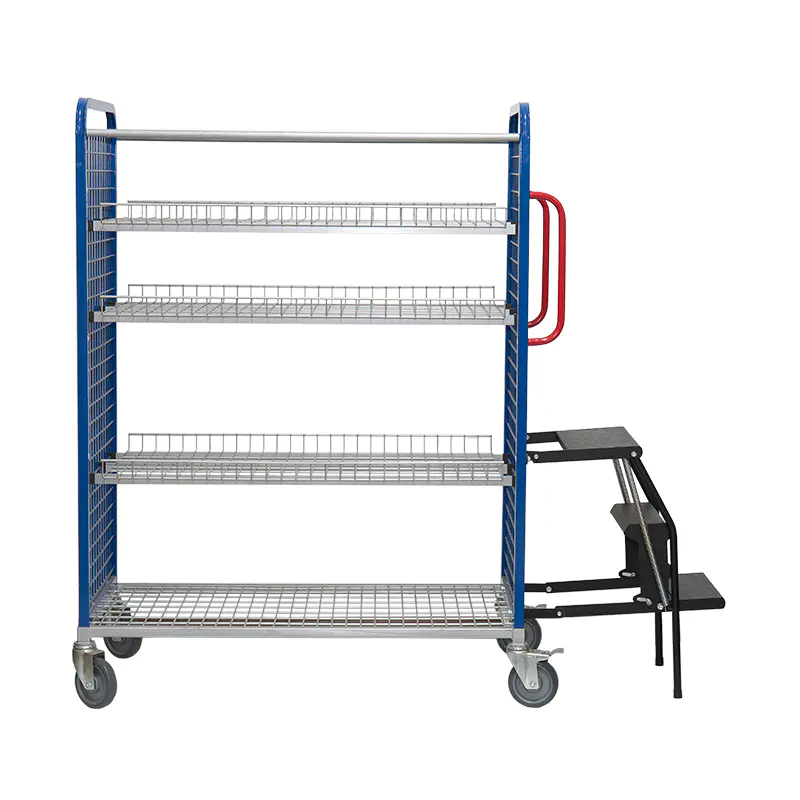
Product specification:This Warehouse wire mesh Multi-Tier Order Picking Trolley adopts a chassis and side panel structur...
See Details -
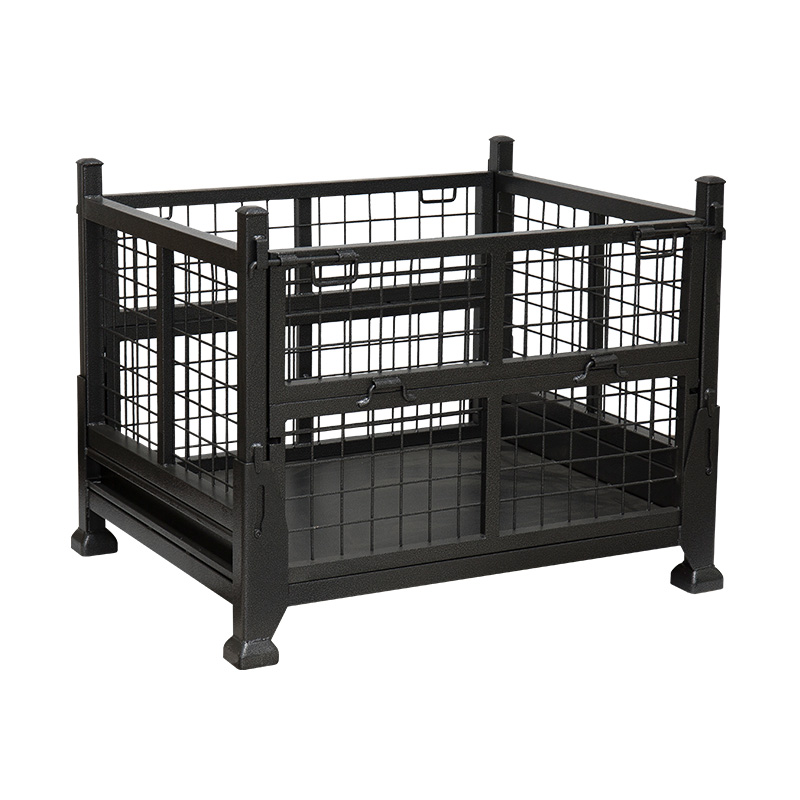
Foldable pallet cages are an important tool in factory logistics. They play an important role in transportation, distrib...
See Details -
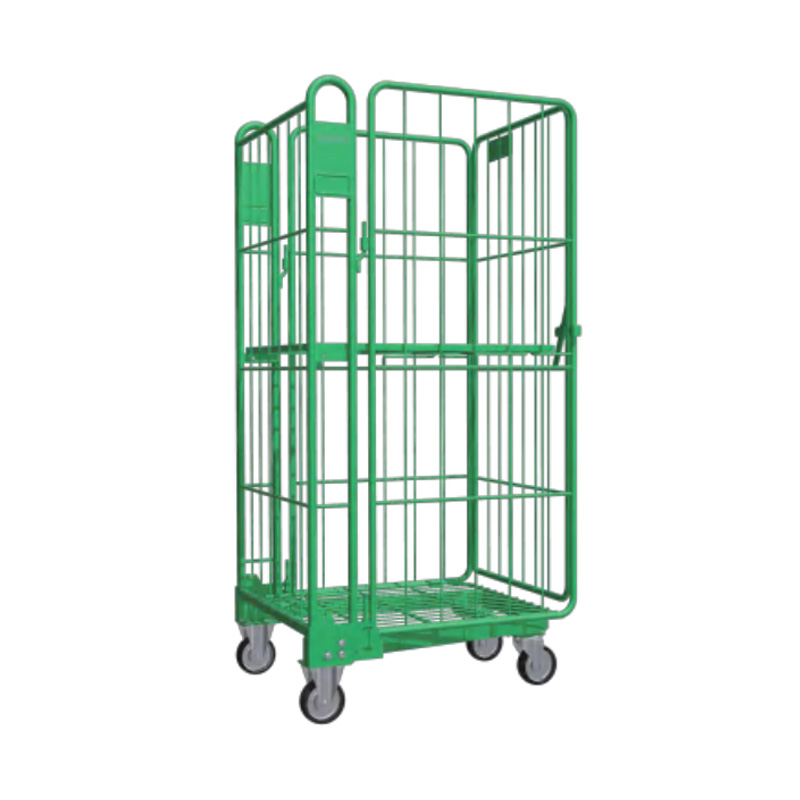
Product specification:The chassis is made of a square tube frame, with a bottom metal sheet tray that can be folded up a...
See Details -
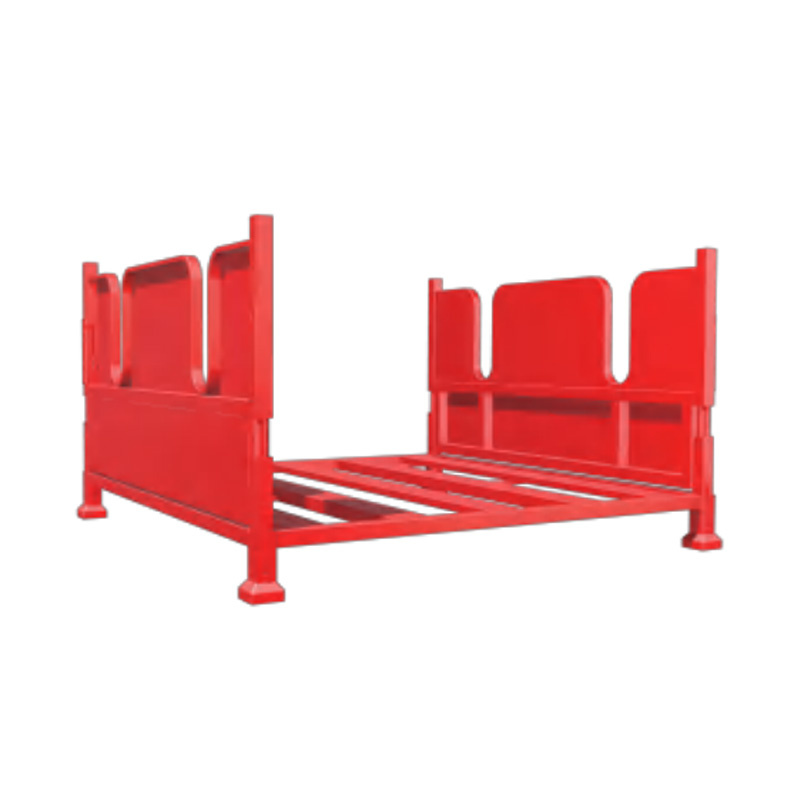
Stacking rack, also known as Qiaogu rack or stacking rackIt is a transportation and storage device derived from pallets ...
See Details -
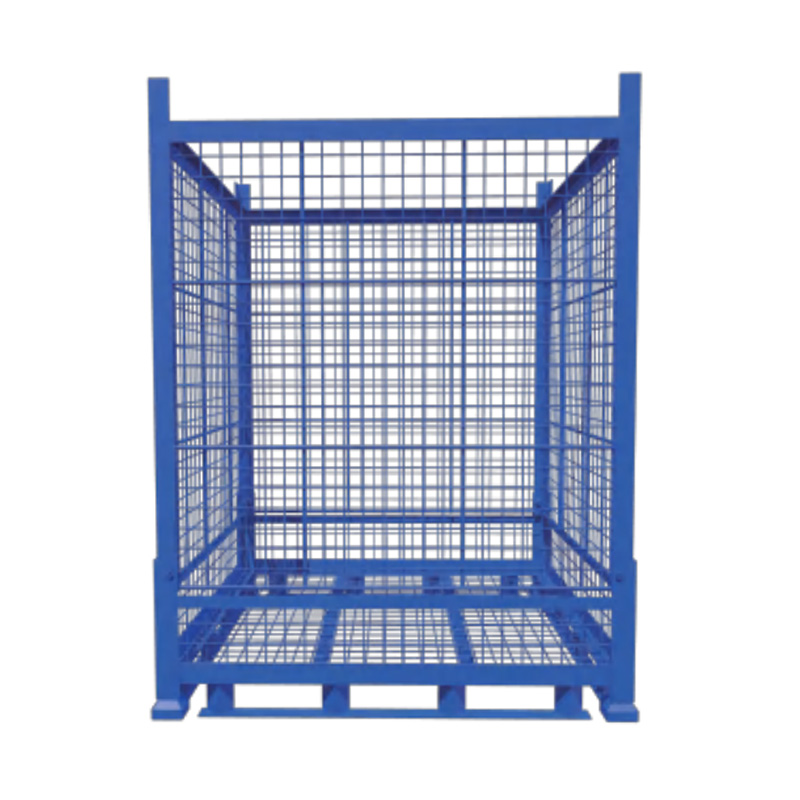
Product specification:Container structure made of L-Type plate frame with 50×50 wire mesh, with base support.Surface tre...
See Details

Information
-
Building B5, No. 138, Weixi Road, Weixi Village, Weitang Town, Xiangcheng District, Suzhou City, China.
-
Tel:
+86-13862140414
+86-13951110334 -
Phone: +86-512-65905480
