


 Español
 русский
 عربى
عربى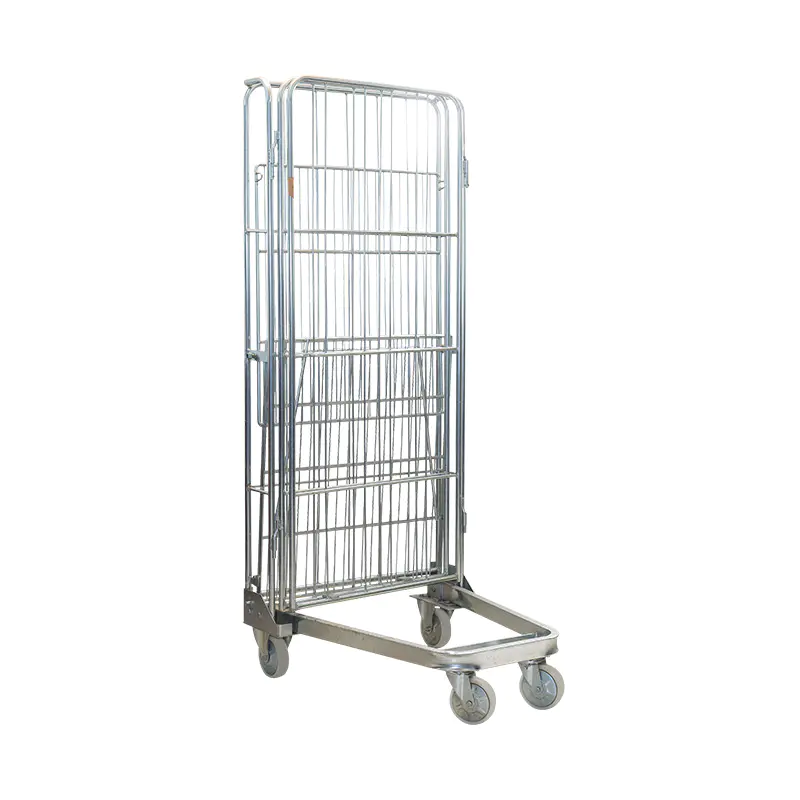
Don't hesitate to send a message
Search
Recent Post
Newsletter
How Do Wire Mesh Pallet Cages and Stillage Systems Improve Warehouse Storage Density?
Understanding Pallet Cages and Stillage Systems in Modern Warehousing
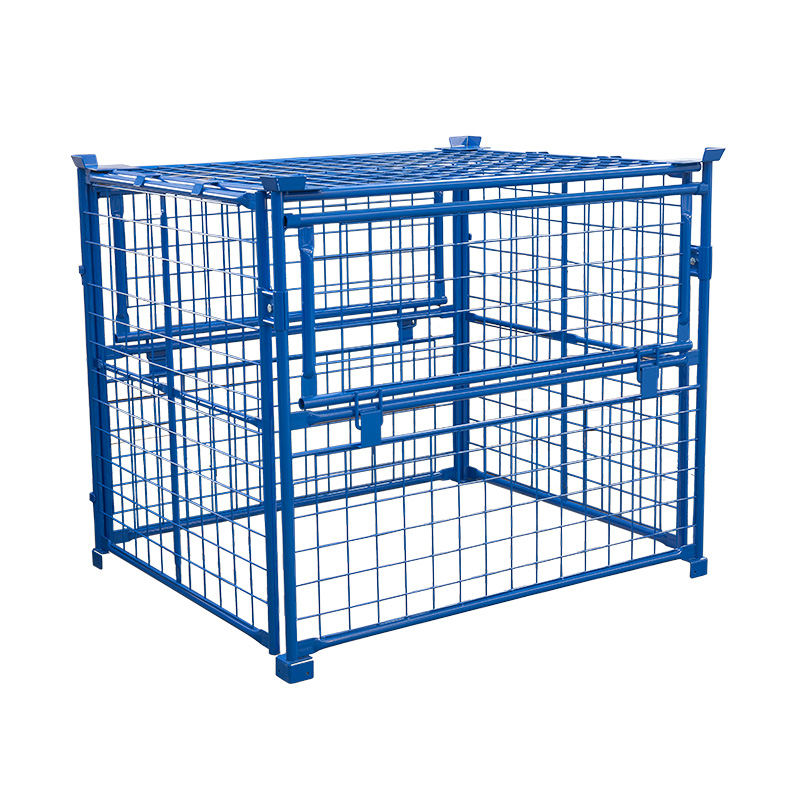
A wire mesh pallet cage is a rigid steel container built on a standard pallet base, enclosed by welded mesh panels that can be locked into a fixed frame or hinged for folding. Unlike open pallets, a cage confines loose, irregular, or loosely stacked goods so they can be lifted, stacked, and transported without shifting. This makes cages a common fixture in distribution centers handling small parts, returns, agricultural produce, or metal components that do not stack cleanly on their own.
Stillage is the broader term used across logistics operations to describe any reusable container platform designed for repeated handling cycles, whether that platform is a rigid box, a mesh cage, or a collapsible frame. Stillage cages are typically rated by static load, dynamic load while moving, and stacking load when multiple units are placed on top of one another. Static ratings tend to run higher than dynamic ratings because forklift movement introduces lateral stress that a stationary stack does not experience.
Warehouses adopt cage-based storage for three operational reasons: containment of loose or oddly shaped stock, protection during multi-touch handling, and compatibility with existing pallet racking and forklift equipment. Because the base dimensions match standard pallet footprints, cages integrate into racking systems without requiring specialized bays or custom shelving.
Why Foldable and Collapsible Designs Are Changing Storage Economics
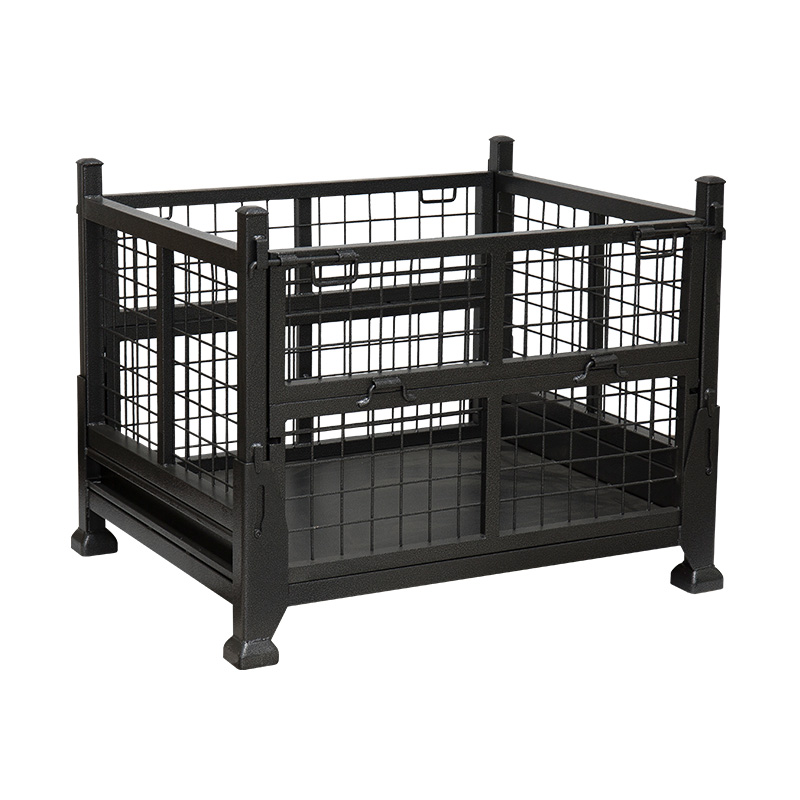
The single biggest limitation of a rigid stillage is what happens when it is empty. A fixed cage still occupies its full height whether it holds goods or nothing at all, which means return trips and empty storage consume the same trailer and warehouse volume as a loaded trip. A foldable and collapsible pallet cage addresses this directly: side panels hinge inward and the top frame drops down onto the base, reducing the empty unit to roughly a fifth of its assembled height.
This matters most in closed-loop supply chains, where the same cage travels from supplier to distribution center and back multiple times per month. A facility running reusable stillage in a closed loop can reduce return-freight volume substantially simply by folding empties before the return leg, since a trailer that once carried forty assembled cages back empty can often carry well over one hundred folded units on the same footprint.
Collapsible designs also simplify seasonal storage. Facilities with fluctuating volume, such as agricultural packers or seasonal retailers, can stack folded units against a wall during low-demand periods instead of dedicating permanent floor space to empty containers year-round.
Structural Components and Load Capacity Considerations
Cage and stillage specifications vary by application, but most industrial units share a common set of measurable attributes that determine how they perform under repeated use. The table below summarizes typical specification ranges seen across general-purpose warehouse cages.
| Attribute | Typical Range | Impact on Performance |
|---|---|---|
| Frame wire gauge | 4 to 6 millimeters | Determines resistance to impact and mesh deformation |
| Static load capacity | 800 to 1500 kilograms | Maximum weight when stationary on flat ground |
| Dynamic load capacity | 600 to 1200 kilograms | Safe weight limit while being moved by forklift |
| Stacking capacity | 3 to 4 units high | Number of loaded cages that can be safely stacked |
| Base material | Steel or steel with wood insert | Affects weight, cost, and fork entry points |
| Fold-down ratio | Up to 1 to 5 | Height reduction when collapsed for storage or return |
Static and dynamic ratings should never be treated as interchangeable. A cage rated for 1200 kilograms static may carry a lower dynamic rating once forklift acceleration, braking, and turning forces are factored in, which is why reputable specification sheets list both figures separately rather than a single blended number.
Comparing Floor Space Utilization Across Storage Formats
Floor space efficiency is one of the clearest ways to justify a shift toward cage or stillage-based storage. The chart below compares approximate usable storage density, expressed as a percentage of theoretical maximum, across four common warehouse storage formats.
Folded stillage storage reaches the highest density figure because the comparison assumes empty units awaiting reuse, where collapsibility has the greatest advantage. Stacked pallet cages still outperform block stacking and standard racking because vertical stacking of loaded cages reclaims cubic volume that flat pallet placement cannot use.
Space Reclaimed During a Fold-Down Sequence
The following line chart illustrates how quickly usable floor space is reclaimed as a batch of empty cages moves through a fold-down sequence, from initial unloading through full collapse and staging for return transport.
The steepest gains occur once side panels are folded inward, since panel height is typically the largest single contributor to overall cage volume. Facilities that build fold-down into standard end-of-shift procedures see the largest cumulative space savings over a full operating month.
Stacking Height and Throughput Impact
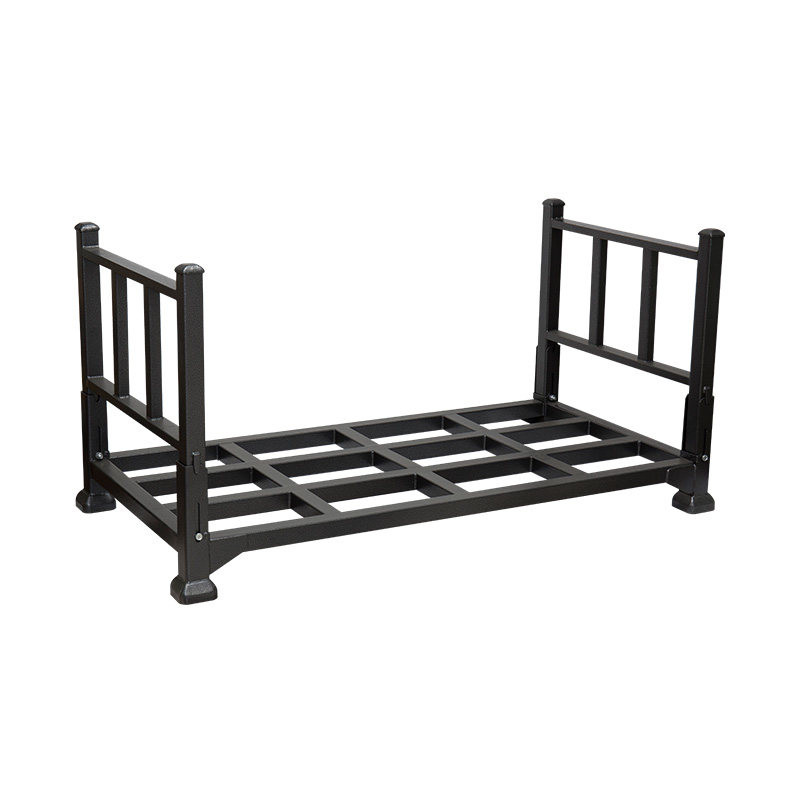
A heavy duty warehouse storage stacking folding rack is often selected over a full cage when the goal is dense vertical stacking without full mesh enclosure. Stacking height directly affects order-picking throughput, since taller stacks reduce footprint but slow retrieval of items stored on lower tiers. The chart below shows approximate pallets processed per hour at different stack heights in a representative distribution operation.
Throughput generally rises with stack height up to a point, after which additional tiers begin to slow retrieval because operators need extra clearance and repositioning time to reach lower units. Most facilities find a practical ceiling around three tiers for actively picked stock, reserving taller stacks for slower-moving or bulk reserve inventory.
Choosing Between Pallet Cages, Stacking Racks, and Order Picking Trolleys
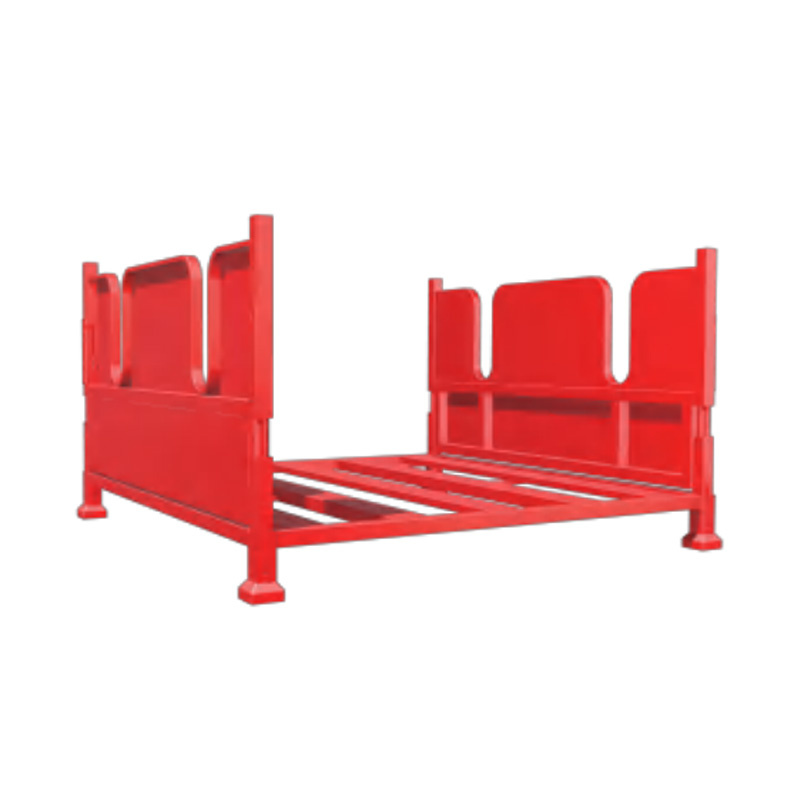
Different stillage formats trade off differently across the same five criteria: load capacity, footprint efficiency, mobility, durability, and cost efficiency. The radar comparison below scores three common formats, including the compact order picking trolley, on a five-point scale.
Pallet cages score well across durability and load handling, making them suited to heavier or irregular loads. Stacking racks lead on load capacity and durability but sacrifice mobility. Order picking trolleys score highest on footprint efficiency and mobility, favoring frequent small-batch retrieval over bulk stacking.
Workflow: How Stillage Systems Move Through a Warehouse Cycle
A reusable stillage system follows a repeatable operational loop rather than a single point-to-point movement. Understanding this loop helps facility planners size the right number of units and allocate staging space correctly.
Sizing this loop correctly requires accounting for time spent at each stage, not just the number of physical units owned. A facility with a slow fold-down step at the end of the cycle will need more total cages in circulation than one where folding is built into the standard end-of-shift routine.
Custom Stillage Manufacturing: Matching Configuration to Load Profile
Off-the-shelf cages cover most general warehouse needs, but certain load profiles justify a custom configuration. Facilities handling long or irregular parts often need extended-length bases rather than square footprints. Operations with washdown requirements, such as food processing, typically specify stainless or coated mesh instead of standard painted steel to resist corrosion from repeated cleaning cycles.
Custom stillage cages can also incorporate features such as removable side gates for easier loading of bulky items, drop-down half-doors for partial access without full unstacking, or reinforced base rails for use with narrow-aisle forklifts. When evaluating a custom order, the most useful starting data points are average unit weight, typical stack height in the target facility, and whether units will be exposed to outdoor storage, since ultraviolet exposure and moisture both accelerate coating wear on unprotected steel.
- Define load weight and shape before selecting mesh gauge
- Confirm stacking height against existing racking clearance
- Specify coating type based on indoor or outdoor exposure
- Match base dimensions to forklift fork spacing already in use
Maintenance and Safety Practices That Extend Service Life
Even well-built stillage cages lose structural integrity over time if inspection routines are skipped. Weld points and hinge mechanisms on folding units experience the most wear because they carry repeated mechanical stress with every fold and unfold cycle.
- Inspect base welds and corner joints for cracking before each stacking cycle
- Check hinge pins on folding panels for wear or looseness monthly
- Replace units with bent frame rails rather than attempting field repair on load-bearing members
- Avoid exceeding rated stack height even temporarily during peak season
- Store empty folded units on level ground to prevent frame warping
A simple visual inspection routine, performed by dock staff during normal handling rather than as a separate scheduled task, catches most early-stage frame damage before it becomes a load-bearing risk.
Frequently Asked Questions
Q1: What is the difference between a pallet cage and a general stillage?
A pallet cage is a specific type of stillage built with mesh side panels on a pallet base, while stillage is a broader category that also includes solid-wall containers and open-frame stacking units.
Q2: How much space does a folding cage save compared to a fixed cage when empty?
Most folding designs reduce empty height to roughly one fifth of the assembled unit, though the exact ratio depends on panel design and hinge configuration.
Q3: How many pallet cages can typically be stacked safely?
Three to four loaded units is common for general-purpose steel cages, though the safe number depends on the rated stacking load and the condition of the base frame.
Q4: Are custom stillage cages more expensive than standard sizes?
Custom configurations generally cost more due to non-standard tooling, but they can reduce long-term handling costs when the load profile does not fit standard dimensions efficiently.
Q5: How often should stacking racks and cages be inspected?
Visual inspection during routine handling is recommended continuously, with a more thorough structural check of welds, hinges, and coating condition at least once per quarter.
Related products
-
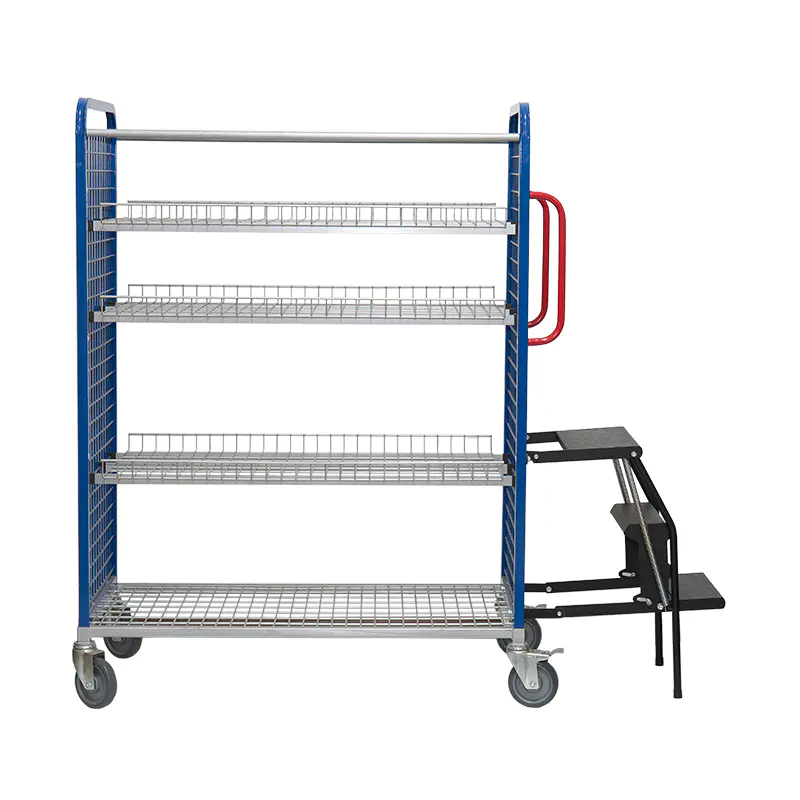
Product specification:This Warehouse wire mesh Multi-Tier Order Picking Trolley adopts a chassis and side panel structur...
See Details -
Foldable pallet cages are an important tool in factory logistics. They play an important role in transportation, distrib...
See Details -
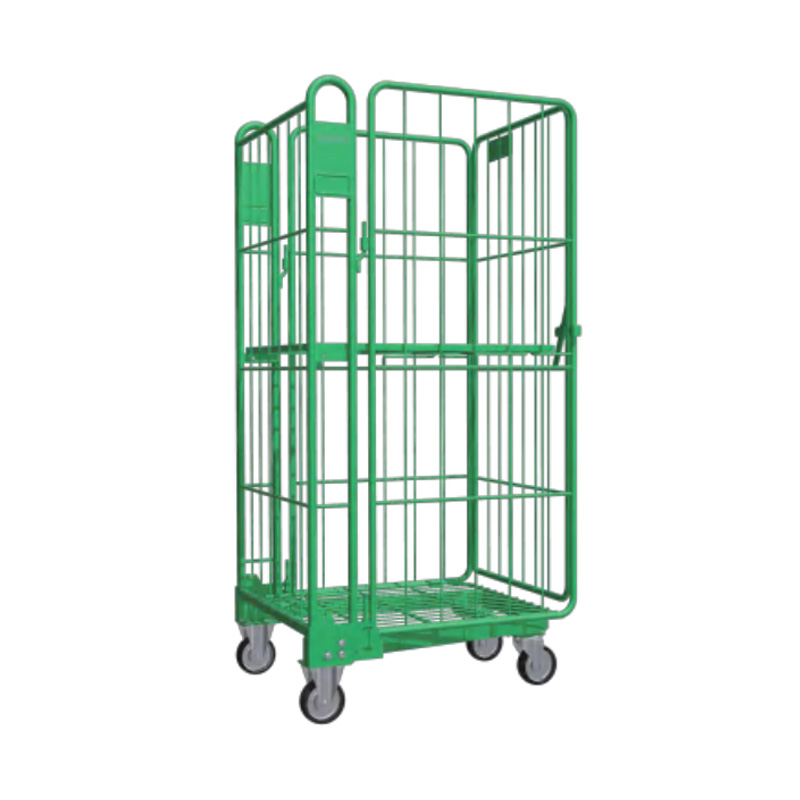
Product specification:The chassis is made of a square tube frame, with a bottom metal sheet tray that can be folded up a...
See Details -
Stacking rack, also known as Qiaogu rack or stacking rackIt is a transportation and storage device derived from pallets ...
See Details -
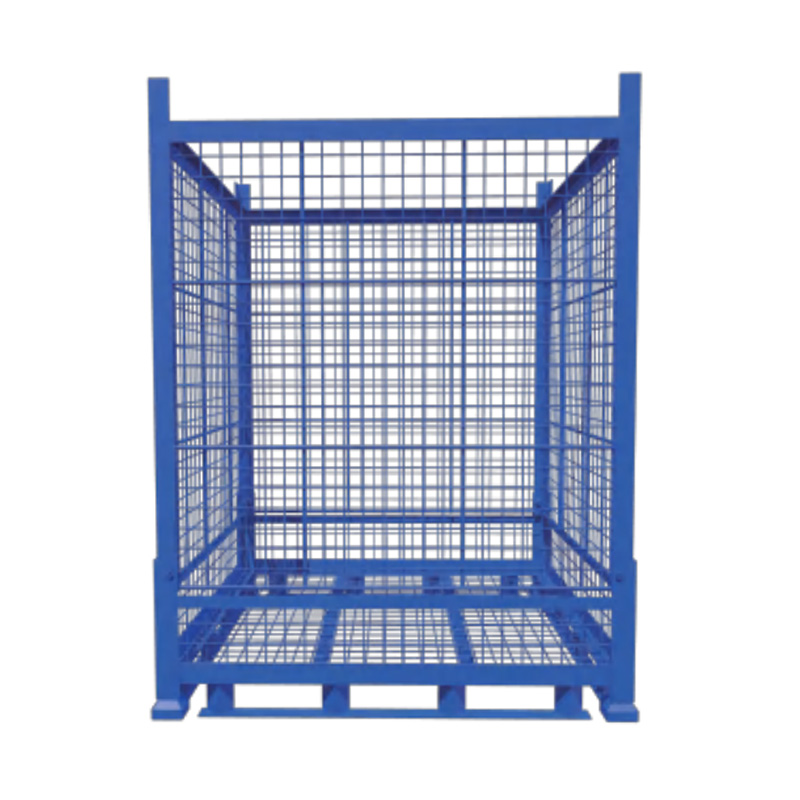
Product specification:Container structure made of L-Type plate frame with 50×50 wire mesh, with base support.Surface tre...
See Details

Information
-
Building B5, No. 138, Weixi Road, Weixi Village, Weitang Town, Xiangcheng District, Suzhou City, China.
-
Tel:
+86-13862140414
+86-13951110334 -
Phone: +86-512-65905480
