

 Español
 русский
 عربى
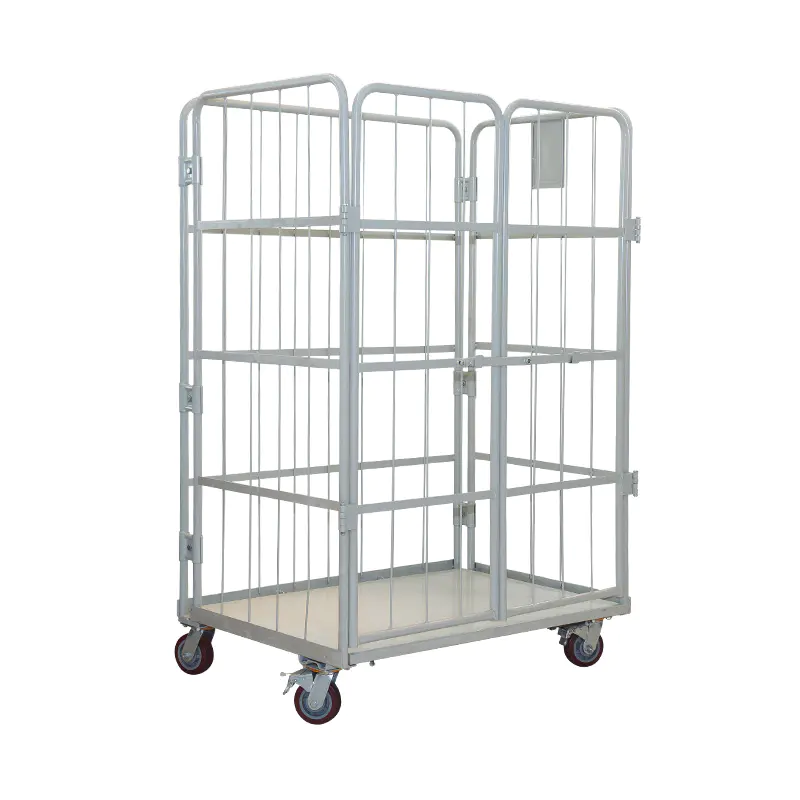
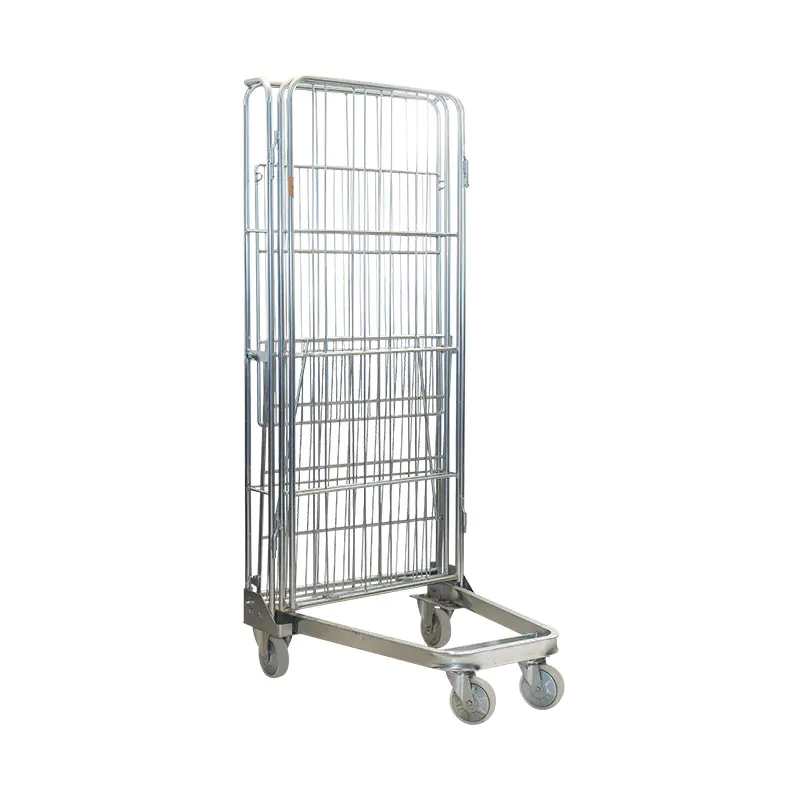

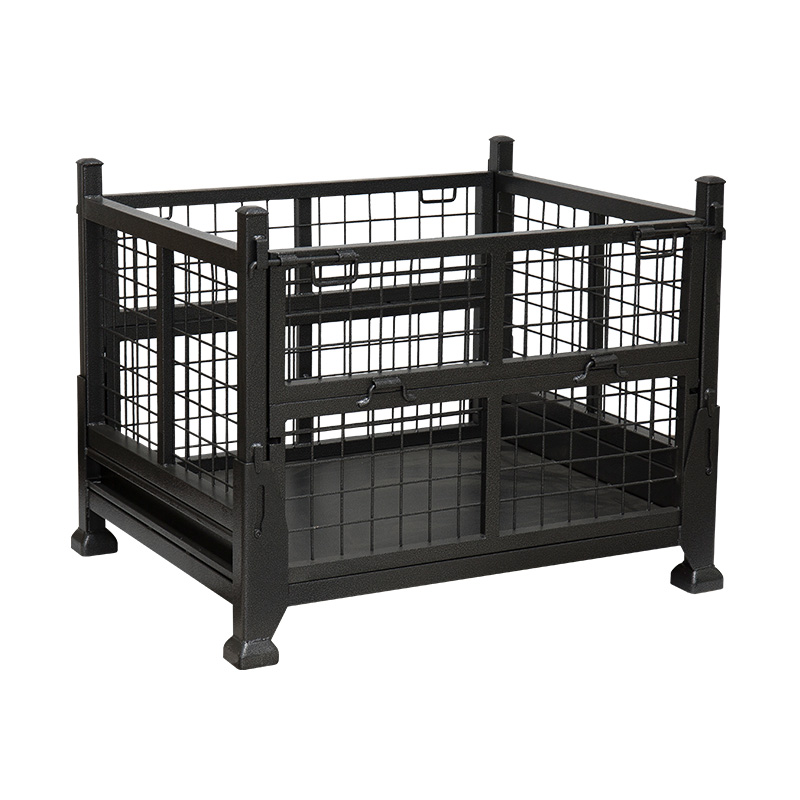
Warehouse handling efficiency depends on more than the speed of individual workers or the capacity of material handling equipment. The way goods are collected, transferred, temporarily stored and prepared for dispatch also determines how efficiently a distribution operation performs. In facilities where products move frequently between storage areas, picking stations, sorting zones and loading bays, selecting the right transport equipment can make a measurable difference to daily workflows.
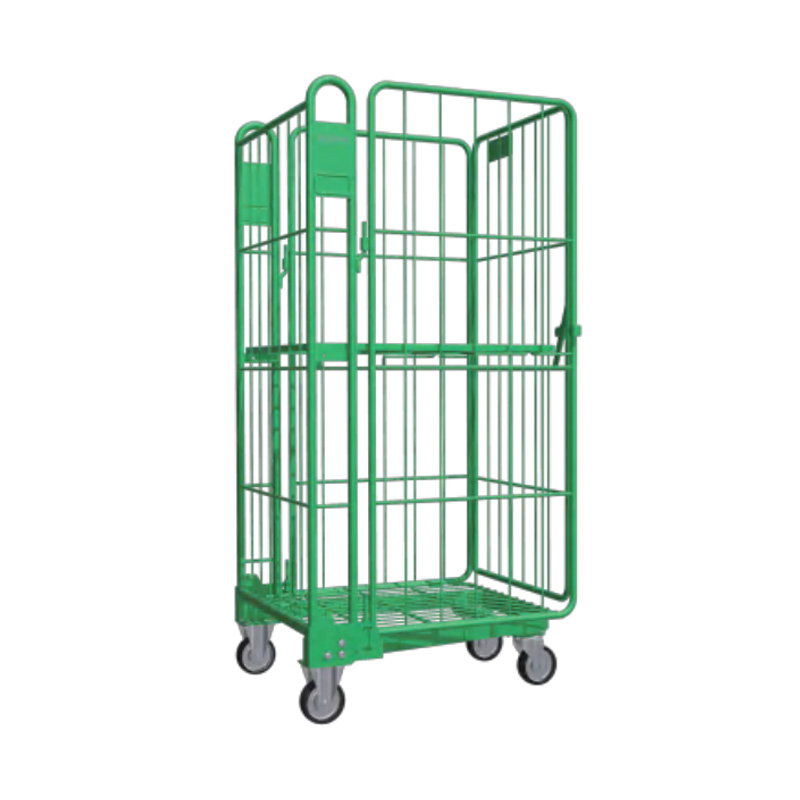
A z shaped zinc mobile roll container cage trolley is designed to support these requirements through a combination of mobile handling, vertical storage capacity and a space-conscious structural configuration. Its Z-shaped frame allows compatible empty containers to nest together, reducing the floor space required for equipment storage when the trolleys are not in use. When loaded, the cage structure provides a defined enclosure for moving goods through different warehouse operations.
Compared with conventional fixed storage equipment, mobile roll containers allow products to travel with their handling unit. This can reduce unnecessary transfers between separate containers and improve coordination between warehouse personnel. The zinc-plated metal construction also provides a practical surface finish for equipment that is repeatedly handled in busy logistics environments.
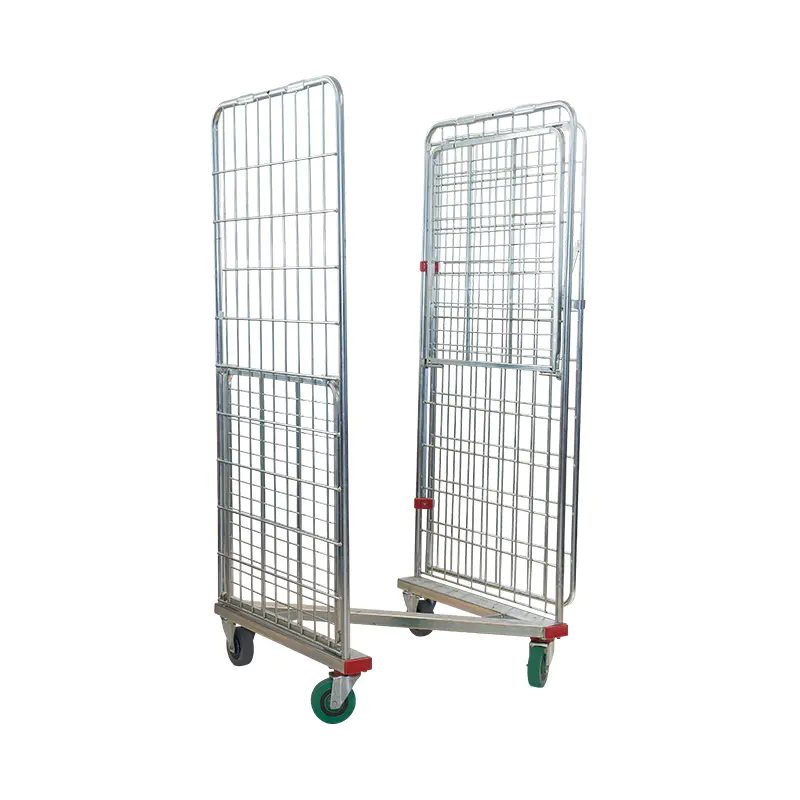
Understanding the Z Shaped Roll Container Design
The structural configuration of a roll container affects how it performs during loading, movement, temporary storage and equipment return. A Z-shaped roll container combines an enclosed metal frame with a geometry intended to make empty units more space-efficient. Understanding the relationship between these design elements helps warehouse operators determine whether this equipment suits their handling requirements.
How the Z-shaped frame works
The defining characteristic is the frame geometry. Rather than relying entirely on a conventional straight-sided configuration, the Z-shaped structure is arranged to allow compatible empty containers to fit into one another. This nesting arrangement reduces the amount of unused floor space occupied by returned or temporarily idle equipment.
During operation, the container functions as a mobile cage. Goods are placed within its enclosed loading area and transported using the installed wheel assembly. The frame helps keep grouped items within a defined handling boundary, while the base supports the load during movement.
The geometry also influences the equipment return process. After goods have been unloaded, empty units can be collected and nested together. This is particularly relevant to distribution operations where large numbers of containers return from delivery routes, retail locations or internal warehouse departments.
Metal Frame
Provides the main supporting structure and establishes the enclosure for grouped goods during transportation.
Z-shaped Geometry
Allows compatible empty units to nest, helping reduce the footprint of stored return equipment.
Mobile Base
Supports the load and enables movement between receiving, picking, sorting and dispatch areas.
Protective Surface
Zinc plating provides a metallic protective finish suitable for routine warehouse equipment handling.
Why nesting capability matters
Traditional roll containers can occupy a considerable amount of space even when they are empty. Their frames, wheels and fixed structural dimensions determine the minimum area needed for storage. When a warehouse handles hundreds of mobile units, the cumulative footprint can become a practical space management issue.
A nestable design changes this situation by allowing compatible containers to be arranged in a compact group. Instead of maintaining a separate full-sized parking position for every empty unit, operators can consolidate returned equipment into designated storage locations.
This arrangement is particularly useful in operations with fluctuating container demand. During peak periods, more units may be required for order preparation and distribution. During quieter periods, surplus equipment can be nested and stored without occupying the same floor area as fully deployed containers.
Nesting performance depends on the actual frame geometry, wheel arrangement, base design and clearance between compatible units. Warehouse planners should confirm the permitted nesting direction and practical stacking depth before allocating storage space.
How Nestable Roll Containers Improve Warehouse Space Utilization
Floor space is a limited resource in most warehouses. Storage racks, picking aisles, packing stations, safety routes and loading areas all compete for available space. Mobile handling equipment must therefore be considered not only in terms of its loaded operating footprint but also in terms of the space it occupies when idle.
The Z-shaped configuration addresses the second requirement. By nesting empty containers, a warehouse can organize returned equipment within a smaller designated area. This creates more flexibility when arranging temporary storage zones and managing equipment circulation.
Reducing the empty-container parking area
Consider a distribution facility that operates 100 mobile roll containers. If each empty unit requires an individual parking position, the facility must reserve a relatively large area for equipment that is not currently transporting goods. A nestable arrangement allows several compatible units to occupy a shared storage zone.
The benefit is not limited to floor area. A more compact return area can also simplify visual management. Personnel can identify available equipment more easily, consolidate empty units and maintain clearer access around loading and picking areas.
Relative Floor Space Required for Empty Equipment
Conceptual comparison using a conventional single-unit parking arrangement as the reference.
Creating more flexible operating zones
Space savings become more useful when they are connected to warehouse layout decisions. A compact empty-container area can help operators maintain separation between different activities, including:
- Receiving zones for incoming products and returned transport equipment.
- Order picking areas where loaded mobile containers are temporarily staged.
- Dispatch areas where grouped orders are prepared for outbound transportation.
- Return equipment zones where empty cages are collected, inspected and nested.
- Shared circulation routes that require sufficient clearance for workers and handling equipment.
For facilities with limited expansion opportunities, improving the arrangement of idle equipment can be more practical than introducing additional storage infrastructure. However, nesting areas should remain separate from emergency exits, pedestrian walkways and designated forklift routes.
Improving Internal Material Handling and Transportation
A warehouse handling process usually involves several connected activities. Goods arrive at receiving, are identified and sorted, transferred to storage or picking locations, consolidated into orders and eventually moved to dispatch. Every transfer creates an opportunity for unnecessary handling, delays or product misplacement.
A mobile warehouse cage trolley can support a more continuous movement process by allowing products to remain in the same transport unit across several stages. Rather than moving goods individually between separate temporary containers, employees can transfer a loaded cage to the next operating area.
Reducing repeated product transfers
Repeated handling can increase labor requirements and create additional opportunities for damage. For example, an order assembled on a temporary pallet may need to be transferred into another container before dispatch. If the product dimensions and order composition are compatible with a roll cage, the initial collection unit may also serve as the transport unit.
This approach can reduce unnecessary repositioning. It is particularly useful for mixed orders containing several product types, provided the load can be safely arranged and restrained within the container.
Supporting movement between warehouse departments
Mobile roll containers can be assigned to defined routes between operational zones. A cage collected from a picking station can move to a checking area, then to packing or dispatch without requiring the goods to be unloaded at every stage.
The container also provides a visible boundary for a particular batch, order or destination. Where identification labels are used, employees can associate the handling unit with the relevant order information and reduce confusion between different product groups.
Material Movement with Mobile Roll Containers
A continuous handling sequence from receiving to outbound dispatch.
Improving order identification and traceability
In multi-order distribution environments, the physical separation of goods is important. A roll cage can act as a temporary holding unit for a specific order group, delivery route or product category. Labels, destination cards or other identification methods can be attached according to the frame design.
When the same unit remains associated with a particular handling task, employees can more easily identify which products belong together. This does not replace inventory management software or barcode-based tracking, but it can support the physical organization of goods and reduce the likelihood of accidental mixing.
Making internal transport more predictable
Fixed movement routes can help warehouse managers coordinate employee responsibilities and equipment availability. For example, a group of loaded cages may move from picking to checking at scheduled intervals, while another group returns to the picking zone after unloading.
Predictable movement patterns can make congestion easier to identify. If loaded cages repeatedly accumulate at one transfer point, managers can investigate the cause, such as insufficient checking capacity, poor staging arrangements or an imbalance between picking and dispatch activities.
How Roll Container Trolleys Affect Warehouse Productivity
Warehouse productivity should be assessed through the entire handling process rather than a single activity. A trolley that moves smoothly but occupies excessive storage space may solve one problem while creating another. Likewise, a highly compact container that is difficult to load may reduce the practical benefits of its nesting design.
For this reason, operators should evaluate mobile cage trolleys through several connected performance indicators, including handling time, transfer frequency, equipment availability, storage footprint and order preparation efficiency.
Handling time and movement efficiency
One practical indicator is the time required to move a defined group of goods between two operating zones. A mobile cage can help simplify this activity by consolidating products into one transport unit. However, the actual time savings depend on route distance, floor conditions, load weight, wheel performance, operator experience and congestion.
The following conceptual comparison illustrates how an operation might assess several handling activities before and after introducing a more coordinated mobile-container process.
Relative Handling Time by Operational Activity
Comparison based on a hypothetical baseline of 100 index points.
Equipment availability and utilization
Equipment utilization describes how effectively available containers are being used during operating hours. If too many units remain empty in working areas, the warehouse may experience congestion. If too few units are available at picking stations, employees may wait for equipment before preparing orders.
A nestable mobile roll container can help improve the management of this equipment cycle. Empty units can be consolidated into a designated return zone, while operational units remain available for active handling tasks.
Managers can monitor the following indicators:
- Number of containers available at the beginning of each shift.
- Number of loaded containers moving through the facility.
- Average time between unloading and equipment reuse.
- Number of containers waiting in picking and dispatch areas.
- Frequency of equipment shortages or unnecessary accumulation.
Reducing unnecessary handling labor
Labor efficiency is influenced by the number of physical actions required to complete an order. If workers repeatedly transfer products between temporary storage units, additional handling time is introduced without necessarily adding value to the order.
Using a suitable mobile container as a common handling unit can simplify the movement sequence. Employees can focus on picking, checking and preparing goods rather than repeatedly reorganizing the same items for different transport stages.
Nevertheless, the equipment should match the goods being handled. Oversized products, unusually heavy loads or fragile items may require dedicated handling equipment, internal dividers or additional protection. The use of a cage trolley should be based on the actual characteristics of the goods rather than a general assumption that all products can be transported in the same way.
Why Zinc Plating Matters for Roll Cage Trolleys
The surface finish of a metal roll container is an important consideration because the equipment is repeatedly exposed to handling, contact with other units and routine warehouse conditions. Zinc plating provides a metallic protective coating to the underlying steel and is commonly used for metal equipment that requires surface protection.
Surface protection during routine warehouse use
Warehouse equipment frequently experiences contact with floors, loading platforms, adjacent containers and handling accessories. A zinc-plated finish helps protect the steel surface against corrosion under suitable operating conditions.
Its practical performance depends on coating quality, preparation, coverage and the environment in which the equipment is used. Damaged areas, deep scratches and exposed edges should be inspected because local coating damage can reduce protection at those locations.
Maintenance and inspection requirements
Routine maintenance should focus on the parts most directly exposed to movement and loading. Although the metal frame is the main structural component, wheels, joints and fastening points also influence the overall reliability of the trolley.
Inspect for deformation, cracks, loose connections and visible surface damage.
Check for scratches, coating loss, corrosion and damaged contact areas.
Check rotation, fastening security, wear and the accumulation of debris.
Look for bending, loose components and conditions that could affect load stability.
Matching the finish to the operating environment
Not all warehouses have the same environmental conditions. Dry indoor distribution centers have different requirements from facilities exposed to high humidity, frequent washing or outdoor storage. Zinc plating should therefore be evaluated against the expected exposure conditions.
Where equipment is regularly exposed to moisture, operators should confirm the suitability of the coating and establish appropriate cleaning and drying procedures. Zinc plating should not be treated as a guarantee of corrosion resistance in every environment.
For procurement teams, useful questions include whether the coating covers the relevant frame surfaces, how coating damage is inspected and whether the proposed finish is appropriate for the intended service conditions.
Z Shaped Roll Containers vs Conventional Roll Cage Trolleys
Different roll container structures serve different operational purposes. A conventional roll cage trolley may be suitable for straightforward transportation and storage, while a Z-shaped model places additional emphasis on nesting empty units. Neither configuration is automatically better for every warehouse.
The selection should be based on the balance between loaded operating requirements, empty-container storage, handling routes and the available space within the facility.
| Evaluation Factor | Z-shaped Roll Container | Conventional Roll Cage |
|---|---|---|
| Empty Storage | Designed for nesting compatible units | Depends on frame design and configuration |
| Floor Space | Can reduce idle equipment footprint | May require more individual parking space |
| Loaded Transport | Suitable for grouped goods and internal movement | Suitable for general cage transportation |
| Equipment Return | Supports consolidated empty-unit storage | Return arrangement depends on the model |
| Design Priority | Space-efficient nesting and mobility | General enclosed transportation |
| Selection Focus | Nesting compatibility and load requirements | Capacity, access and storage arrangement |
Comparing operational characteristics
A broader comparison can help procurement teams identify which design characteristics deserve the most attention. The following radar diagram uses an illustrative qualitative assessment to demonstrate how different priorities may be evaluated. It is not a measured performance test of specific products.
Illustrative Structural Performance Comparison
Relative evaluation based on common warehouse selection priorities.
When a Z-shaped configuration is more suitable
A Z-shaped roll container deserves consideration when empty equipment accumulates frequently and storage space is limited. It is also relevant to operations where containers are repeatedly returned after delivery, consolidated and prepared for another handling cycle.
Typical situations include:
- Distribution centers handling high volumes of reusable transport containers.
- Retail supply operations with regular delivery and return cycles.
- Warehouses with limited space for empty equipment parking.
- Logistics facilities that organize goods into mobile order groups.
- Internal transport systems with clearly defined equipment collection areas.
When a conventional roll cage may be sufficient
A conventional configuration may be adequate when equipment is used primarily for one-way internal transfers, when empty units can be stored without space constraints or when the goods require a particular loading arrangement that is not compatible with a nesting frame.
Other considerations include shelf integration, access requirements, load dimensions and whether the container needs additional doors, removable panels or specialized internal supports.
Applications Across Warehousing and Distribution Operations
The usefulness of a mobile roll container depends on the relationship between its structure and the movement pattern of the goods. A Z-shaped cage trolley is particularly relevant when products are collected, transported, unloaded and returned through a repeated handling cycle.
Distribution Centers
Loaded containers can be assigned to different delivery routes or order groups. After unloading, empty units can be collected and nested within a designated return area.
Outbound DistributionRetail Warehousing
Grouped merchandise can be transferred between storage, order preparation and dispatch areas. Mobile units help keep different product groups physically organized.
Retail ReplenishmentE-commerce Fulfillment
Roll cages can serve as temporary order collection and sorting units where products are grouped by destination, shipping batch or downstream handling requirement.
Order FulfillmentManufacturing Logistics
Compatible components, semi-finished goods and production supplies can be transferred between designated workstations without repeated changes of handling unit.
Internal SupplyThird-Party Logistics
Reusable transport units can support goods consolidation and movement across different warehouse processes, especially where equipment returns are frequent.
Logistics OperationsCross-Docking Facilities
Goods can be grouped into mobile units for short-term staging and onward transfer, helping reduce unnecessary movement between temporary holding locations.
Transfer OperationsApplication in retail replenishment
Retail replenishment requires goods to move from a central warehouse to individual stores or designated sales areas. Products are often grouped according to store destination, department or delivery sequence.
A mobile cage trolley can help maintain these groups during internal transportation and dispatch preparation. Once the merchandise has been removed at the destination, the empty unit can enter a return process. Where multiple units are collected, nesting helps reduce the volume of space needed for their temporary storage.
Application in e-commerce fulfillment
E-commerce warehouses often process a large number of orders with different product combinations. Mobile containers can support order consolidation by providing a physical boundary for goods that are waiting for checking, packing or dispatch.
For facilities using batch picking, containers may be assigned to different order groups or shipping destinations. This approach can simplify the movement of collected products between work areas, provided the container design is suitable for the product size and picking method.
Application in manufacturing logistics
Manufacturing facilities also rely on the organized movement of materials between production, inspection, temporary storage and assembly areas. A mobile roll container can support these transfers without requiring every group of components to be placed on a separate stationary storage platform.
However, manufacturing environments may introduce additional considerations. Component weight, surface protection, cleanliness requirements and the need to separate different production batches should all be assessed before selecting a suitable cage structure.
How to Select the Right Mobile Warehouse Cage Trolley
Choosing a roll container should begin with an analysis of the actual warehouse operation. The external appearance of two cages may be similar, but differences in frame dimensions, loading area, wheel arrangement and nesting compatibility can affect their suitability.
Procurement teams should establish a technical requirement list before comparing available equipment. This makes it easier to identify whether the proposed container can fit existing aisles, accommodate the intended products and operate safely within the facility.
1. Evaluate the load dimensions and weight
The first consideration is the size and weight of the goods being transported. The internal loading area should accommodate the largest expected product group without excessive overhang or unstable placement.
Load capacity should be confirmed through the supplier's documented specifications. Buyers should distinguish between the rated load of the base, the structural capacity of the frame and the permitted operating conditions of the complete trolley.
2. Check the frame structure and nesting compatibility
The Z-shaped structure should be evaluated for dimensional consistency and practical nesting performance. Buyers should confirm how the containers fit together, whether the nesting arrangement is easy to operate and whether the units remain stable when stored in a group.
Particular attention should be given to frame alignment, connection points and clearances. A container that is theoretically nestable may still be inconvenient if its design makes insertion or separation difficult during daily operations.
3. Select suitable wheels
Wheel configuration affects steering, movement resistance and maneuverability. The appropriate arrangement depends on the warehouse floor, route width, load characteristics and the frequency of directional changes.
Procurement specifications should address wheel diameter, wheel material, bearing arrangement, fixed or swivel positioning and the availability of braking mechanisms where required. The actual floor surface should be considered because uneven joints, ramps and thresholds can influence trolley movement.
4. Review the surface finish
For a zinc plated roll cage trolley, buyers should confirm the intended coating process and the expected service environment. Surface consistency, edge coverage and protection around joints are relevant inspection points.
If the trolley will be used in humid or frequently cleaned environments, the coating specification and maintenance requirements should be reviewed in greater detail.
5. Consider access and loading convenience
The loading and unloading process should be tested with representative products. Depending on the design, workers may need to access goods from the front, side or top of the cage.
For operations involving frequent picking, the opening arrangement can influence how easily employees retrieve products. The frame should provide a practical balance between product containment and access convenience.
6. Verify storage and transport dimensions
Both loaded and nested dimensions are important. Loaded dimensions determine whether the trolley can pass through aisles, doors and loading areas. Nested dimensions determine how many empty units can be accommodated within the available return zone.
Transport packaging should also be considered during procurement. Buyers should confirm the number of units per shipment, assembly requirements and whether wheels or other components are supplied separately.
Key Factors in Roll Container Selection
Illustrative allocation of evaluation attention for a general warehouse application.
Procurement checklist
- Confirm internal and external container dimensions.
- Verify rated loading capacity and operating limitations.
- Check the nesting direction and storage dimensions.
- Review wheel configuration and floor compatibility.
- Confirm frame material and surface treatment.
- Evaluate loading access and product containment.
- Check connection quality and structural consistency.
- Confirm packaging, assembly and shipment arrangements.
- Request relevant product drawings and inspection information.
Integrating Roll Container Trolleys into Warehouse Workflows
Introducing mobile roll containers is not simply an equipment replacement exercise. Their effectiveness depends on how they are assigned, stored, moved and maintained within the existing warehouse process.
A structured implementation plan can help avoid common problems such as equipment accumulation, unclear return responsibilities and incompatible movement routes.
Establish designated equipment zones
Warehouse managers should define where loaded and empty containers are allowed to remain. These zones should be clearly separated where possible to prevent unused equipment from occupying active picking or dispatch areas.
Empty containers should be returned to an identified collection point after unloading. Once inspected, compatible units can be nested according to the equipment's approved storage arrangement.
Assign responsibilities for equipment circulation
Every handling process should establish who is responsible for collecting, transferring, unloading and returning the equipment. Without clearly defined responsibilities, containers may remain at temporary locations long after their original task has been completed.
For larger facilities, equipment identification numbers or location labels can help monitor movement between departments. These methods are particularly useful when containers are shared by different teams or operating shifts.
Measure actual operating results
Before changing the handling process, managers should record baseline information. Useful measurements include average transfer time, empty equipment storage area, number of repeated product transfers and the frequency of container shortages.
After implementation, the same indicators can be reviewed under comparable operating conditions. This makes it possible to distinguish between improvements caused by equipment design and changes resulting from staffing, order volume or warehouse layout adjustments.
Review current material flow, empty equipment storage and handling bottlenecks.
Match container dimensions, load requirements and wheels to the warehouse environment.
Introduce defined transport routes, equipment zones and employee responsibilities.
Measure handling performance, nesting efficiency and maintenance requirements.
Manage loaded and empty container movement separately
Loaded containers and empty containers have different operational priorities. Loaded units require sufficient clearance, stable load arrangements and suitable routes to their destinations. Empty units require convenient collection, inspection and storage arrangements.
Separating these two movement patterns can improve the organization of busy handling areas. For example, loaded units may follow a route from picking to dispatch, while empty units return through a designated collection point before entering the nesting area.
Where space permits, a one-directional circulation arrangement can reduce unnecessary crossings between different equipment flows. Any layout change should still preserve pedestrian safety, emergency access and the operating requirements of other material handling equipment.
Safety Considerations for Mobile Roll Container Operations
Warehouse efficiency should never be evaluated separately from operational safety. A mobile cage trolley carries goods through areas shared by workers, other equipment and temporary storage activities. Poor loading practices, damaged wheels or inappropriate movement routes can create avoidable risks.
Maintain stable load arrangements
Goods should be distributed in a manner that maintains the stability of the container during movement. Heavy items should be positioned appropriately, and the overall load should remain within the manufacturer's stated capacity.
Products should not extend beyond the permitted loading area in a way that creates an obstruction or affects balance. Where loose items are transported, suitable internal separation or restraint methods should be considered.
Inspect the wheels and frame regularly
Wheels are among the most frequently used components of a mobile trolley. Excessive wear, debris accumulation, damaged bearings or loose mounting points can affect steering and movement.
The frame should also be checked for bending, damaged joints and other structural defects. Any container with a condition that could affect safe operation should be removed from service until it has been assessed and repaired appropriately.
Use suitable movement routes
Routes should accommodate the external dimensions of the loaded trolley and provide sufficient turning clearance. Areas with uneven flooring, narrow passages or frequent pedestrian crossings require particular attention.
Workers should receive appropriate instructions on pushing, pulling, turning and parking mobile containers. The permitted movement method should follow the equipment design and workplace safety procedures.
Control nesting and storage practices
Empty containers should be nested only in the intended direction and within the permitted arrangement. Operators should avoid forcing units together or using damaged containers that cannot align properly.
Storage areas should provide sufficient access for retrieving individual units without pulling unstable groups apart. Where the manufacturer specifies a maximum nesting arrangement, that instruction should be followed.
Measuring the Long-Term Value of a Nestable Roll Container
The long-term value of mobile warehouse equipment is determined by how consistently it supports daily operations. Initial purchasing cost is only one part of the evaluation. Maintenance frequency, equipment availability, storage requirements and the number of handling activities supported should also be considered.
Evaluate the complete equipment lifecycle
A practical assessment should cover the period from initial deployment to routine use, maintenance and eventual replacement. A container that remains in regular service and supports multiple handling stages may provide operational value beyond its original transportation function.
Conversely, equipment that is incompatible with the facility's routes or products may remain underused even if its purchase price is competitive. This is why a product trial using representative goods and real warehouse routes can be useful before a large procurement order.
Track key warehouse performance indicators
Area occupied by empty containers before and after nesting.
Time needed to move representative loads between work areas.
Availability of serviceable units during operating shifts.
Frequency of wheel, frame and surface-related maintenance.
Number of additional product transfers required per order group.
Records of equipment-related problems and unsafe conditions.
Use a controlled evaluation period
Where possible, the facility should test the new equipment in a representative operating zone. The evaluation should include normal workloads, peak activity periods and the complete return cycle.
During the trial, operators should record whether containers fit the intended products, whether they move conveniently through existing routes and whether nesting can be completed without unnecessary effort.
Feedback from employees is also important. Workers who regularly load, move and return the equipment can identify practical problems that may not be obvious from technical drawings alone.
Consider the relationship between space and labor
Space utilization and labor efficiency are connected but should be measured separately. A compact empty-container area may improve floor organization, while reduced transfer activities may influence labor requirements. These improvements should not automatically be treated as the same benefit.
For a reliable evaluation, warehouse managers should document the actual changes in storage area, transfer duration and employee activity. This provides a more useful basis for future equipment planning than relying only on estimated productivity improvements.
Choosing a Roll Container for More Efficient Warehouse Operations
Warehouse material handling requires equipment that supports both the movement of goods and the organization of the working environment. A Z-shaped roll container addresses these needs through a mobile cage structure and a nesting arrangement for compatible empty units.
Its potential operational value comes from several connected characteristics. The enclosed frame provides a defined space for grouped goods, the wheel assembly supports movement between warehouse areas, and the Z-shaped configuration helps consolidate empty equipment after use. Zinc plating provides a protective metallic finish for routine handling environments when properly specified and maintained.
For distribution centers, retail warehouses, e-commerce fulfillment facilities and manufacturing logistics operations, these characteristics can support more organized material movement. However, the actual benefit depends on load compatibility, equipment dimensions, floor conditions, operating procedures and the efficiency of the return process.
Before selecting a mobile warehouse cage trolley, procurement teams should review the complete handling cycle rather than focusing only on the appearance or initial price of the equipment. Evaluating loaded operation, empty storage, wheel performance, frame quality and maintenance requirements provides a more reliable basis for choosing the appropriate design.
When the equipment is integrated into a clearly defined workflow, a z shaped roll container can become part of a more coordinated warehouse handling system, supporting product organization, equipment circulation and space management across daily distribution activities.
Frequently Asked Questions About Z Shaped Roll Containers
Q1: What is a Z shaped roll container?
A Z shaped roll container is a mobile metal cage trolley designed with a Z-shaped frame configuration that allows compatible empty units to nest together. It is used to transport grouped goods and organize empty equipment in warehouses, distribution centers and logistics facilities.
Q2: How does a Z shaped roll container save warehouse space?
Its nesting structure allows compatible empty containers to fit into one another. This reduces the floor area needed to store unused equipment compared with arrangements where every container occupies an individual full-sized parking position. The actual space reduction depends on the product dimensions and permitted nesting arrangement.
Q3: What are the main applications of a mobile warehouse cage trolley?
Common applications include distribution centers, retail replenishment, e-commerce fulfillment, manufacturing logistics, cross-docking and third-party logistics operations. It can support the collection, transportation, sorting and temporary storage of grouped goods.
Q4: What are the advantages of zinc plated roll cage trolleys?
Zinc plating provides a protective metallic coating to the steel surface and helps improve resistance to corrosion under suitable operating conditions. It is important to inspect coating coverage and surface damage regularly, especially in humid or frequently cleaned environments.
Q5: Can a Z shaped roll container be used for heavy goods?
It can be used for goods within the specified load capacity of the complete trolley. Buyers should confirm the rated capacity, base construction, frame strength, wheel specifications and load distribution requirements before using it for heavy materials.
Q6: What should buyers check when purchasing a metal roll container with wheels?
Important considerations include internal dimensions, external dimensions, load capacity, frame construction, wheel configuration, surface treatment, nesting compatibility, loading access and maintenance requirements. Buyers should also confirm packaging and transportation arrangements.
Q7: Are Z shaped roll containers suitable for e-commerce warehouses?
They can be suitable for e-commerce facilities that use mobile units to collect, consolidate and transfer orders. Their usefulness depends on product dimensions, picking methods, order grouping requirements and whether the container can move efficiently through the facility's aisles.
Q8: How should empty roll containers be stored?
Empty containers should be collected in a designated equipment return area and nested according to the manufacturer's instructions. The storage location should provide sufficient clearance for safe insertion and removal while avoiding obstruction of pedestrian routes and emergency access.
Q9: What maintenance does a warehouse roll cage trolley require?
Regular maintenance includes checking frame alignment, welded joints, base condition, wheel rotation, wheel mountings and zinc-plated surfaces. Damaged units should be removed from service until inspected and repaired according to the manufacturer's recommendations.
Q10: How can a warehouse measure the efficiency of roll container trolleys?
Warehouse managers can monitor empty equipment storage footprint, transfer time, equipment availability, repeated product handling, maintenance frequency and equipment-related incidents. Comparing these indicators before and after implementation provides a practical assessment of operational changes.
Discuss Your Roll Container Requirements
Looking for a suitable mobile roll container for warehouse storage, internal transportation or distribution operations? Share your application requirements, loading needs and equipment dimensions to discuss an appropriate configuration.
Contact Us →