

 Español
 русский
 عربى
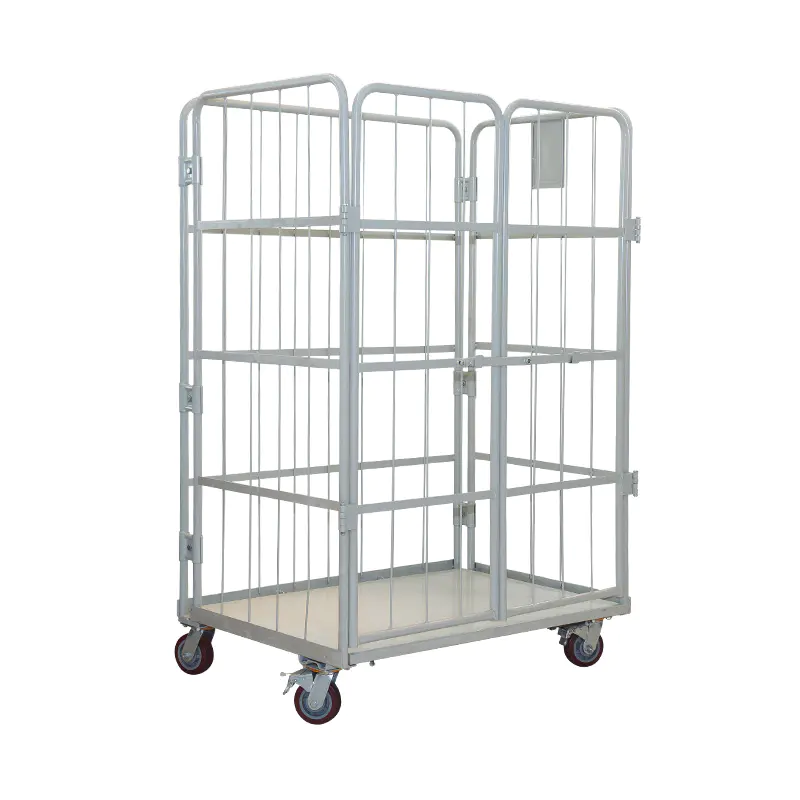

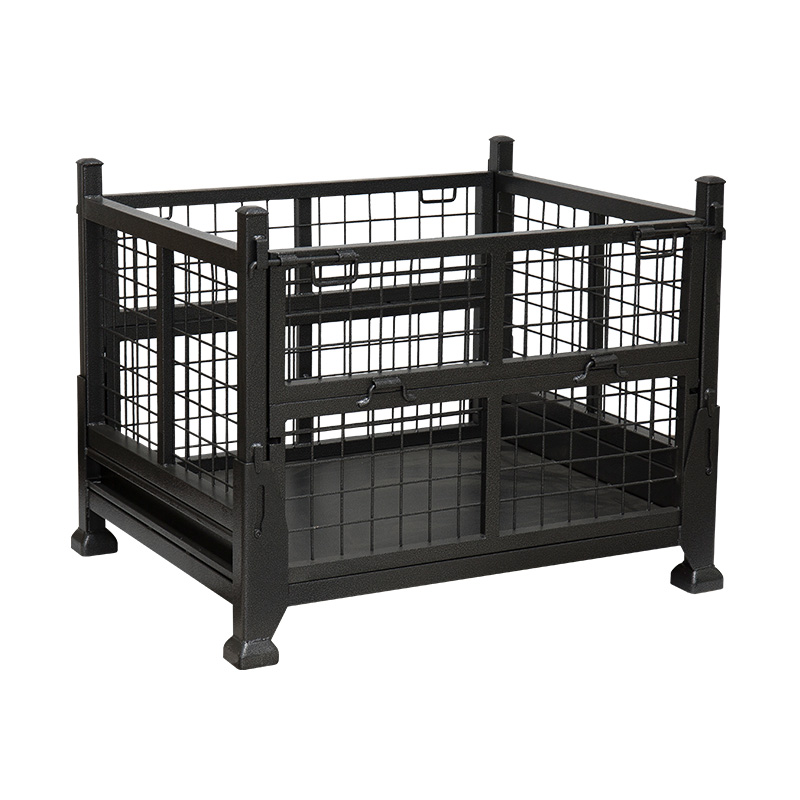
Warehouse storage efficiency depends not only on available floor space but also on how easily goods can be moved, sorted, accessed and transferred between operational areas. In facilities handling frequent order changes, mixed product categories and recurring distribution tasks, mobile storage equipment can help reduce unnecessary handling and improve the organization of goods.
A u-shaped warehouse storage rolling container cage trolley provides a practical combination of enclosed storage, wheeled mobility and accessible loading space. Its U-shaped structural arrangement makes it suitable for operations where goods need to be collected, temporarily stored and transported between different warehouse zones.
Unlike stationary shelving, a U shaped roll container can move with the goods throughout a handling process. This makes it useful for order consolidation, internal replenishment, dispatch preparation and distribution activities where storage and transportation are closely connected.
A mobile cage combines temporary storage with internal transportation, helping reduce repeated transfers between fixed storage locations and handling equipment.
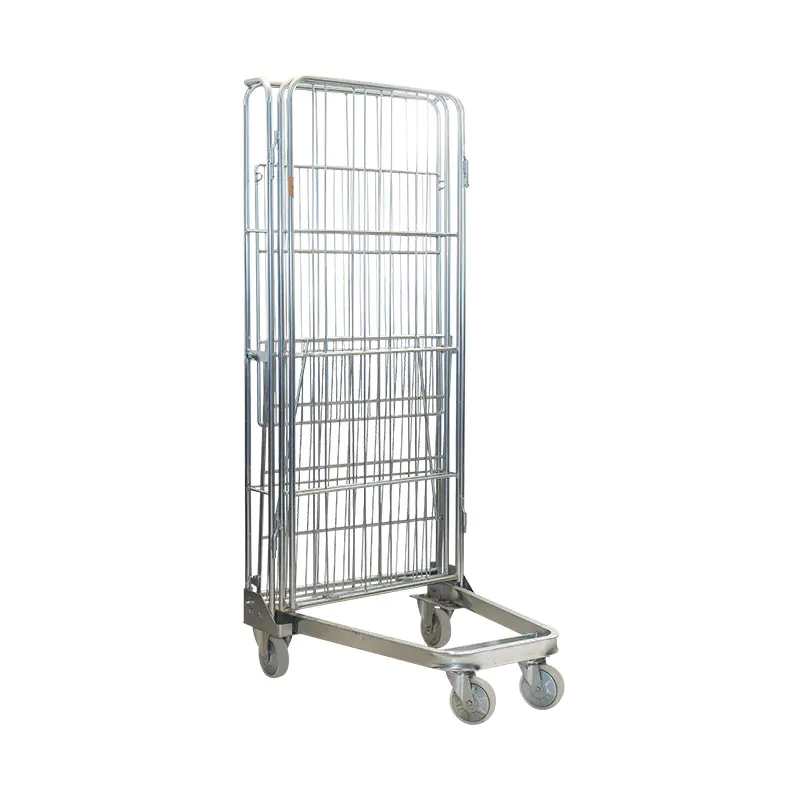
1. Understanding the U-Shaped Roll Container Structure
A U-shaped roll container is a mobile wire storage unit designed around a base platform, vertical side structures and a wheeled support system. The arrangement provides a defined storage area while maintaining an accessible opening for loading, unloading and product retrieval.
The structure is particularly relevant to warehouses that need to move different groups of products without transferring them into separate containers at every stage.
Key Structural Components
U-Shaped Frame
Vertical frame sections define the storage boundary and help keep goods organized during movement.
Base Platform
The bottom structure supports stored products and connects the main frame to the caster assembly.
Wire Mesh Panels
Mesh construction provides visibility of stored contents and allows operators to identify different loads more easily.
Wheel Assembly
Casters support movement between warehouse zones and help operators position the container at working locations.
Why the U-Shaped Configuration Matters
The open arrangement offers practical access to the stored load. Depending on the specific design, operators can approach the container from its open side to place or retrieve products. This can be helpful when handling cartons, packaged components and mixed inventory.
Compared with fully enclosed storage units, the U-shaped arrangement may also simplify access during picking and temporary staging. However, the actual loading direction and accessibility depend on the number of mesh panels, frame configuration and whether additional gates or retaining components are fitted.
The open side should face the intended loading or unloading direction. Before selecting a trolley, check frame rigidity, base support, caster mounting and the stability of the intended load.
2. How U-Shaped Roll Containers Support Warehouse Operations
Warehouse activities involve several connected stages, from receiving incoming goods to storage, order preparation and dispatch. A mobile storage cage can serve as a temporary holding unit across multiple stages, reducing the need to repeatedly transfer products between different storage arrangements.
Inbound Goods Handling
After receiving, products often need to be separated according to purchase orders, product types, destinations or inspection status. A warehouse storage cage trolley provides a defined space for temporarily holding these goods.
- Separate incoming products according to receiving batches.
- Keep inspected and pending-inspection goods in designated containers.
- Move sorted products toward storage or replenishment areas.
- Maintain visibility of stored items during internal transfers.
Order Picking and Consolidation
Order picking requires operators to collect products from different storage locations. A rolling container can accompany the picking process and hold collected items until the order is complete.
For warehouses processing multiple small orders, separate cages can be assigned to different orders, delivery routes or picking batches. This arrangement helps reduce the possibility of mixing products from unrelated orders.
Temporary Storage and Dispatch Preparation
Before dispatch, completed orders may wait in staging areas for checking, packing, labeling or loading. A mobile storage cage can keep these goods grouped while allowing them to be moved when the next operational stage is ready.
Illustrative workflow showing how a mobile cage can support multiple warehouse handling stages.
3. Storage and Distribution Applications Across Different Facilities
The application of a U-shaped roll container is not limited to conventional warehouse storage. Its combination of an accessible frame and mobile base makes it relevant to different environments where products need to be organized and transported within a facility.
E-Commerce Fulfillment Centers
Order picking operations frequently involve small products from multiple storage locations. Separate rolling cages can be allocated to picking batches, order groups or dispatch destinations. Operators can collect items in a mobile unit and move the completed batch toward packing stations.
Retail Distribution Warehouses
Retail distribution facilities often sort products according to store destinations, departments or replenishment requirements. A warehouse distribution trolley can hold grouped merchandise during internal movement and temporary staging before delivery.
Manufacturing and Assembly Facilities
Production areas require a steady supply of components, packaging materials and semi-finished products. Mobile cages can serve as intermediate storage units between material preparation, assembly and inspection stations.
Third-Party Logistics Facilities
Third-party logistics operations may handle products from different customers within the same facility. Individual cages can be allocated according to customer orders, shipment groups or destination categories to support controlled internal handling.
Supermarkets and Back-of-House Storage
Retail backrooms need to organize replenishment stock while maintaining access to frequently handled goods. A mobile cage can move packaged products from receiving areas to temporary storage and sales-floor replenishment points.
4. Operational Factors That Influence Material Handling Efficiency
The performance of a mobile cage depends on more than its ability to carry products. Its effectiveness is influenced by accessibility, load arrangement, wheel performance, aisle conditions and the frequency of movement.
The following chart presents an illustrative assessment of the operational factors that warehouse managers may consider when evaluating rolling storage equipment. These values are planning weights rather than measured performance results or product specifications.
The index illustrates a possible evaluation framework. Actual priorities should be adjusted according to load type, warehouse layout and operating procedures.
Load Stability and Weight Distribution
Products should be positioned evenly across the base platform, with heavier items placed lower whenever the load arrangement allows. Unbalanced loads can affect handling stability, especially when a container is pushed around corners or across uneven floor joints.
Wheel Selection and Floor Conditions
Casters influence the force required to move a loaded container and its ability to navigate different warehouse surfaces. Wheel material, diameter, bearing design, swivel configuration and braking arrangements should be evaluated against the intended operating environment.
Access and Product Visibility
The open side and mesh structure can make product identification and retrieval more convenient. Nevertheless, operators should consider whether small items require additional bins or internal dividers to prevent products from falling through openings or becoming mixed during movement.
5. Comparing Different Roll Container Configurations
Not every warehouse requires the same storage arrangement. U-shaped, fully enclosed and foldable containers serve different operational purposes. Selection should be based on loading methods, storage requirements, return logistics and available working space.
| Configuration | Main Characteristics | Typical Application | Key Consideration |
|---|---|---|---|
| U-Shaped Roll Container | Open loading arrangement with vertical retaining structures | Picking, staging and internal transfers | Open-side access and load retention |
| Fully Enclosed Roll Cage | More complete surrounding mesh structure | Grouped goods transportation and distribution | Access configuration and loading convenience |
| Foldable Roll Container | Collapsible frame arrangement | Return logistics and space-conscious storage | Folding mechanism and structural durability |
| Nestable Roll Container | Designed for compatible units to fit together when empty | Facilities with frequent empty-container returns | Nesting clearance and stacking arrangement |
Application-Based Comparison
The following radar diagram is an illustrative qualitative comparison. It helps explain how different configurations may prioritize access, containment, return storage and operational flexibility. It is not a laboratory test or a rating of any particular product.
Profiles are conceptual examples intended to illustrate design trade-offs. Actual characteristics vary by construction, dimensions and operating requirements.
For operations that prioritize accessible loading and mobile order staging, the U-shaped arrangement may be appropriate. Facilities that require more complete load containment may prefer enclosed structures, while operations with substantial empty-container returns may benefit from foldable or nestable designs.
6. Planning Warehouse Capacity and Equipment Requirements
Choosing a rolling wire container requires an understanding of how many units will be used, what products they will carry and how they will circulate through the facility. Selecting equipment based only on nominal dimensions or maximum load capacity may lead to practical problems during daily operations.
Calculate the Operational Quantity
Warehouse managers should examine the number of simultaneous handling tasks rather than simply counting daily orders. A facility may need separate containers for inbound receiving, picking, completed orders and dispatch staging.
Cartons, individual packages, components and irregular goods require different containment arrangements.
Turning clearance and storage positions influence the practical size and quantity of mobile cages.
High-frequency routes may require more available units to avoid waiting between operational stages.
Return routes and temporary parking areas should be considered in the equipment plan.
Illustrative Equipment Allocation
The following example shows how a warehouse processing several operational stages might distribute a fleet of 40 mobile cages. It is a hypothetical planning example, not a universal equipment ratio.
The example allocates 12 units to receiving, 10 to picking, 16 to dispatch staging and 6 as reserve units. Actual allocation depends on peak workload and turnaround time.
Evaluate Storage Density and Movement Space
Adding more mobile cages does not automatically improve warehouse efficiency. Excessive equipment can restrict aisle access, create congestion around workstations and complicate emergency access.
A practical layout assessment should include:
- Container parking locations near receiving and dispatch points.
- Clear travel paths between storage and picking zones.
- Turning areas for operators moving loaded cages.
- Separate positions for empty, loaded and maintenance-required units.
- Safe access around doors, ramps and shared pedestrian routes.
7. Material Selection, Surface Treatment and Durability
Warehouse rolling cages are exposed to repeated loading, unloading, pushing, turning and occasional contact with surrounding equipment. Their durability depends on frame construction, mesh attachment, base support, caster quality and surface protection.
Metal Frame and Mesh Construction
Metal structures provide the supporting framework for the storage unit. The frame should maintain its shape under the intended working load, while mesh panels should be securely connected to the surrounding structure.
Important construction details include:
- Consistent frame geometry and securely connected joints.
- Mesh openings appropriate for the dimensions of stored products.
- Reinforcement around high-stress connection points.
- A stable base platform with suitable support beneath the load.
Galvanized Surface Protection
A galvanized finish is commonly considered for metal storage equipment because it provides a protective zinc coating on the steel surface. The coating can help reduce corrosion exposure during normal warehouse use, although the actual level of protection depends on coating quality, thickness, surface preparation and operating conditions.
For facilities with moisture exposure, frequent cleaning or outdoor transfer routes, the selected surface treatment should match the working environment. Scratches, damaged coating and exposed steel should also be included in routine inspection procedures.
Caster Performance and Maintenance
Casters experience repeated mechanical stress, particularly when containers carry heavy or unevenly distributed loads. A suitable caster arrangement should support the intended load and provide predictable movement on the facility floor.
8. How to Evaluate Operational Performance Over Time
After introducing a metal roll cage with wheels, warehouse operators should monitor whether it improves actual handling activities. Evaluation should focus on observable operating results rather than relying only on equipment specifications.
Useful Warehouse Performance Indicators
This conceptual trend illustrates a possible gradual improvement in a normalized handling index after workflow adjustments. It does not represent measured data from a real warehouse or a guaranteed equipment result.
Key Indicators to Record
Record the time required to collect, move and stage a typical order batch.
Monitor how often products must be moved between temporary containers.
Compare the number of active units with idle and unavailable equipment.
Track damage associated with loading, movement and temporary storage.
Check whether assigned containers help maintain order separation.
Record caster replacements, structural repairs and surface damage.
Performance reviews should compare similar operating periods and account for changes in order volume, product mix and staffing. This helps distinguish improvements related to equipment and workflow organization from changes caused by other warehouse conditions.
9. Selection Checklist for Warehouse Buyers
When evaluating a logistics storage container, purchasing teams should connect technical requirements with the actual warehouse operating environment. A structured review helps prevent issues caused by unsuitable dimensions, incompatible wheels or insufficient load retention.
Confirm external dimensions, usable internal space and the required opening direction.
Check the rated capacity and confirm that it matches the intended load distribution and movement conditions.
Review material, wire arrangement, frame reinforcement and connection quality.
Confirm wheel dimensions, material, swivel arrangement, braking options and floor compatibility.
Evaluate corrosion protection according to storage conditions and cleaning requirements.
Determine whether empty containers need to be folded, nested or parked individually.
Understand maintenance requirements and the availability of compatible replacement casters and components.
Questions to Clarify Before Production
- Will the container carry cartons, loose products or mixed packaged goods?
- Will operators load products manually or through another handling process?
- Does the facility require fixed or removable mesh panels?
- Will the equipment be used mainly indoors or in partially exposed environments?
- Are specific dimensions required to fit existing warehouse aisles and workstations?
10. Frequently Asked Questions
Q1: What is a U-shaped roll container cage trolley?
A U-shaped roll container cage trolley is a mobile metal storage unit with a base platform, vertical retaining structures and wheels. Its open configuration provides convenient access for loading, unloading and internal warehouse movement.
Q2: What is the main difference between a U-shaped and fully enclosed roll container?
The main difference is the surrounding structure and access arrangement. A U-shaped container has an open side that can simplify loading and product retrieval, while a fully enclosed roll cage provides more complete surrounding containment for stored goods.
Q3: Can U-shaped roll containers be used for order picking?
Yes. They can hold products collected from different warehouse locations and keep picking batches organized during movement toward packing or dispatch areas. Separate units can also be allocated to different orders or delivery destinations.
Q4: Are U-shaped roll containers suitable for retail distribution?
They can be used for store replenishment, merchandise sorting and internal transfers in retail distribution facilities. The container dimensions and load capacity should match the products and movement routes involved.
Q5: What factors determine the load capacity of a warehouse storage cage trolley?
Load capacity depends on the frame structure, base platform, mesh construction, joints, caster assembly and overall design. Buyers should refer to the manufacturer's rated capacity and operating instructions rather than estimating capacity from appearance.
Q6: What type of wheels should be selected for a mobile storage cage?
Wheel selection should consider floor material, load weight, movement frequency, turning requirements and noise expectations. Swivel casters can improve maneuverability, while braking casters can help keep the trolley positioned during loading and unloading.
Q7: Is a galvanized roll cage trolley suitable for long-term warehouse use?
A properly applied galvanized coating can provide corrosion protection for steel components. Long-term suitability still depends on coating quality, working conditions, maintenance and whether the trolley is exposed to moisture or corrosive substances.
Q8: How can warehouses reduce damage to goods inside rolling wire containers?
Operators should distribute loads evenly, place heavier items toward the bottom, avoid exceeding rated capacity and select mesh openings suitable for the stored products. Additional bins or internal separators may be needed for small or fragile items.
Q9: How many mobile storage cage trolleys does a warehouse need?
The required quantity depends on order volume, the number of simultaneous handling tasks, container turnaround time, staging requirements and reserve equipment needs. Reviewing actual operating cycles provides a more reliable estimate than using a fixed quantity per warehouse area.
Q10: What should buyers confirm before purchasing a U-shaped warehouse cage trolley?
Buyers should confirm dimensions, rated load capacity, material, mesh construction, surface treatment, caster configuration, loading access and maintenance requirements. Compatibility with existing aisles, workstations and warehouse handling procedures is equally important.
Connecting Storage Organization with Internal Distribution
U-shaped roll container cages provide a practical way to combine temporary storage and mobile transportation within warehouse operations. Their accessible structure can support receiving, order picking, product consolidation and dispatch staging, particularly where goods need to move between several working areas.
The most suitable configuration depends on product dimensions, load requirements, warehouse layout, caster performance and return-storage arrangements. Evaluating these factors together helps purchasing teams select equipment that fits real operational processes.
Discuss Your Warehouse Storage Requirements →