

 Español
 русский
 عربى
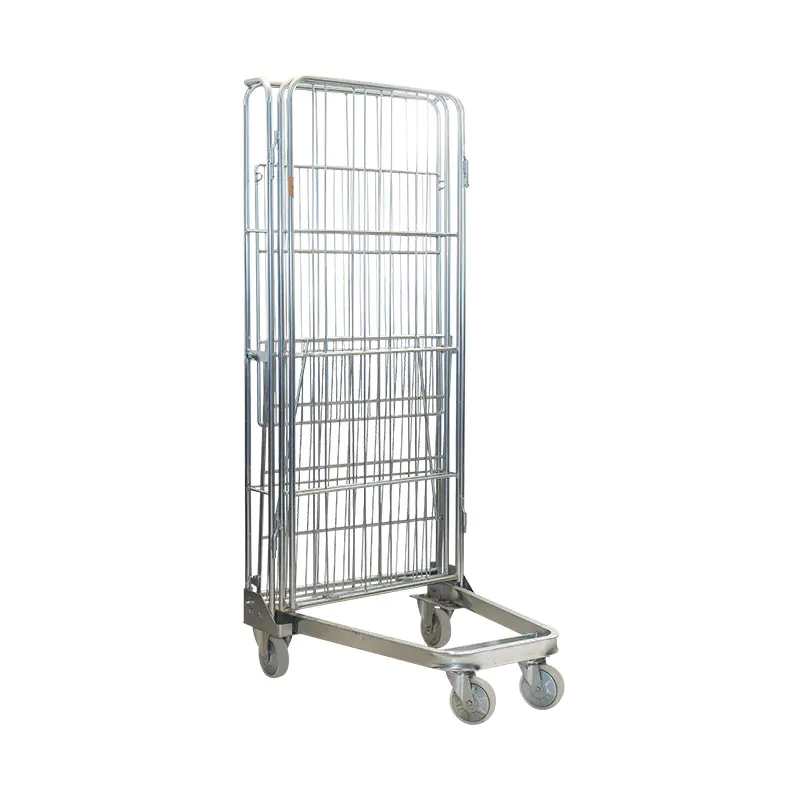

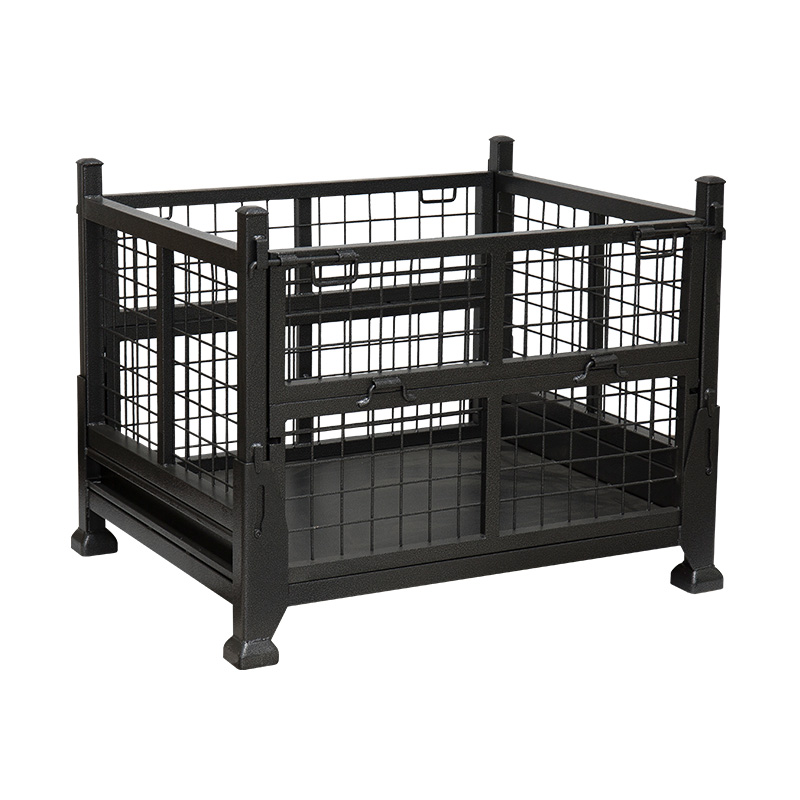
Why Warehouse Storage Space Requires a More Flexible Approach
Warehouse storage efficiency is not determined only by the amount of available floor space. The way storage equipment occupies space during active operations, temporary storage and return transportation also affects overall capacity. Fixed storage containers can be useful when goods remain in one location, but they may become inefficient when empty equipment accumulates after goods have been transferred or dispatched.
A galvanized nestable foldable roll container addresses this challenge through a combination of mobility, collapsible construction and space-conscious storage. It allows warehouse operators to use the container as a mobile handling unit when required and reduce its occupied volume when it is not in service.
This flexibility is particularly relevant to distribution centers, retail replenishment operations, manufacturing warehouses and returnable transport systems. Instead of treating empty containers as permanent storage fixtures, businesses can incorporate folding and nesting arrangements into their warehouse space management plans.
Active handling space, empty-container storage space and return transportation space should be evaluated together.
1. How Nestable and Foldable Structures Reduce Storage Requirements
The primary advantage of a collapsible roll cage trolley is its ability to change its storage configuration. Traditional rigid cages retain approximately the same external dimensions whether loaded or empty. Foldable models, by contrast, can be partially or fully collapsed according to their structural design.
Foldable Construction
Movable side panels can be folded inward or lowered when the container is empty, reducing the space occupied by its frame.
Nestable Arrangement
Compatible containers can be arranged together in a nested configuration, allowing empty equipment to occupy a more compact storage area.
Mobile Handling
Integrated wheels support movement between receiving, picking, staging and dispatch areas without requiring separate lifting equipment for every transfer.
These functions should be considered separately during equipment selection. Folding describes how the container structure changes, while nesting describes how multiple compatible units fit together. Some models provide both functions, but the actual storage arrangement depends on frame geometry, wheel positioning, side-panel construction and the manufacturer's specified nesting method.
Understanding the difference between folding and nesting
Its panels or frame components move into a more compact configuration.
Compatible empty containers fit together or partially overlap to reduce the space required for storage.
For warehouse planners, the most useful specification is not simply whether a product is described as foldable or nestable. It is the actual footprint of one empty unit and the combined footprint of a group of units in their designated storage configuration.
2. Comparing Space Occupancy in Different Storage Configurations
To understand the value of a space saving roll container, warehouse managers should compare three common arrangements: fully assembled empty cages, folded containers and nested container groups.
The following illustrative comparison uses a normalized storage-space index. It demonstrates the potential relationship between storage configurations rather than representing certified dimensions or measured performance from a specific product.
Relative Storage Space Occupancy
Illustrative index for comparing storage configurations
The comparison highlights why storage configuration matters. A folded container may occupy considerably less room than an assembled cage, while a compatible nested arrangement can further improve the utilization of a designated storage area.
Practical factors affecting actual space savings
- Container height: The height of the assembled side panels determines the vertical storage requirement.
- Folding direction: Inward-folding and outward-folding structures may require different clearance areas.
- Wheel arrangement: Casters and wheel brackets can affect how closely empty containers fit together.
- Storage quantity: Larger container groups may make nesting arrangements more beneficial.
- Operating clearance: Handling aisles and access space must remain available even when equipment is stored compactly.
3. How Galvanized Construction Supports Repeated Warehouse Use
Space efficiency is only one consideration when selecting a metal logistics cage. Warehouse equipment is repeatedly moved, loaded, unloaded and returned to storage. Its surface protection and structural durability therefore influence long-term operating performance.
Galvanized steel is commonly used in material handling equipment because its zinc coating provides a protective barrier against environmental exposure. This is particularly relevant in warehouses where containers may encounter moisture, frequent handling and occasional contact with other metal equipment.
Galvanized Steel Construction
Surface protection combined with a practical metal framework for repeated logistics handling.
The zinc coating helps protect the underlying steel from corrosion under suitable operating conditions.
The metal frame supports the container's side panels, base and handling components.
Routine inspection helps identify damaged coatings, loose fittings and deformation before they affect normal use.
What warehouse operators should inspect
| Inspection Area | What to Check | Operational Purpose |
|---|---|---|
| Steel frame | Deformation, cracks and loose joints | Maintain structural integrity |
| Galvanized surface | Coating damage and corrosion spots | Monitor surface protection |
| Folding components | Hinges, locking points and alignment | Ensure reliable folding operation |
| Wheels and casters | Rotation, wear and attachment condition | Support controlled movement |
| Base structure | Load-bearing condition and stability | Maintain safe handling |
Galvanized construction does not eliminate maintenance requirements. The protective coating can be damaged by impact, abrasion or unsuitable operating environments. Inspection frequency should reflect the handling intensity and environmental conditions of the facility.
4. Storage Efficiency Across Different Warehouse Operations
The practical value of a nestable roll cage depends on how frequently containers move between loaded and empty states. Operations with high return volumes and changing storage requirements generally have more opportunities to benefit from collapsible equipment.
Distribution Centers
Distribution facilities often receive, sort and dispatch large quantities of goods. After unloading, empty cages can be folded or nested in designated return areas, helping prevent them from occupying valuable staging and picking space.
Retail Replenishment
Retail supply chains use mobile containers to transfer merchandise from storage areas to store replenishment points. Once goods are removed, collapsible containers can be collected and prepared for return transportation.
Manufacturing Warehouses
Production facilities may use rolling containers for components, semi-finished goods and packaging materials. Folding empty units makes it easier to manage temporary storage during production changes.
Third-Party Logistics
Logistics providers frequently manage equipment circulating between multiple sites. A collapsible roll container can simplify the collection and consolidation of empty handling equipment.
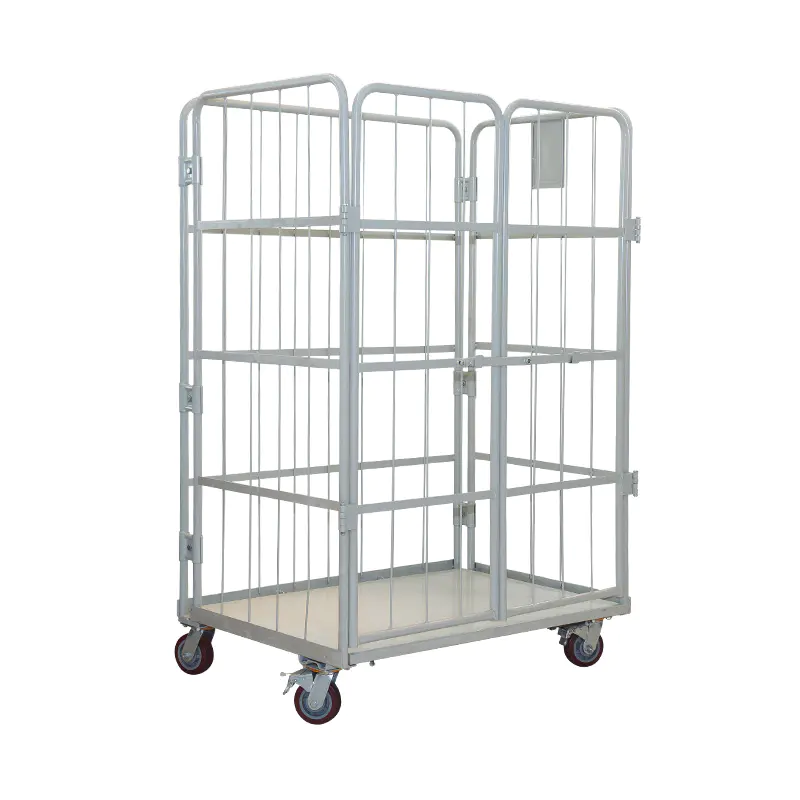
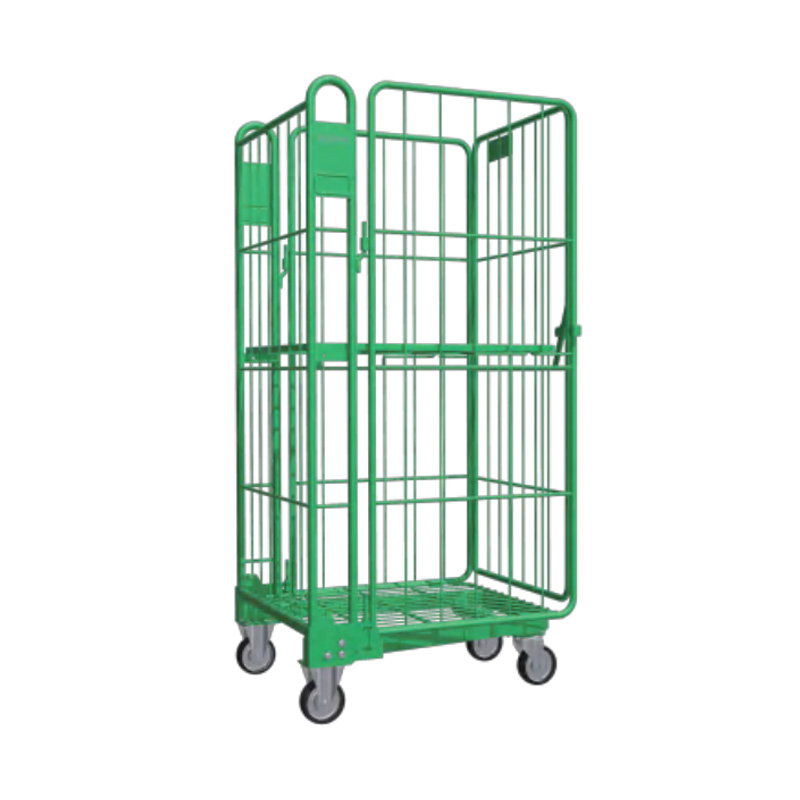
Mobile metal roll containers support goods movement, temporary storage and warehouse distribution activities.
These applications share a common operational pattern: the container needs sufficient capacity and stability during handling, but it should occupy less space when no longer carrying goods. This makes the empty-container management process an important part of warehouse planning.
5. Evaluating Storage Performance Through Operational Data
Warehouse managers should evaluate collapsible equipment using actual operational records rather than relying exclusively on advertised space-saving percentages. A useful assessment considers how many containers are in circulation, how long they remain empty and how much floor space is allocated to returned units.
Illustrative Empty Container Storage Trend
Comparison of storage-space requirements across a working week
The chart demonstrates a useful planning principle: even when the daily number of empty containers changes, a compact storage configuration can help keep the allocated storage footprint relatively stable.
Key indicators for warehouse space management
Floor area occupied by returned and unused containers.
Time required to convert an assembled container into its compact state.
Number of empty units consolidated in a return transport load.
Frequency with which containers move between active and storage states.
These indicators help identify whether a space saving roll container is producing practical benefits. For example, a container may have an effective folding design but require too much manual handling time. In this situation, the overall operational benefit should be assessed together with labor requirements.
6. Foldable Roll Containers and Returnable Transport Management
Empty equipment management is closely connected to reverse logistics. In a returnable transport system, containers travel from a warehouse to a distribution point, remain in circulation during goods handling and eventually return to their original facility or another designated collection location.
Rigid cages can consume substantial transportation volume when returned empty. Foldable and nestable designs provide another option by allowing compatible containers to be consolidated before dispatch.
Empty Container Return Workflow
A practical process for managing reusable warehouse cages
How to improve the return process
- Establish collection points: Designate specific areas for empty roll containers to prevent them from obstructing loading and unloading operations.
- Separate equipment by configuration: Group compatible container models together before folding or nesting.
- Inspect before consolidation: Identify damaged wheels, loose hinges and structural problems before placing units into storage groups.
- Standardize handling procedures: Train operators to follow the correct folding, locking and stacking instructions.
- Coordinate return schedules: Match container collection frequency with actual circulation requirements.
These measures can help reduce unnecessary handling and improve the consistency of reusable packaging operations. The actual transportation benefit depends on the vehicle dimensions, container design, permitted stacking arrangement and loading restrictions.
7. Comparing Roll Container Designs for Warehouse Applications
Not every warehouse requires the same type of mobile storage equipment. Rigid, foldable, nestable and stackable designs serve different operational purposes. Understanding their characteristics helps procurement teams select a suitable configuration instead of focusing on a single product feature.
Roll Container Design Comparison
Qualitative assessment across five operational considerations
| Design | Main Characteristic | Typical Application |
|---|---|---|
| Rigid roll cage | Fixed structure | Frequent loaded handling |
| Foldable roll container | Collapsible panels | Operations with regular empty returns |
| Nestable roll cage | Compact group arrangement | Facilities managing multiple empty units |
| Stackable storage cage | Vertical storage arrangement | Applications with approved stacking requirements |
A stackable storage cage should not automatically be treated as equivalent to a nestable roll container. Stacking generally involves placing one unit above another, whereas nesting involves fitting compatible units into one another or into a partially overlapping arrangement. The permitted configuration must be confirmed through the product's structural design and handling instructions.
8. Important Specifications to Check Before Procurement
Selecting a galvanized roll container requires more than checking whether the frame can fold. Procurement teams should examine its dimensions, construction, operating characteristics and compatibility with existing warehouse procedures.
Key Technical and Operational Considerations
Confirm external length, width and height in both assembled and collapsed configurations.
Determine how closely compatible empty units can be arranged and how many can be stored together.
Verify the rated working load and confirm that it matches the intended goods and handling conditions.
Review steel tube dimensions, wire mesh structure, base design and joint quality.
Confirm the galvanizing process and the applicable corrosion protection requirements.
Check caster diameter, wheel material, braking arrangements and compatibility with warehouse floors.
Evaluate operating clearance, locking reliability and ease of manual operation.
Check the shipping arrangement, assembly requirements and quantity per shipment.
Questions to clarify with the manufacturer
- What are the assembled and folded dimensions?
- Is the container designed for nesting, folding or both?
- How many empty units can be nested in one group?
- Does the nesting arrangement require removing or repositioning any components?
- Are locking mechanisms provided to secure movable panels?
- What maintenance is recommended for the wheels and folding components?
- Are customized dimensions or wheel configurations available?
Requesting drawings and sample handling demonstrations can help confirm whether the proposed design fits the actual warehouse layout. This is especially important when containers need to pass through narrow aisles, loading doors or automated handling areas.
9. Practical Methods for Maximizing Space Savings
Even a well-designed collapsible roll cage trolley cannot deliver its full potential if the warehouse lacks a consistent storage procedure. Equipment layout, operator training and return management all influence the final results.
Create Dedicated Empty-Cage Zones
Keep returned containers in designated areas close to unloading or collection points. This reduces unnecessary movement and prevents equipment from blocking active workspaces.
Standardize Container Orientation
Use consistent folding and nesting directions so that operators can consolidate units without repeatedly rearranging them.
Manage Equipment by Model
Separate containers with different dimensions or nesting mechanisms. Mixing incompatible designs can reduce storage density and create handling difficulties.
Review Storage Capacity Regularly
Monitor the number of returned units and adjust the allocated storage area according to actual circulation patterns.
It is also important to maintain safe access around stored containers. Compact storage should never compromise emergency access, pedestrian routes, equipment movement or the stability of the stored units. Follow the manufacturer's instructions and applicable workplace safety requirements.
10. Frequently Asked Questions About Nestable Foldable Roll Containers
Q1: What is a nestable foldable roll container?
A nestable foldable roll container is a mobile metal storage unit designed to carry and transport goods while allowing its structure to be folded or arranged with compatible empty units in a compact configuration. It combines mobile handling with more efficient empty-equipment storage.
Q2: How does a foldable roll container save warehouse space?
Its movable panels or structural components can be folded when the container is empty. This reduces the space occupied by unused equipment and makes it easier to organize returned containers in designated storage areas.
Q3: What is the difference between a nestable and a stackable roll cage?
A nestable roll cage is designed so compatible units fit together or partially overlap, reducing their combined storage footprint. A stackable cage is designed for vertical placement, subject to specified structural and safety requirements.
Q4: Why choose galvanized steel for a roll container?
Galvanized steel provides a zinc protective coating that helps reduce corrosion of the underlying steel. It is commonly used in material handling equipment that requires repeated movement and routine warehouse operation.
Q5: Can galvanized roll containers be used for returnable transport?
Yes. When their dimensions, load capacity and construction meet the transport requirements, they can be used to move goods between facilities and returned after unloading. Foldable or nestable designs can also simplify the consolidation of empty containers.
Q6: What determines the nesting capacity of a roll container?
Nesting capacity depends on frame geometry, container dimensions, wheel positioning, side-panel design and the clearance between compatible units. Manufacturers should provide the applicable nesting arrangement and dimensional information.
Q7: Are foldable roll containers suitable for all warehouse environments?
Not necessarily. Selection should consider floor conditions, handling frequency, load requirements, aisle dimensions and storage arrangements. Facilities with heavy-duty handling requirements should verify structural ratings and operating suitability before procurement.
Q8: What should buyers check when purchasing a galvanized nestable foldable roll container?
Important considerations include assembled and folded dimensions, nesting depth, load capacity, galvanized surface treatment, wheel configuration, folding mechanism, locking structure and packaging requirements. Sample inspections and technical drawings can help confirm suitability.
Making Empty Container Storage Part of Warehouse Planning
Efficient warehouse storage depends not only on how goods are organized but also on how handling equipment is managed between operating cycles. Foldable construction and nesting compatibility provide practical ways to reduce the footprint of unused roll containers, improve return logistics and keep working areas better organized.
When evaluating a galvanized nestable foldable roll container, buyers should consider its actual collapsed dimensions, nesting capacity, structural performance and compatibility with existing handling procedures. These factors provide a more reliable basis for evaluating long-term storage efficiency than product descriptions alone.
Contact Us for Product Information →