


 Español
 русский
 عربى
عربى
Don't hesitate to send a message
Search
Recent Post
Newsletter
How Regular Maintenance and Cleaning Extend the Life of Warehouse Racking Systems
Why Warehouse Racking Fails Before Its Time
Most racking systems are engineered to last well beyond a decade, yet many facilities replace sections after only three to five years of service. The gap between designed lifespan and actual lifespan almost never comes down to poor manufacturing. It comes down to how the structure is loaded, cleaned, and inspected once it is in daily use.
A structural steel frame under a warehouse roof faces a combination of stresses that are easy to underestimate: repeated impact from forklift traffic, dust and residue buildup that hides corrosion, uneven load distribution across beams, and humidity cycles that accelerate rust in coastal or high-moisture regions. None of these factors alone will bring down a rack quickly, but stacked together over months, they erode the safety margin engineers built into the original design.
Field observation: In multi-site audits of mid-size distribution centers, the majority of reported rack deformation traced back to unaddressed forklift contact damage that was never logged or repaired within the first 30 days of occurrence.
This is the core argument for treating rack maintenance as a scheduled operational task rather than a reactive one triggered only after a visible problem appears.
Pallet Rack Inspection Checklist: What to Look For
A consistent inspection routine catches small issues while they are still cheap to fix. The table below organizes the checklist by structural zone, since different components fail in different ways and at different rates.
| Zone | What to Check | Warning Sign | Suggested Frequency |
|---|---|---|---|
| Upright frames | Vertical alignment, base plate contact | Visible bowing, gap under base plate | Monthly |
| Beams and connectors | Deflection, locking pin engagement | Sagging beams, loose or missing pins | Monthly |
| Diagonal and horizontal bracing | Weld and bolt integrity | Cracked welds, sheared bolts | Quarterly |
| Floor anchors | Torque and concrete condition | Spinning bolts, cracked concrete | Quarterly |
| Wire deck and dividers | Mesh tension, support clip condition | Sagging mesh, missing clips | Monthly |
| Safety accessories | Row-end protectors, safety pins | Cracked guards, absent pins | Monthly |
A useful discipline is color-coded tagging: green for compliant, yellow for monitor-and-schedule-repair, red for immediate load removal. This visual system lets floor staff flag issues in seconds without waiting for a formal inspection report.
How to Clean Warehouse Racking Without Downtime
Cleaning racking is not cosmetic. Dust, packaging residue, and spilled product create a film that traps moisture against steel surfaces, which is one of the fastest paths to corrosion. A cleaning routine that fits inside normal operating hours is far more sustainable than an occasional deep clean that requires shutting down an aisle.
- Schedule cleaning by aisle rotation rather than facility-wide shutdown, so only one section is inaccessible at a time.
- Remove loose debris with a stiff brush or compressed air before applying any liquid cleaner, since wet debris is harder to fully remove.
- Use a neutral pH industrial degreaser on beams and uprights; avoid abrasive pads that scratch protective coatings.
- Pay special attention to base plates and floor anchor points, where residue accumulates and moisture pools.
- Dry surfaces thoroughly, particularly on wire deck and mesh divider components where water can sit in the weave.
- Log the cleaning date per aisle so the next inspection cycle can cross-reference cleaning history with any new damage.
Facilities running food-grade, pharmaceutical, or textile storage often need a shorter cleaning interval, since fiber lint and fine powders accelerate residue buildup on horizontal surfaces compared to general industrial goods.
Stillage Storage and the Role of Dividers
Stillage storage, where goods sit on stackable frames rather than fixed shelving, introduces its own maintenance considerations. Because stillages are moved frequently between storage and staging areas, their contact points wear faster than fixed rack components. A mesh divider or a set of wire deck dividers is often the first line of defense against product shift and edge damage during these moves.
| Divider Type | Best Suited For | Maintenance Note |
|---|---|---|
| Mesh divider | Loose parts, small components, mixed SKUs | Check for bent wire and loosened frame welds |
| Wire deck dividers | Palletized goods needing lane separation | Inspect clip retention and deck sag under load |
| Solid partition panels | Fragile or irregularly shaped items | Watch for panel warping in humid environments |
A well-chosen divider layout also reduces cleaning time, since it prevents small debris from migrating between storage lanes and collecting in corners that are difficult to reach with standard cleaning tools.
Choosing the Right Stacking Pallet Rack for Long-Term Durability
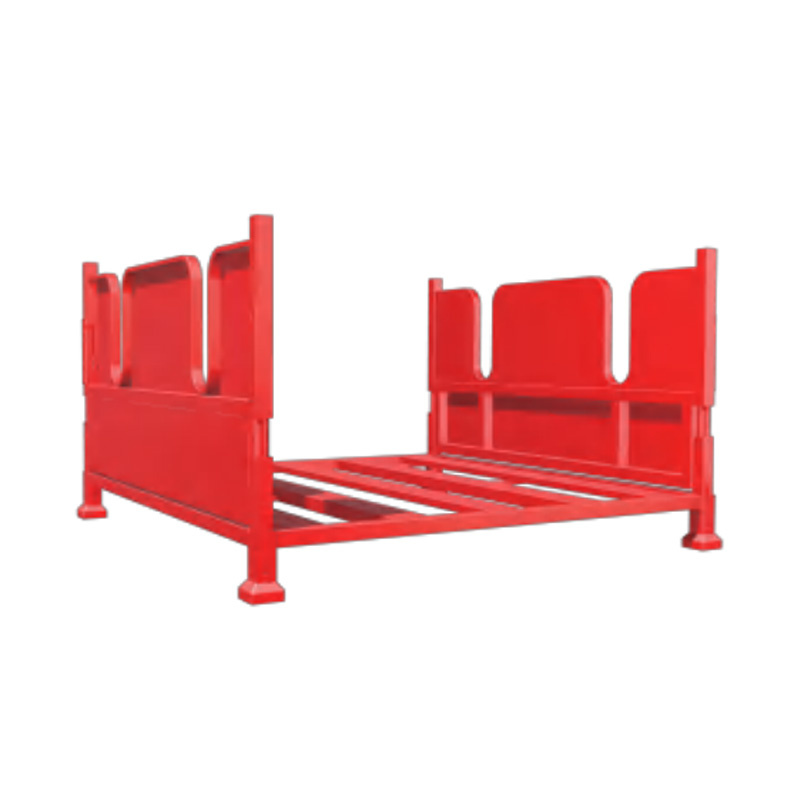
Not every maintenance problem originates from use. Some begin at the selection stage, when a facility picks a stacking pallet rack configuration that does not match its actual load pattern, aisle width, or turnover speed. A rack rated for static storage but used for high-frequency picking will show wear far sooner than its rated cycle count suggests.
When evaluating a system such as the ggd pallet stacking rack, the practical questions worth asking are less about steel gauge alone and more about how the structure behaves under repeated stacking and destacking:
- Does the frame return to true alignment after repeated stacking cycles, or does it require re-leveling?
- Are locking mechanisms accessible for inspection without disassembling the stack?
- Is the coating rated for the specific humidity and temperature range of the storage environment?
- Can components such as wire deck dividers be retrofitted without replacing the entire frame?
Facilities that build these questions into procurement tend to spend less on early-life repairs, because the equipment matches the actual operating conditions rather than a generic load rating.
A Practical Maintenance Cycle
The diagram below outlines a maintenance loop that keeps inspection, cleaning, and repair connected rather than treated as separate, disconnected tasks.
Building a Warehouse Storage Safety Maintenance Program
Warehouse storage safety maintenance works best as a written program rather than an informal habit, because informal routines break down the moment staff turnover happens. A written program should assign clear ownership, define escalation paths for red-tagged issues, and set a minimum retraining interval for staff who operate lifting equipment near racking.
| Program Element | Purpose |
|---|---|
| Named inspector per zone | Removes ambiguity about who checks what and when |
| Load capacity signage | Prevents overloading from staff unfamiliar with a specific bay |
| Damage reporting form | Creates a paper trail linking incidents to repairs |
| Annual third-party audit | Provides an outside check on internal inspection accuracy |
Even a simple program, applied consistently, tends to outperform a more sophisticated one that is only followed sporadically. Consistency, not complexity, is what actually protects both the structure and the people working around it.
Frequently Asked Questions
Q1: How often should warehouse racking be inspected?
A monthly visual inspection covering frames, beams, and dividers is standard for most facilities, with a more detailed quarterly check of bracing and floor anchors.
Q2: Can a mesh divider be repaired instead of replaced?
Minor bends in a mesh divider can often be reshaped, but any cracked weld or broken support clip should be replaced rather than repaired, since a compromised weld will not hold load reliably.
Q3: What is the biggest cause of premature rack failure?
Unreported forklift impact is the most common cause. Damage that goes unlogged continues to weaken the structure with every additional load cycle.
Q4: Do wire deck dividers need a different cleaning approach than solid shelving?
Yes. The open weave of wire deck dividers traps fine debris differently than a solid surface, so compressed air or a brush pass before any liquid cleaning step is especially important.
Q5: How long does a well-maintained stacking pallet rack typically last?
With consistent inspection and cleaning, a properly loaded system can remain in reliable service well beyond its original design estimate, often extending useful life by several years compared to a system left unmaintained.
Related products
-
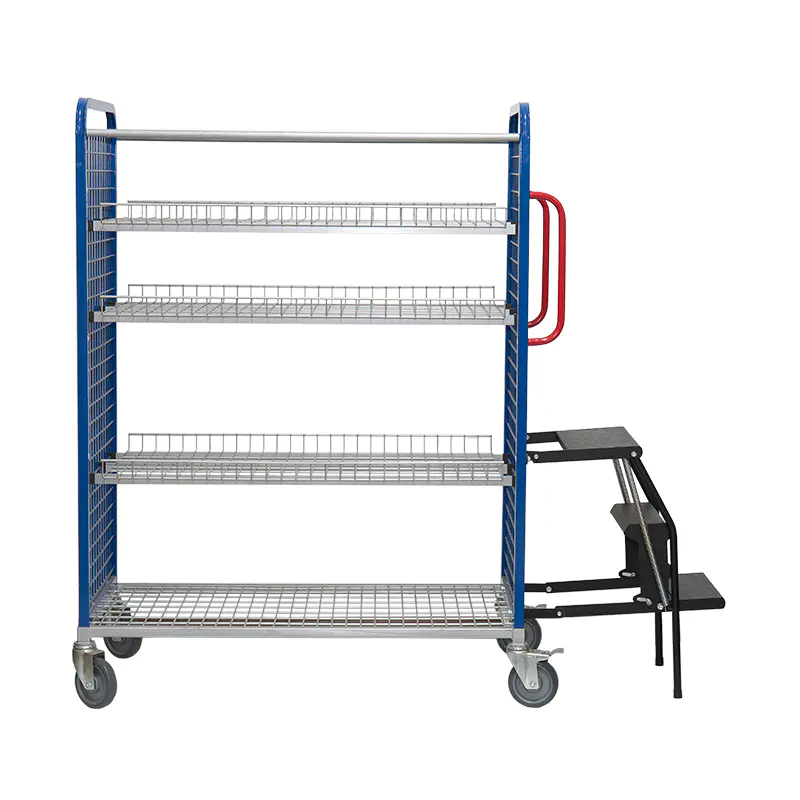
Product specification:This Warehouse wire mesh Multi-Tier Order Picking Trolley adopts a chassis and side panel structur...
See Details -
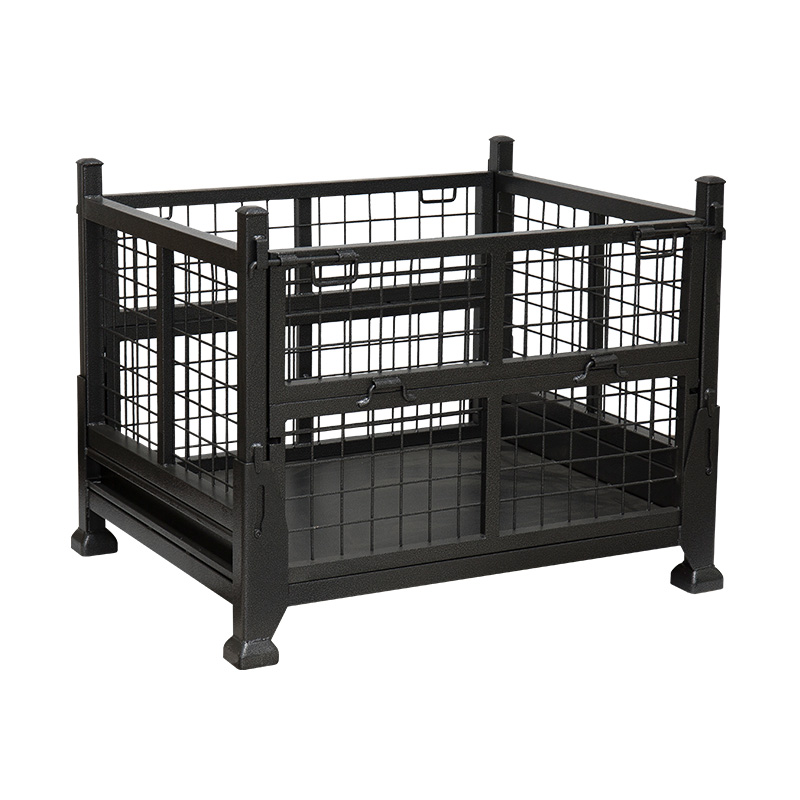
Foldable pallet cages are an important tool in factory logistics. They play an important role in transportation, distrib...
See Details -
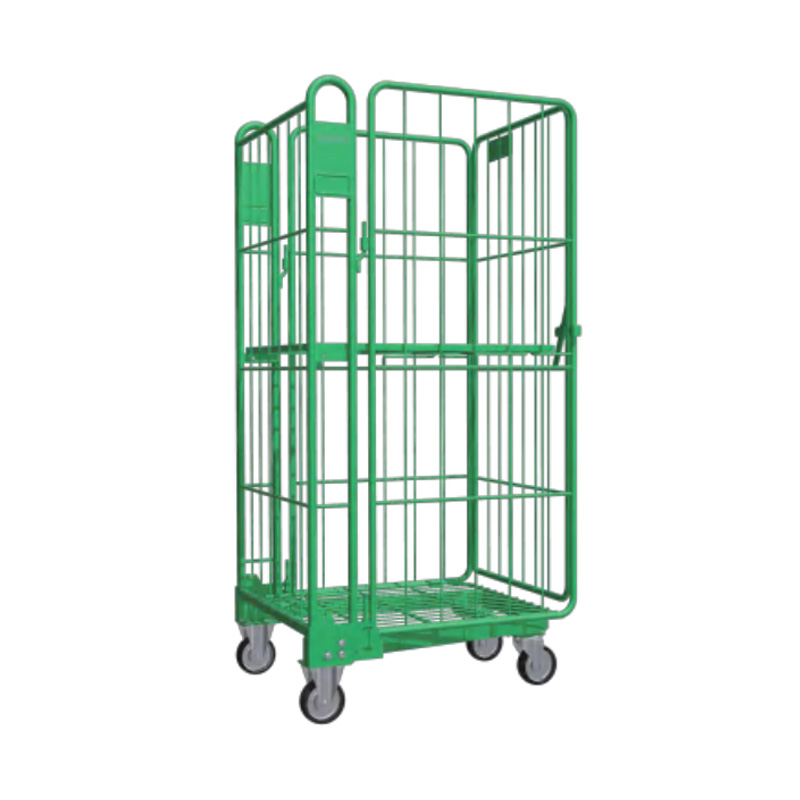
Product specification:The chassis is made of a square tube frame, with a bottom metal sheet tray that can be folded up a...
See Details -
Stacking rack, also known as Qiaogu rack or stacking rackIt is a transportation and storage device derived from pallets ...
See Details -
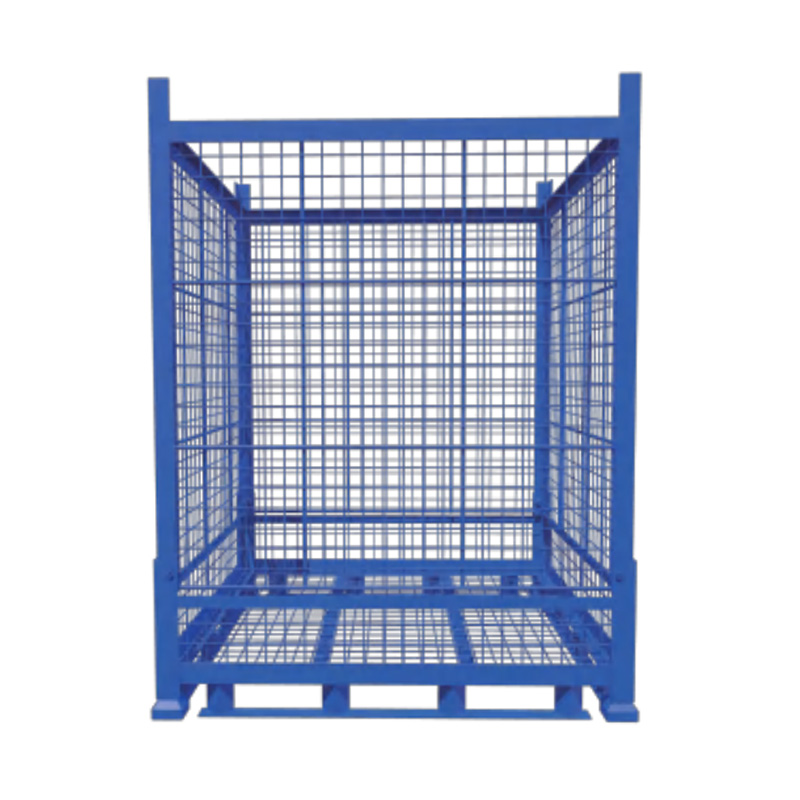
Product specification:Container structure made of L-Type plate frame with 50×50 wire mesh, with base support.Surface tre...
See Details

Information
-
Building B5, No. 138, Weixi Road, Weixi Village, Weitang Town, Xiangcheng District, Suzhou City, China.
-
Tel:
+86-13862140414
+86-13951110334 -
Phone: +86-512-65905480
