


 Español
 русский
 عربى
عربى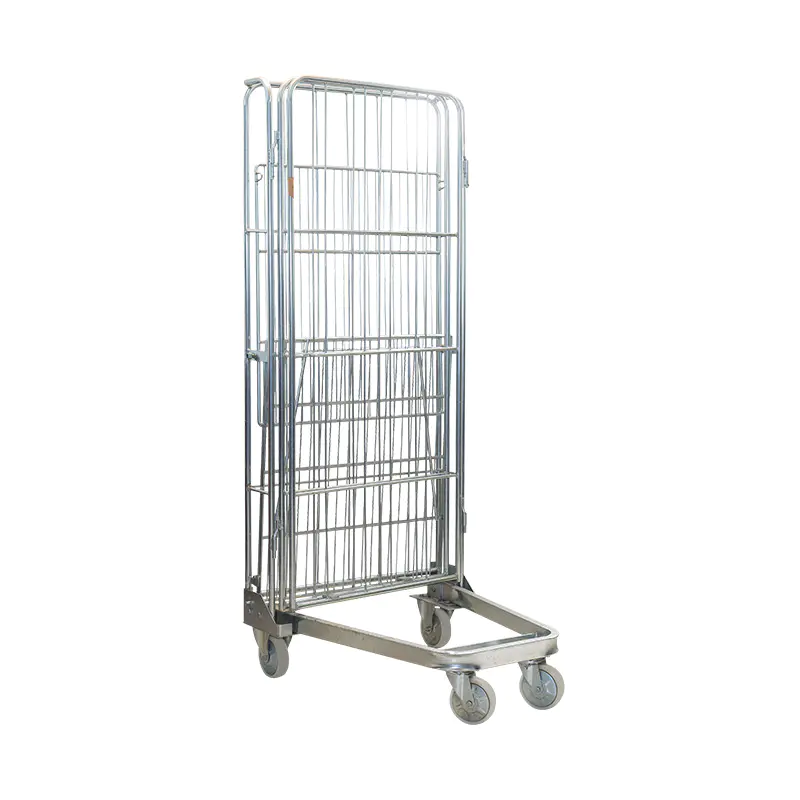
Don't hesitate to send a message
Search
Recent Post
Newsletter
Industrial Metal Storage Containers: Steel Bins, Cages & Trolleys for Warehousing
If loose castings, stamped parts, or empty packaging are sitting directly on your warehouse floor, you already know the cost. Forklift routes get blocked, inventory counts slow down, and damaged parts end up in scrap. Industrial metal storage containers solve this by turning loose goods into standardized, stackable loads. In our experience, welded steel containers are the right choice for heavy, repetitive industrial use: they withstand far more abuse than plastic or wooden bins, and they fold or nest to reclaim space when empty.
Why steel containers outperform plastic and wooden alternatives
The short answer is strength. Steel containers carry heavier loads, survive rougher handling, and keep working for years in environments where plastic bins crack and wooden crates rot. But the real value shows up when you compare them side by side against the way your warehouse actually operates.
| Material | Load capacity | Repair ability | Empty storage | Moisture resistance |
|---|---|---|---|---|
| Welded steel | High, stable under heavy dynamic loads | Repairable by welding | Collapsible or nestable options | Excellent when plated or powder coated |
| Plastic | Moderate; may warp at elevated temperatures | Limited; cracks tend to spread | Nestable | Good, but UV and chemical degradation |
| Wood | Lower; splinters and needs maintenance | Replacement parts available | Rarely foldable | Poor; absorbs water and moisture |
Special attention should go to the container's base. A correctly designed steel base keeps the container square when stacked, so the load does not lean or transfer unevenly. That is one reason why we build U-base and Z-base roll cages with exact tolerances: they have to engage with pallet jacks and racking beams without catching or shifting.
Common industrial metal storage container types in our production
We manufacture a range of welded metal storage products for warehouses, distribution centers, and production lines. Three types are especially useful when you are moving heavy bulk materials.
Foldable storage cages: space-saving bulk storage
Foldable storage cages are made from welded wire mesh with steel frames. When loaded, they hold heavy parts such as castings, forgings, or fasteners. When empty, the sides collapse so several cages can be stacked in the height of one loaded cage. This is why foldable storage cages are popular with suppliers who handle returnable packaging programs.
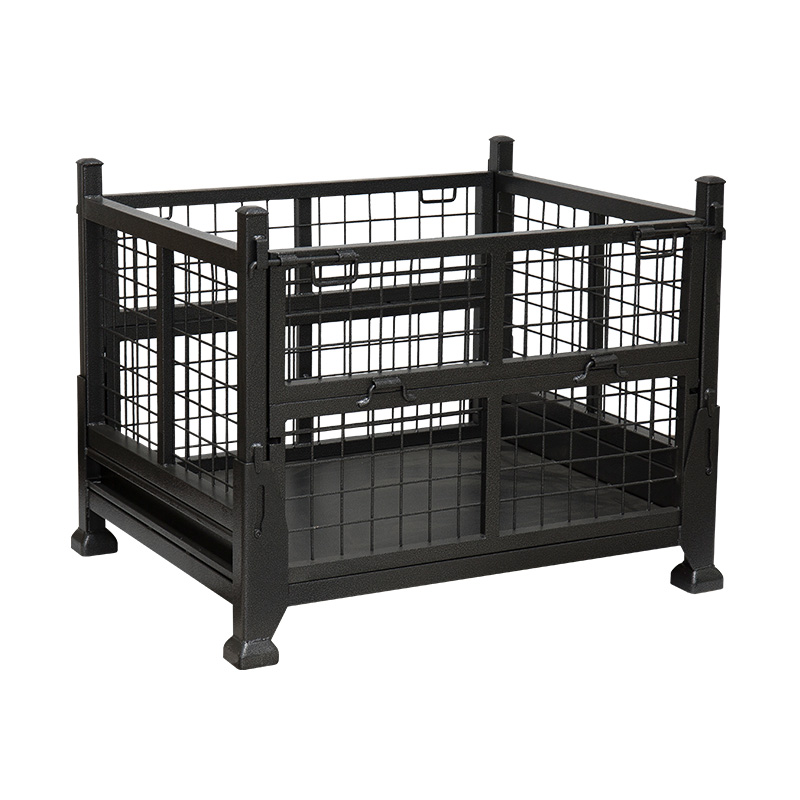 Foldable And Collapsible Pallet Cage for Storage and TransportThis foldable pallet cage features a welded wire mesh and steel frame, capable of holding heavy parts. Its collapsible design allows efficient stacking when empty, saving space in returnable packaging programs.View Product →
Mobile containers: moving heavy parts safely
Mobile containers add a different dimension: they let operators roll a full container to the next workstation instead of waiting for a forklift. Our MC12080 series combines a rigid, welded cage with swivel casters and a handle system. For line-side feeding and cross-plant transfers, the MC12080 mobile container reduces the need for manual lifting and keeps parts within easy reach.
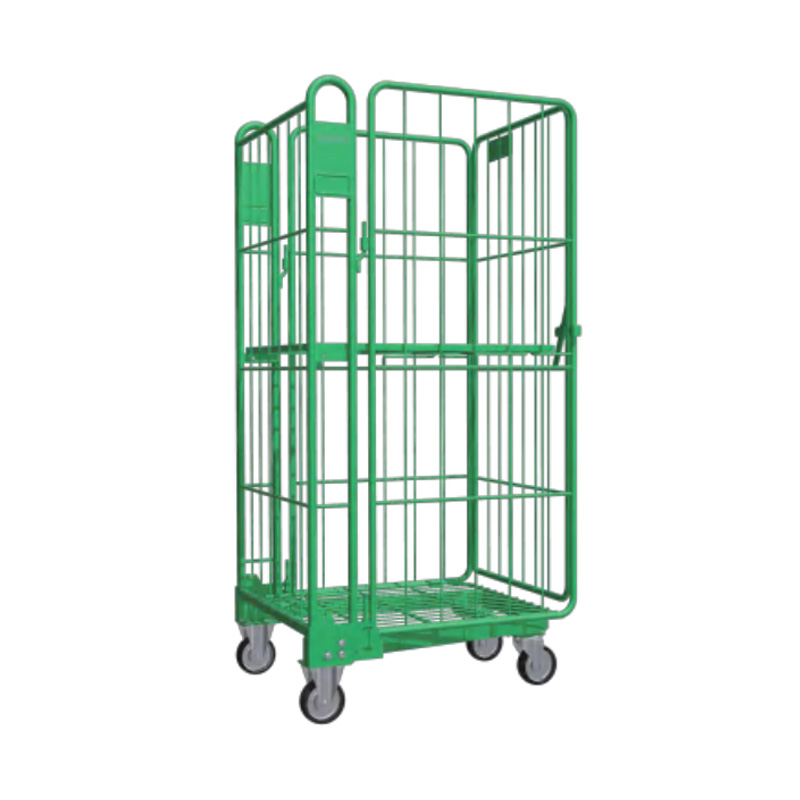 MC12080 Mobile Container with Swivel Casters and HandleThe MC12080 mobile container combines a rigid welded cage with swivel casters and a handle, enabling easy movement to workstations. It reduces manual lifting and keeps parts within reach during line-side feeding.View Product →
Roll cages and picking trolleys: efficient order picking
Roll cages, also called roll containers, are the backbone of high-throughput distribution. They work well for seasonal inventory, returns handling, and multi-echelon supply chains. A U-base roll cage rolls easily into a lightweight stillage or delivery vehicle, and its open mesh construction gives pickers full visibility of the stock. We also produce Z-base versions for non-slip braking and steep ramps. When you need maximum maneuverability and simple, reliable rolling, the U-base roll cage is a proven starting point.
 U-shaped Warehouse Storage Rolling Container Cage TrolleyThe U-base roll container offers a stable square tube chassis and foldable side tray, enhancing load capacity. Its mesh construction provides visibility, while the U-shape allows efficient rolling in distribution environments.View Product →
What to evaluate before buying industrial metal storage containers
Before you place an order, translate your usage into measurable requirements. The list below covers the decisions that affect total cost of ownership the most.
- Load capacity and stacking strength. Know the maximum weight you will put in a container, and whether you plan to stack three or four loaded units. The steel spec and the welding integrity have to support that duty cycle.
- Foldability and nestability. If you ship empty containers between plants, foldable or nestable designs will lower return freight costs dramatically.
- Base design. U-base roll cages are easier to push in tight aisles; Z-base roll containers provide more braking on slopes. Choose the geometry based on your floor and equipment.
- Mesh aperture. A fine mesh keeps small parts from falling out; a coarse mesh improves airflow and visibility. Match the aperture to your product and operational needs.
- Surface treatment. Hot-dip galvanizing, electroplating, or powder coating determines how the container behaves after years of exposure to humidity, salt, or chemicals. We generally recommend powder coated or plated wire for food-adjacent and retail environments.
One more practical check is whether the container can be moved by standard pallet jacks or forklifts. If the bottom frame is not designed with the correct fork entry height, your material handlers will slow down every time they change a line.
How we manufacture industrial metal storage containers
Since 2001, we have developed a complete metal wire forming and welding production system. We start with bright wire or rod, draw it to the diameter you need, then weld it into mesh panels or cage structures. Because the product is built from wire rather than sheet metal, it keeps its strength while letting air and light pass through.
Surface treatment is the critical final step. We run electroplating lines for chrome, nickel, and zinc, plus a powder coating line that follows a multi-stage pre-treatment process. This means every storage container receives a consistent, corrosion-resistant finish. In our view, a durable industrial metal container is not just about the raw steel gauge; it is about having the right coating on every weld seam and corner.
Our automatic production lines also help us deliver medium and large orders on time while keeping costs competitive. If you are sourcing from overseas, our location near Shanghai Port and the Suzhou expressway network shortens lead times and simplifies export logistics.
Frequently asked questions about industrial metal storage containers
Q1: What is the difference between a foldable storage cage and a mobile container?
A foldable storage cage is designed primarily for static storage and stacked racking. The sides fold down to save space when the cage is empty. A mobile container adds casters or a rolling base, so it can be pulled or pushed from one workstation to another without a forklift. Choose the foldable version if you have a fixed storage area; choose the mobile version if you need frequent transport within the building.
Q2: Are metal storage containers too heavy to handle manually?
Empty welded metal cages are heavier than plastic bins, but they are still designed to be manageable with a pallet jack or forklift. For manual movement, we recommend containers with casters and ergonomic handles. The extra weight of the container itself is usually a small fraction of the load it carries, and the durability advantage more than makes up for it over the container's multi-year service life.
Q3: Can I customise the mesh aperture and container dimensions?
Yes. We manufacture wire mesh products from 1.2 mm to 12 mm wire, so we can modify the wire gauge, mesh aperture, frame dimensions, number of casters, and surface finish to suit your parts and handling equipment. For customization, send us your product drawings or a sample container, and we will work with a prototype before mass production.
The bottom line
Industrial metal storage containers are a long-term investment in your material flow. They reduce waste, protect parts, and make your warehouse inherently more organized. The key is to choose the right container type and specification for your actual loads. If you are still comparing plastic vs steel or trying to decide between a mobile container and a roll cage, start with the weight and frequency of your movement. Once you have those parameters, the decision becomes much simpler.
Related products
-
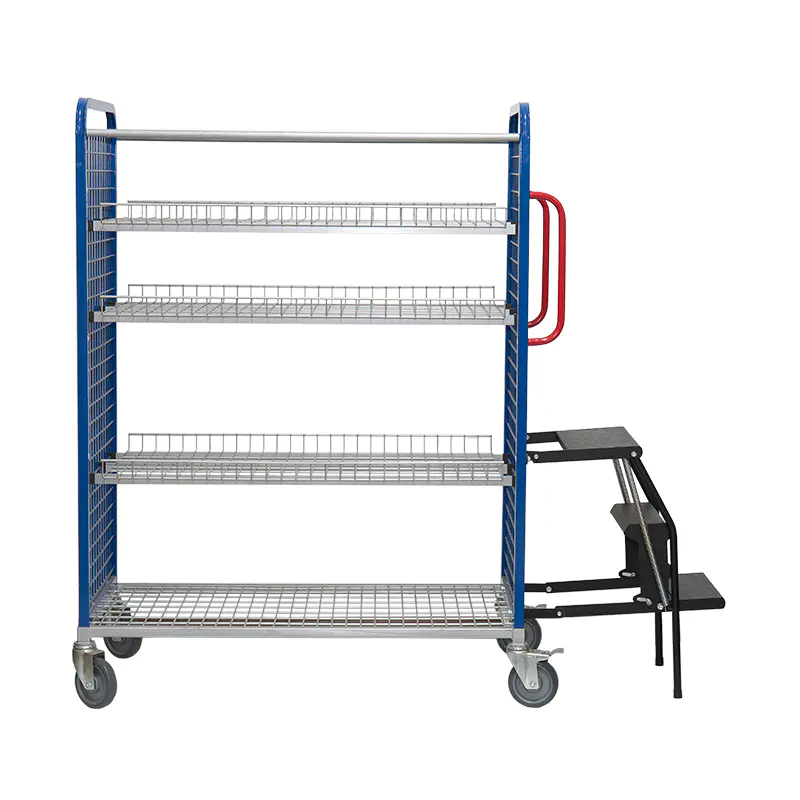
Product specification:This Warehouse wire mesh Multi-Tier Order Picking Trolley adopts a chassis and side panel structur...
See Details -

Foldable pallet cages are an important tool in factory logistics. They play an important role in transportation, distrib...
See Details -

Product specification:The chassis is made of a square tube frame, with a bottom metal sheet tray that can be folded up a...
See Details -
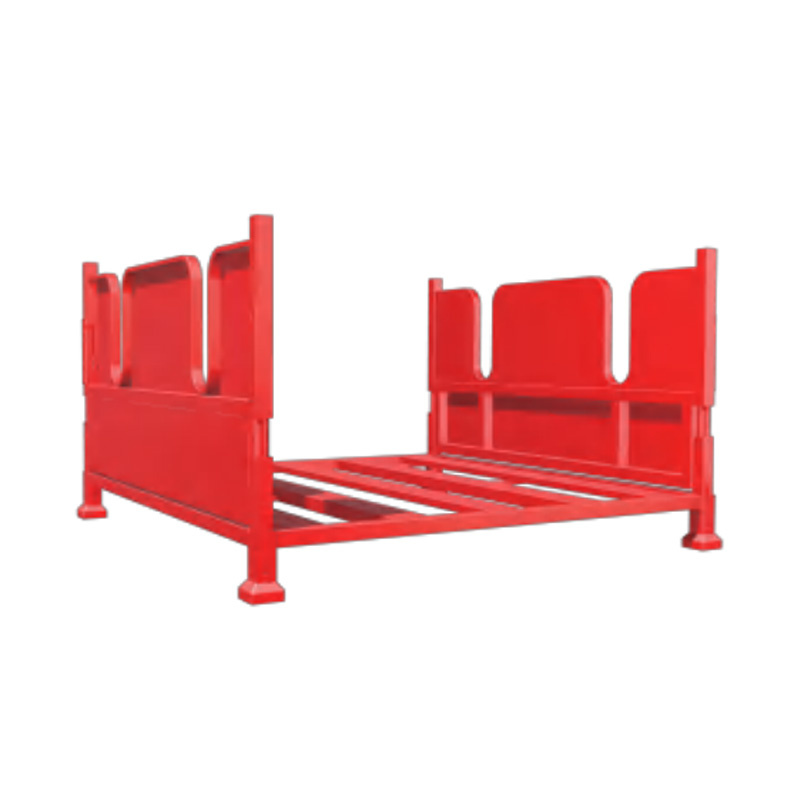
Stacking rack, also known as Qiaogu rack or stacking rackIt is a transportation and storage device derived from pallets ...
See Details -
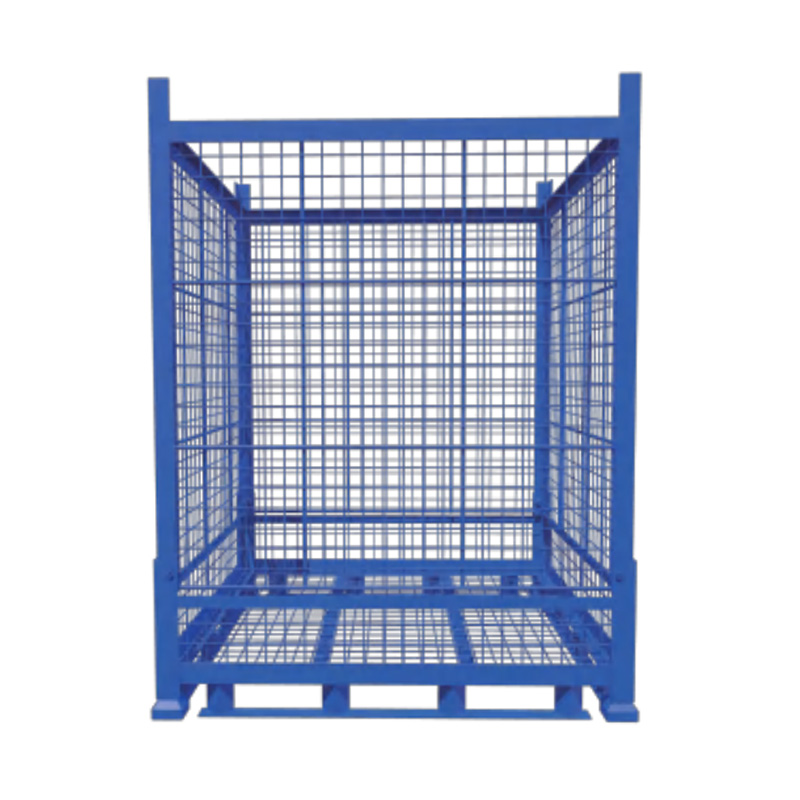
Product specification:Container structure made of L-Type plate frame with 50×50 wire mesh, with base support.Surface tre...
See Details

Information
-
Building B5, No. 138, Weixi Road, Weixi Village, Weitang Town, Xiangcheng District, Suzhou City, China.
-
Tel:
+86-13862140414
+86-13951110334 -
Phone: +86-512-65905480
