The Bottom Line: Foldable Roll Containers Save Space, Time, and Money
If you are managing logistics, warehousing, or retail operations, a foldable roll container is one of the highest-ROI equipment investments you can make. Unlike fixed-frame alternatives, these containers fold flat when not in use — cutting storage footprint by up to 75% — while still handling loads of 500 kg or more during operation. The core value proposition is simple: full capacity when you need it, minimal space when you don't.
Industries from e-commerce fulfillment to food distribution are already standardizing on foldable roll containers because they reduce handling steps, lower return logistics costs, and improve floor space utilization simultaneously. This article breaks down exactly why, with real-world context and data.
What Is a Foldable Roll Container?
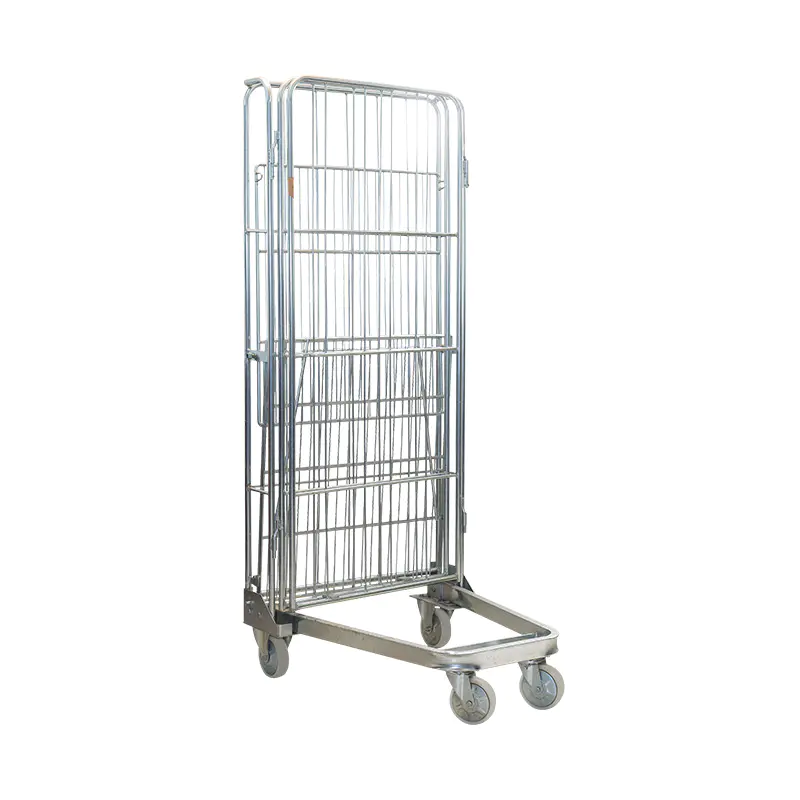
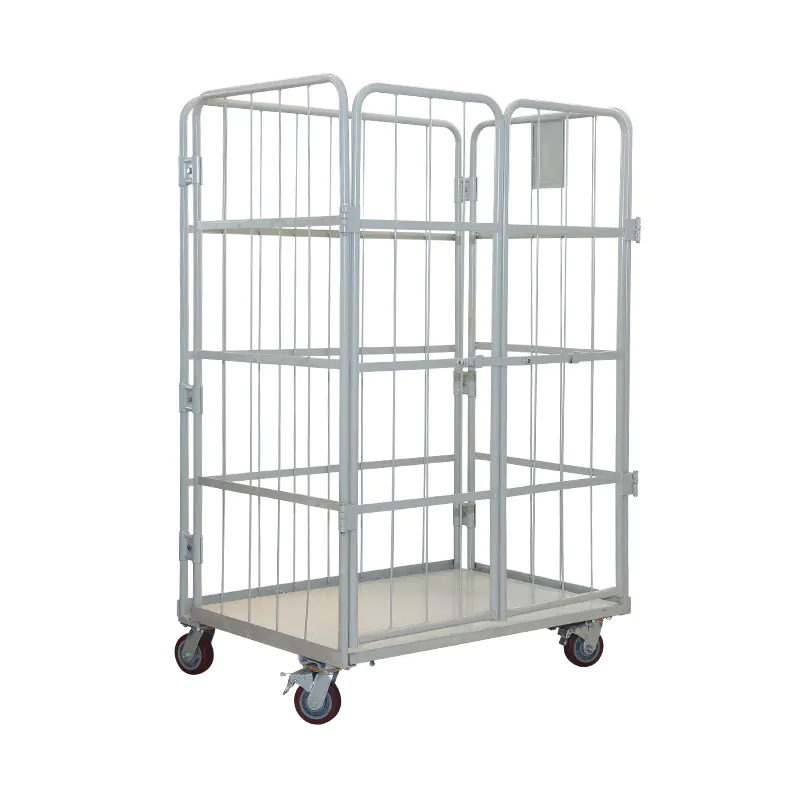
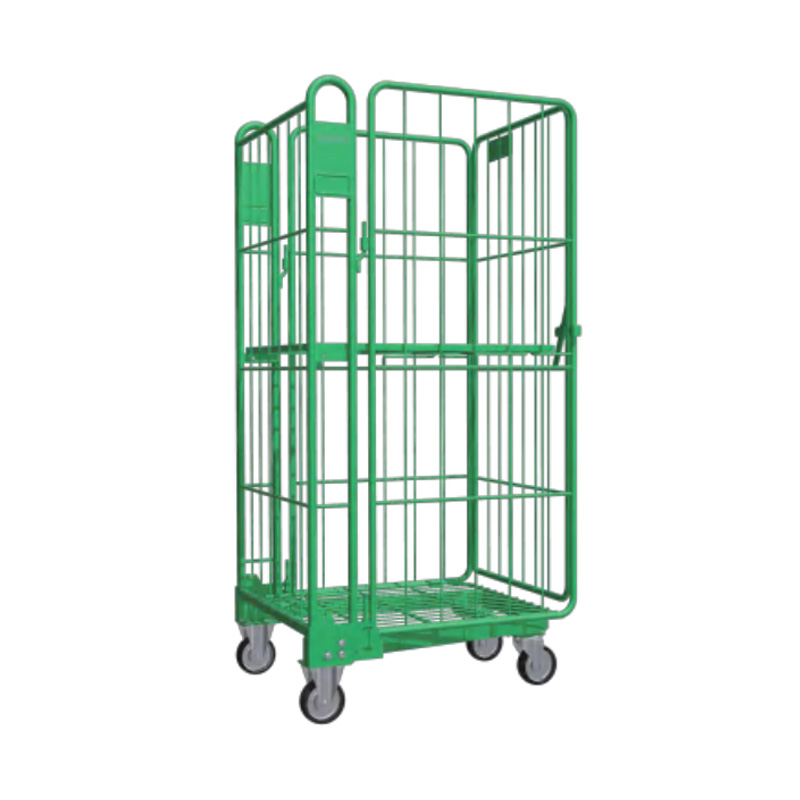
A foldable roll container is a wheeled cage or trolley with collapsible mesh or panel walls that can be folded down when the unit is empty. Most models feature:
- A steel or galvanized wire mesh frame for structural integrity
- Four swivel casters (often with locking mechanisms) for mobility
- Foldable side and back panels that collapse flat
- Load capacities typically ranging from 300 kg to 600 kg
- Standardized footprints (commonly 800×1200 mm or 720×810 mm) compatible with euro pallets and loading docks
When folded, multiple units can be nested or stacked — a column of 6–8 folded containers takes the same floor space as a single deployed one.
Key Industries That Benefit Most
Foldable roll containers are not a one-size-fits-all solution — but they are remarkably close. Here is where they deliver the greatest measurable impact:
Retail and Supermarket Chains
Supermarkets use roll containers as the primary unit for stock replenishment from distribution centers to store floors. A foldable design means empty containers returned from stores take up far less truck space — one truck that previously returned 40 rigid containers can now return 160 folded units. This directly reduces return-trip transport costs by 50–70%.
E-Commerce and Parcel Sorting Facilities
High-volume sorting operations deal with fluctuating container demand throughout the day. During off-peak hours, foldable roll containers can be collapsed and stored compactly near sorting lines, then rapidly deployed at shift changes. Facilities report warehouse aisle utilization improving by 30–40% when switching from rigid to foldable models.
Food and Beverage Distribution
Cold chain logistics require containers that can be efficiently cleaned and stored in limited refrigerated space. The open mesh structure of most foldable roll containers allows airflow and easy washdown, while foldability reduces congestion in temperature-controlled staging areas.
Pharmaceutical and Medical Supply
Strict inventory traceability requirements mean pharmaceutical distributors often need to manage large numbers of containers with low utilization rates. Foldable designs allow buffer stock of containers without sacrificing floor space needed for compliant storage and handling zones.
Manufacturing and Automotive Parts
Just-in-time manufacturing environments need containers that can be pre-staged, filled, moved to the line, emptied, and immediately collapsed for return — all within tight cycle times. Foldable roll containers support this lean workflow without creating "container pile-up" near assembly stations.
Quantified Advantages Over Fixed Roll Containers
The case for foldable roll containers becomes clearest when compared directly to traditional fixed-frame roll cages:
| Factor |
Fixed Roll Container |
Foldable Roll Container |
| Folded storage footprint |
Same as deployed (~0.65–1.0 m²) |
Reduced by 70–80% (0.1–0.2 m²) |
| Return transport efficiency |
1× baseline |
3–4× more units per truck |
| Load capacity |
300–600 kg |
300–600 kg (equivalent) |
| Setup/collapse time |
N/A |
Typically 15–30 seconds per unit |
| Lifespan under normal use |
8–12 years |
6–10 years (with proper maintenance) |
| Suitability for depot pooling |
Limited |
High — enables shared container pools |
The load capacity parity is important: foldability does not compromise structural performance. Modern foldable roll containers meet the same EN ISO 11228 and EN 12195 handling standards as their fixed counterparts when properly deployed.
Space Efficiency: The Most Underestimated Benefit
Warehouse space costs money — often $80–$200 per square meter per year in developed markets, depending on location and facility type. Every square meter consumed by empty, idle rigid containers is a direct, ongoing operational expense.
Consider a mid-size distribution center managing 500 roll containers with a 40% average utilization rate. At any given time, 300 containers are empty and waiting:
- Rigid containers: 300 units × 0.72 m² each = 216 m² of floor space consumed
- Foldable containers: 300 units folded and nested = approximately 45–55 m² consumed
That reclaimed 160+ m² can be repurposed for additional racking, staging lanes, or operational aisles — without expanding the building footprint.
Transport and Return Logistics Cost Reduction
In closed-loop supply chains — where containers travel from warehouse to store and back — the return trip is often the most overlooked cost center. Sending trucks back with mostly air (inside rigid containers) is a structural inefficiency that foldable roll containers directly solve.
A standard 13.6-meter semi-trailer can hold approximately:
- 28–32 rigid roll containers (deployed size)
- 100–130 foldable roll containers (collapsed and stacked)
For a retail chain running 50 return trips per week, switching to foldable containers could reduce return fleet requirements from 50 trips to as few as 15–18 — a transport cost reduction of 60–65% on return legs alone.
Ergonomics and Workplace Safety
Roll containers are operated by warehouse and store staff dozens of times per shift. Ergonomic design directly impacts injury rates and productivity. Foldable roll containers offer specific safety advantages:
- No tripping hazards from idle containers in aisles — collapsed units are stored flat against walls or in designated compact zones
- Mesh walls allow visibility of contents without tilting or opening, reducing repetitive bending
- Swivel casters with brakes provide stable, controlled movement on varied floor surfaces
- Standardized handle heights (typically 950–1050 mm) align with ergonomic push/pull force guidelines
Workplaces that reduce container-related aisle congestion consistently report lower manual handling incident rates and faster pick-and-pack cycle times.
Durability and Maintenance Considerations
A common concern is whether the folding mechanism introduces a weak point. In quality-engineered foldable roll containers, the hinges and locking pins are typically the most-tested components — designed to withstand tens of thousands of fold/unfold cycles without fatigue failure.
Best practices for maximizing container lifespan include:
- Inspecting hinge pins and locking clips on a quarterly basis
- Replacing casters proactively rather than after failure (caster wear is the most common maintenance item)
- Avoiding overloading — always respect the rated capacity stamped on the frame
- Storing folded containers in areas protected from moisture to prevent corrosion of the steel frame
- Training staff on the correct fold/unfold sequence to prevent panel misalignment
With proper maintenance protocols, foldable roll containers reliably achieve 7–10 years of operational life in typical distribution environments.
Selecting the Right Foldable Roll Container for Your Operation
Not all foldable roll containers are configured the same way. When specifying a model for your operation, evaluate these parameters:
Load Capacity
Match the rated capacity to your heaviest typical load — not your average load. A container rated for 500 kg gives meaningful safety margin for dense product categories like canned goods or automotive parts.
Mesh Opening Size
Smaller mesh openings (e.g., 50×50 mm) prevent small items from falling through but reduce airflow. Larger openings (100×100 mm) are better for ventilated products but require secondary containment for small-unit SKUs.
Number of Shelves
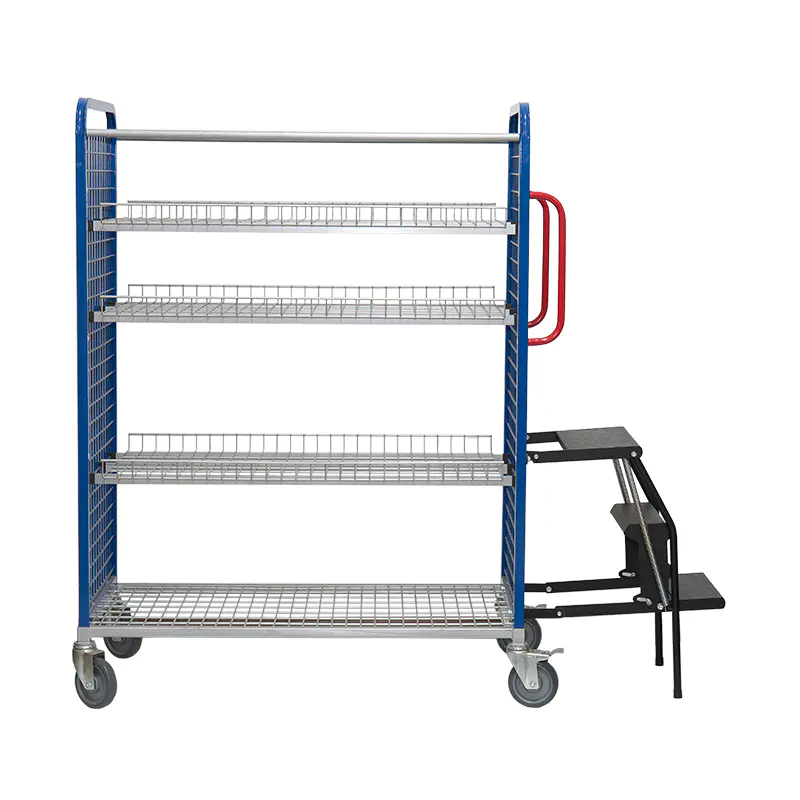
Fixed-shelf models improve stability for stackable items. Shelf-free open-bay models offer maximum flexibility for irregularly shaped loads. Some foldable designs allow shelves to be added or removed in the field.
Caster Specification
For smooth warehouse floors, standard 125 mm polyurethane casters are sufficient. For rough outdoor surfaces or dock plates, specify 160–200 mm rubber or nylon casters with higher load ratings.
Surface Treatment
Galvanized wire mesh offers superior corrosion resistance for food or outdoor use. Powder-coated steel is cost-effective for dry indoor environments and allows color-coding by product zone or customer.
Frequently Asked Questions
Q1: How long does it take to fold or unfold a foldable roll container?
Most trained operators can fold or unfold a standard foldable roll container in 15 to 30 seconds. More complex multi-shelf models may take up to 60 seconds. This speed means folding/unfolding adds negligible time to handling workflows.
Q2: Can foldable roll containers be used in freezer or cold storage environments?
Yes, provided the frame material and casters are specified for low-temperature use. Galvanized steel frames perform well down to -30°C. Standard lubricants in caster bearings may need to be replaced with low-temperature grease for consistent freezer performance.
Q3: Are foldable roll containers compatible with standard loading docks and pallet jack equipment?
Most foldable roll containers with standardized footprints (800×1200 mm or 720×810 mm) are compatible with euro-standard loading docks. They are designed to be hand-pushed, not lifted by forklifts, though some models include base rail channels compatible with manual pallet jacks for positioning.
Q4: What is the typical weight of a foldable roll container?
Empty weight varies by size and construction, but most industrial foldable roll containers weigh between 30 kg and 55 kg. Lighter models around 28–32 kg are available for retail applications where frequent repositioning by single operators is required.
Q5: How do foldable roll containers perform in high-throughput sortation environments?
They perform well when a consistent fold/unfold workflow is established. The key is designating clear collapse zones near unloading points and training staff to collapse containers immediately after emptying, rather than leaving them deployed in aisles.
Q6: Is there a significant price difference between foldable and fixed roll containers?
Foldable roll containers typically cost 15–30% more upfront than comparable fixed models. However, the reduction in return transport costs and storage space requirements generally produces a positive ROI within 12–24 months in most distribution operations.



 Español
 русский
 عربى
عربى