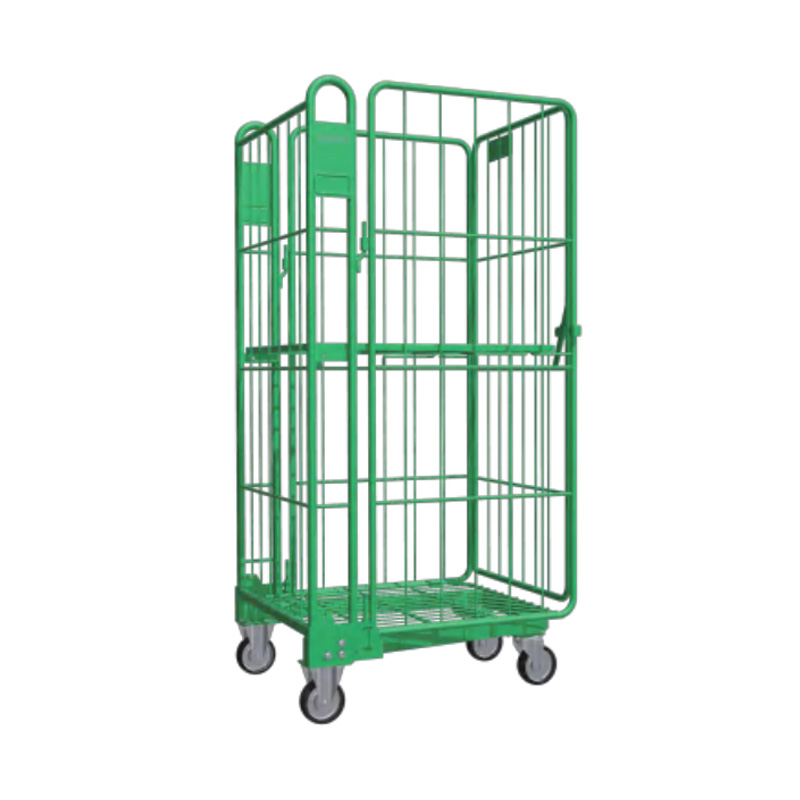
What Makes the 4-Sided Roll Cage Production Process Unique
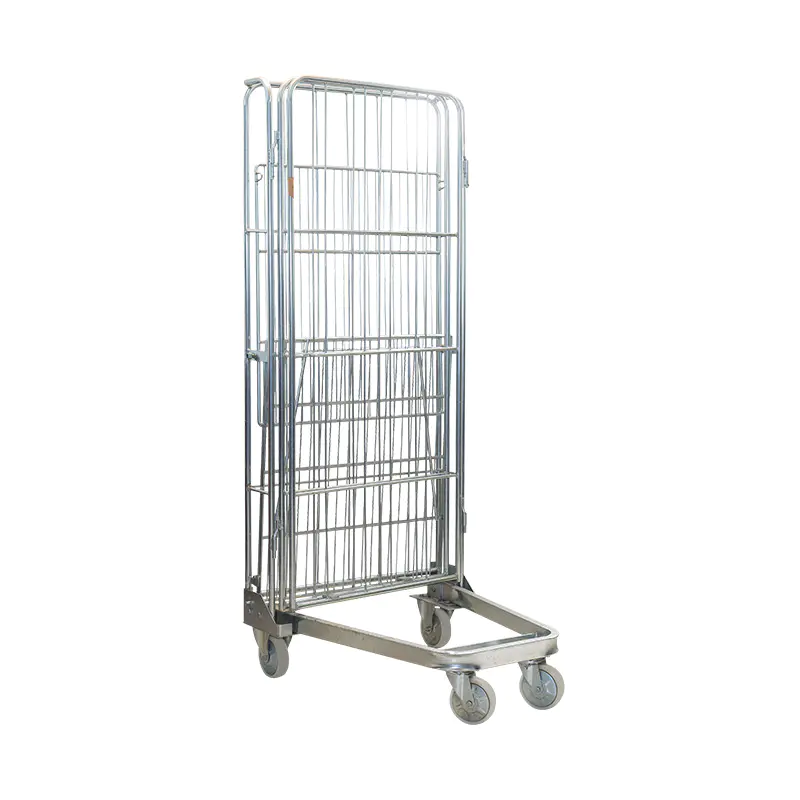
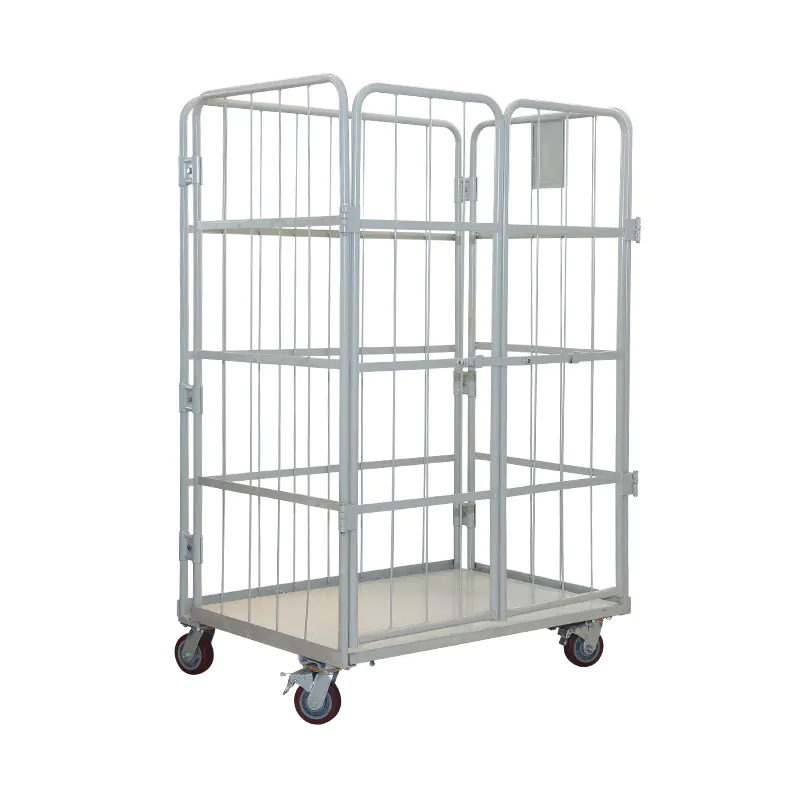
The production of a 4-sided roll cage is a structured, multi-stage engineering process designed to deliver maximum load stability, dimensional accuracy, and long-term durability. Unlike open-frame trolleys, the four enclosed sides create a rigid structural enclosure that fundamentally changes material selection, welding strategy, and quality control requirements. Understanding this process helps buyers evaluate product quality, lead times, and price differences across suppliers.
In short: a well-manufactured heavy duty 4 side logistic trolley goes through at least 8 distinct production stages — from raw steel selection to final surface treatment — each of which directly impacts the trolley's performance in warehouse, retail, and distribution environments.
Stage 1: Raw Material Selection and Preparation
The foundation of any high-quality roll cage is the steel used in its frame. Manufacturers typically use Q235 or Q345 carbon steel tubing with wall thicknesses ranging from 1.2 mm to 2.0 mm for standard-load models, and up to 2.5 mm for heavy-duty variants rated above 500 kg.
Key material preparation steps include:
- Incoming steel inspection — checking yield strength, surface defects, and dimensional tolerances
- Cutting to length using CNC pipe cutting machines for ±0.5 mm precision
- Deburring and end-facing to ensure clean weld joints
- Batch labeling for traceability throughout production
Wire mesh panels — a defining feature of the 4-sided cage — are sourced separately, typically in 50×50 mm or 100×100 mm grid patterns, using 3.0 mm to 4.0 mm diameter wire depending on load class.
Stage 2: Frame Component Fabrication
Before assembly, each structural component is individually fabricated. This includes the base frame, four upright corner posts, horizontal rails, and folding side panels (in collapsible designs).
Bending and Forming
CNC hydraulic pipe benders form curved corners and angled joints with consistent radius control. This is critical for the top rail corners of a 4-sided cage, where uneven bending creates stress concentration points that can fail under repeated loading cycles. Precision-bent corners maintain ≥90° internal angles across all units in a production batch.
Punching and Notching
Connection points for mesh panels and cross-braces are punched using stamping dies. Notching is applied at tube intersections to improve weld contact area by up to 40% compared to butt joints, significantly increasing weld shear strength.
Stage 3: Welding — The Core Structural Process
Welding is the most critical and technically demanding stage in roll cage manufacturing. For a heavy duty 4 side logistic trolley, weld quality directly determines load capacity and fatigue life under daily warehouse conditions.
Two primary welding methods are used:
| Welding Method |
Application |
Typical Penetration Depth |
Best For |
| MIG (GMAW) |
Main frame joints, corner posts |
3–5 mm |
Structural load-bearing connections |
| Spot Welding |
Mesh-to-frame attachment |
1–2 mm |
High-speed mesh panel fixing |
| CO₂ Arc Welding |
Heavy-duty base frame |
5–8 mm |
High-load base platforms |
Quality producers use robotic MIG welding cells for primary frame joints to ensure consistent weld bead geometry, heat input control, and elimination of operator variation. Manual TIG finishing is applied to visible external joints for cosmetic quality.
Post-weld, all frames undergo visual inspection and — in certified factories — dye penetrant or magnetic particle testing on critical welds to detect subsurface cracks before surface treatment.
Stage 4: Base Platform and Caster Integration
The base platform of a 4-sided roll cage must distribute load evenly across all four casters. Manufacturers press or weld a reinforced base deck — typically 1.5 mm to 2.0 mm cold-rolled steel plate — onto the bottom frame.
Caster mounting involves:
- Drilling or punching four caster mounting holes to ±1 mm positional accuracy
- Welding or bolting reinforcement plates beneath caster mounting points
- Installing casters — typically 125 mm or 150 mm diameter polyurethane wheels for smooth floor protection
- Fitting two fixed and two swivel casters, with swivel units including a braking mechanism
Caster load rating must exceed the trolley's total capacity divided by two (since only 2 casters bear load on uneven surfaces). For a 600 kg rated trolley, each caster is typically rated at ≥300 kg individual capacity.
Stage 5: Mesh Panel Attachment and Side Frame Assembly
The four side panels are what distinguish this product category. Depending on design, panels are either:
- Fixed welded — mesh permanently welded to a framed border, then attached to the main cage frame
- Drop-in removable — framed mesh panels that slide into corner post channels
- Hinged folding — panels hinged to allow the cage to collapse for return logistics
For the heavy duty 4 side logistic trolley with top shelf, an additional welded top shelf frame is integrated at this stage, providing a secondary load platform typically rated at 50–100 kg for lighter items separated from the main cargo load.
Each panel is spot-welded at intervals no greater than 100 mm along mesh-to-border contact lines to prevent panel distortion under lateral load.
Stage 6: Surface Treatment — Powder Coating Process
Surface treatment protects the steel structure from corrosion and determines the trolley's appearance and long-term finish durability. The standard process for roll cages consists of four sequential steps:
- Degreasing — chemical bath removes oil, grease, and metal residue from fabrication
- Phosphating — zinc phosphate conversion coating improves paint adhesion and provides a base corrosion barrier
- Powder coating application — electrostatic spray applies thermoplastic or thermoset powder at 60–80 kV charge
- Curing oven — parts pass through at 180–200°C for 15–20 minutes to cure the powder into a hard, uniform film
Standard powder coat thickness for industrial trolleys is 60–80 microns (μm). This provides resistance to chipping, UV fading, and mild chemical exposure from warehouse cleaning agents. Premium models apply a two-coat system (primer + topcoat) reaching 100–120 μm for harsher environments.
Stage 7: Assembly Completion and Component Fitting
After coating, the trolley undergoes final assembly. This includes fitting handle grips, corner bumper protectors, label holders, and any locking mechanisms on folding panels.
Handle mounting is a frequently overlooked detail. High-quality manufacturers press-fit or bolt ergonomic rubber or PVC grip sleeves that cover at minimum 300 mm of grip length to reduce operator hand fatigue during extended pushing. Handle height is typically set at 900–1050 mm from floor level to comply with ergonomic guidelines for adult operators.
For collapsible 4-sided designs, hinge pin quality and folding latch mechanism play a critical role in long-term reliability. Stainless steel hinge pins and zinc-cast latch bodies provide significantly better cycle life than zinc-coated carbon steel alternatives.
Stage 8: Quality Inspection and Load Testing
The final production stage validates that each unit meets dimensional specifications and structural performance requirements before shipment.
Standard inspection checks include:
- Overall dimensional check (length × width × height) to ±5 mm tolerance
- Flatness of base platform — maximum 3 mm deviation across diagonal
- Caster rotation and brake function test
- Panel latch engagement force test (for folding models)
- Powder coat adhesion cross-hatch test per ISO 2409 standard
- Static load test at 1.5× rated capacity for minimum 10 minutes
Factories supplying to European retail chains or logistics operators also conduct dynamic push-pull testing simulating 50,000 loading cycles to verify weld joint fatigue resistance under repetitive use conditions.
Production Lead Times and Batch Considerations
Understanding production timelines helps buyers plan procurement accurately:
| Order Volume |
Typical Lead Time |
Notes |
| 50–100 units |
15–20 working days |
Standard catalog specifications |
| 100–500 units |
20–30 working days |
May require dedicated production run |
| 500+ units |
30–45 working days |
Custom specs, dedicated tooling may apply |
Custom color matching, non-standard mesh apertures, or modified dimensions add 5–10 working days for tooling and first-article inspection before mass production approval. Buyers requesting third-party inspection (SGS, Bureau Veritas) should factor in an additional 3–5 days at the end of the production cycle.
Frequently Asked Questions
Q1: What steel grade is typically used in a heavy duty 4 side logistic trolley?
Most manufacturers use Q235 or Q345 carbon steel tubing. Q345 offers higher yield strength (~345 MPa vs ~235 MPa) and is preferred for trolleys rated above 500 kg.
Q2: Is powder coating sufficient for outdoor or wet environment use?
Standard powder coating with zinc phosphate pre-treatment handles indoor warehouse and light outdoor use. For consistently wet or corrosive environments, hot-dip galvanizing or a two-coat epoxy powder system is recommended.
Q3: What is the difference between a fixed and a collapsible 4-sided roll cage?
Fixed cages offer higher structural rigidity and lower cost. Collapsible models fold flat for return logistics, saving up to 75% of storage space when empty — the trade-off is higher unit cost and more wear points on hinges and latches over time.
Q4: How do I verify the rated load capacity is accurate?
Request the factory test report showing static load test results at 1.5× the rated capacity. Reputable manufacturers conduct this for every production batch and can provide documentation on request.
Q5: Can mesh panel size or aperture be customized?
Yes. Standard apertures are 50×50 mm or 100×100 mm. Custom apertures are available but typically require a minimum order quantity (usually 100+ units) to justify tooling changes.
Q6: What caster size is appropriate for a heavy duty trolley?
For loads above 400 kg, 150 mm diameter polyurethane casters are standard. Larger 200 mm casters are available for very heavy loads or rough floor surfaces and reduce rolling resistance significantly.



 Español
 русский
 عربى
عربى