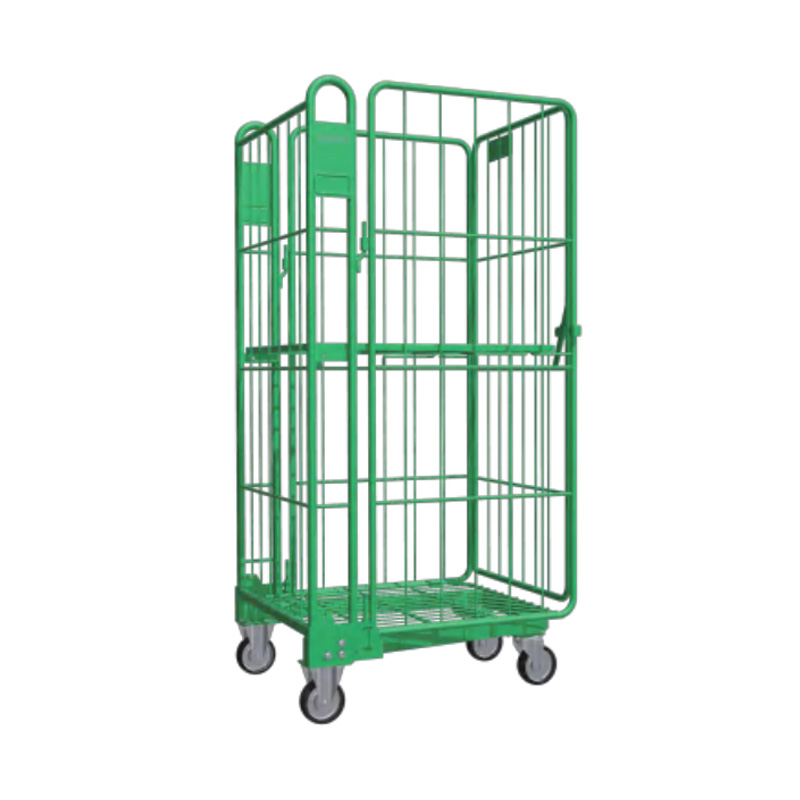
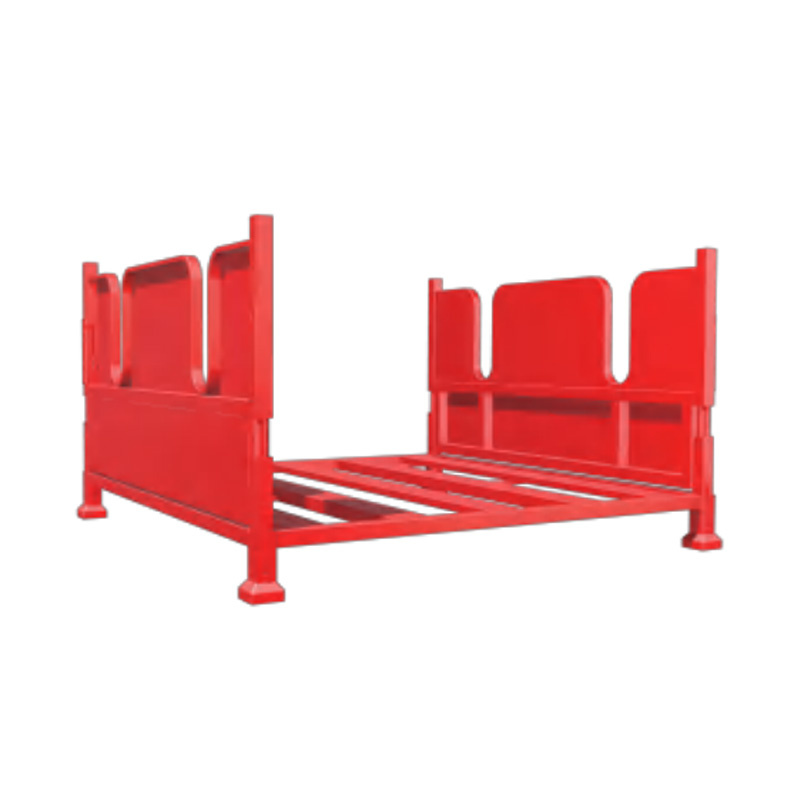
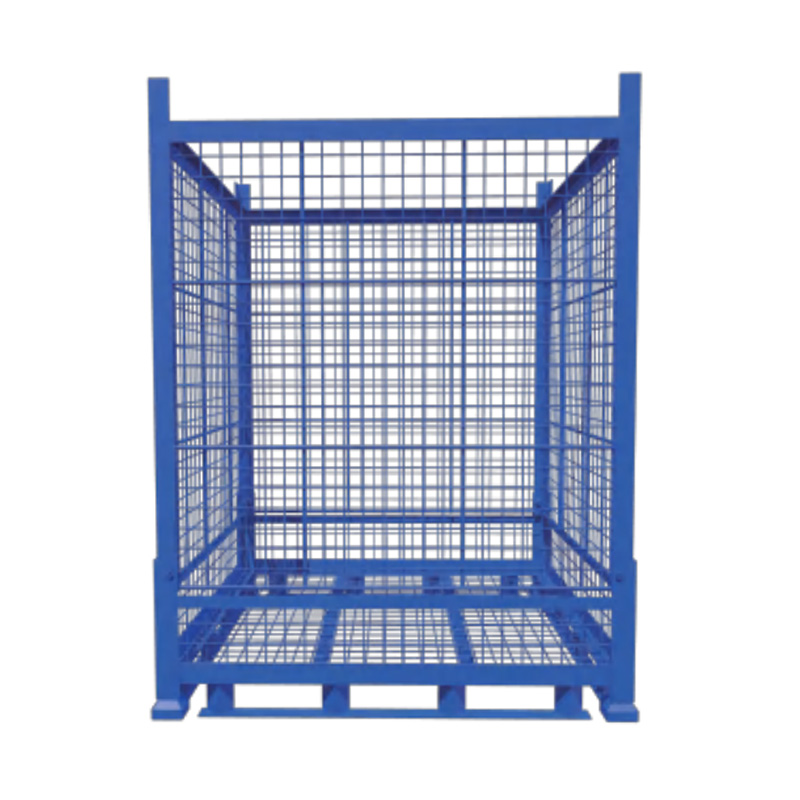
Understanding the Terminology: Foldable vs Collapsible
When sourcing industrial storage solutions, procurement professionals often encounter the terms foldable and collapsible pallet cage used interchangeably. However, understanding the subtle distinctions between these designations can significantly impact your purchasing decision and operational efficiency. Both terms describe metal wire mesh containers mounted on pallet bases that reduce in size when not in use, but the specific folding mechanisms and structural designs can vary considerably.
A foldable and collapsible pallet cage fundamentally serves as a secure, rigid container designed to protect goods during storage and transportation while offering the space-saving advantage of reducing to a fraction of its assembled height when empty. This dual functionality addresses one of logistics' most persistent challenges: the cost and space inefficiency of returning or storing empty containers. The collapsed ratio—the volumetric difference between assembled and folded states—typically ranges from 4:1 to 5:1, meaning you can store or transport up to five collapsed units in the same space required for one assembled cage.
Structural Design Variations and Mechanism Differences
The primary distinction between different types of foldable and collapsible pallet cage designs lies in their folding mechanisms and structural configurations. Understanding these variations helps B2B buyers select the optimal solution for their specific material handling requirements.
Four-Post Collapsible Design
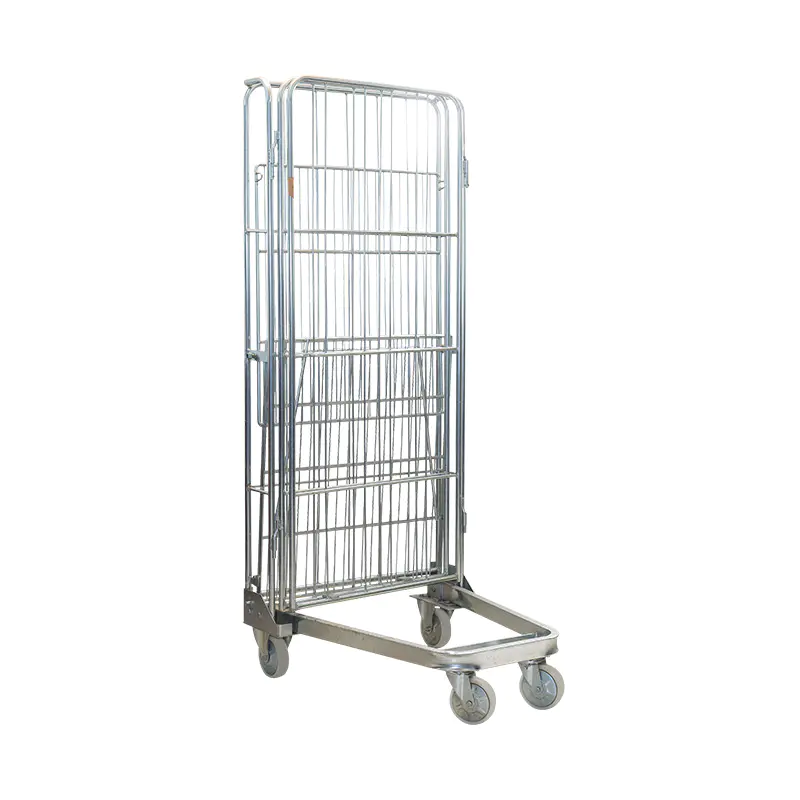
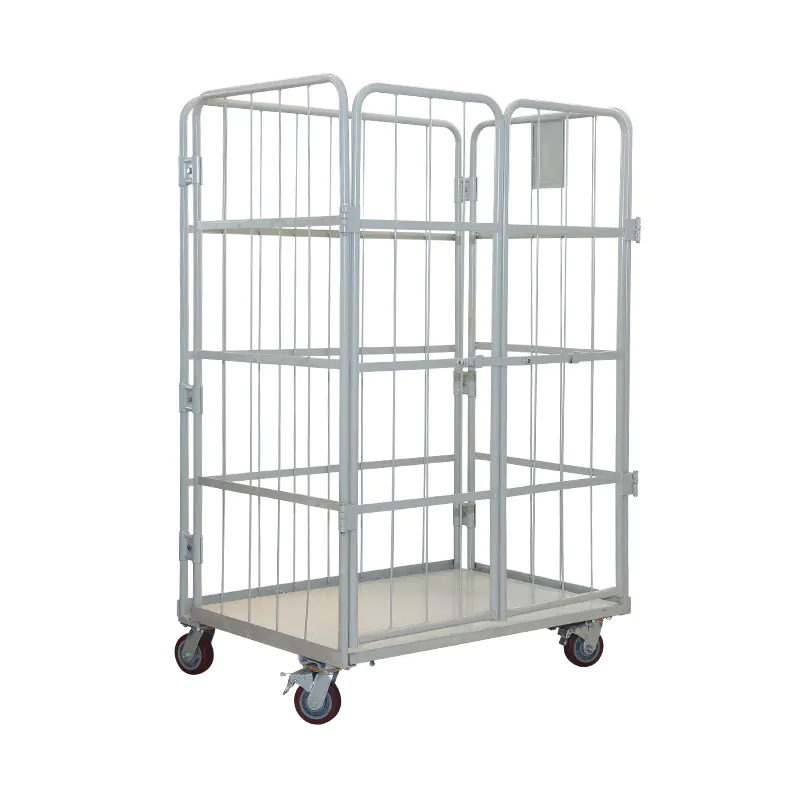
The four-post design represents the industry standard and most widely adopted configuration. This mechanism features four vertical corner posts that serve as the primary structural elements. The two longer side walls remain permanently fixed to the base and top frame, while the shorter end walls hinge at their connection points. To collapse the unit, operators unlock and fold the end walls inward sequentially, causing the side walls to drop down and lie flat atop the folded components.
This design offers exceptional mechanical simplicity with fewer moving parts, resulting in reduced maintenance requirements and extended service life. The straightforward operation requires minimal training, making it ideal for high-turnover warehouse environments. Four-post cages typically support dynamic loads ranging from 800kg to 1500kg and static loads up to 5000kg when stacked four to six levels high.
Box-Type Foldable Configuration
Box-type designs prioritize maximum security and content protection. Unlike standard wire mesh versions, these configurations feature solid steel panels or corrugated sheet metal walls that provide complete enclosure. The folding mechanism typically involves all four walls hinging at the base, folding downward in a specific sequence, or utilizing a lift-and-collapse system where the top frame raises to allow wall movement before lowering into a flat profile.
While offering superior protection against dust, moisture, and unauthorized access, box-type units generally weigh 15-20% more than mesh equivalents and require more careful operation during the folding process. These characteristics make them particularly suitable for high-value components, small parts that could escape through mesh openings, and environments with significant dust or debris.
Drop-Gate Accessibility Design
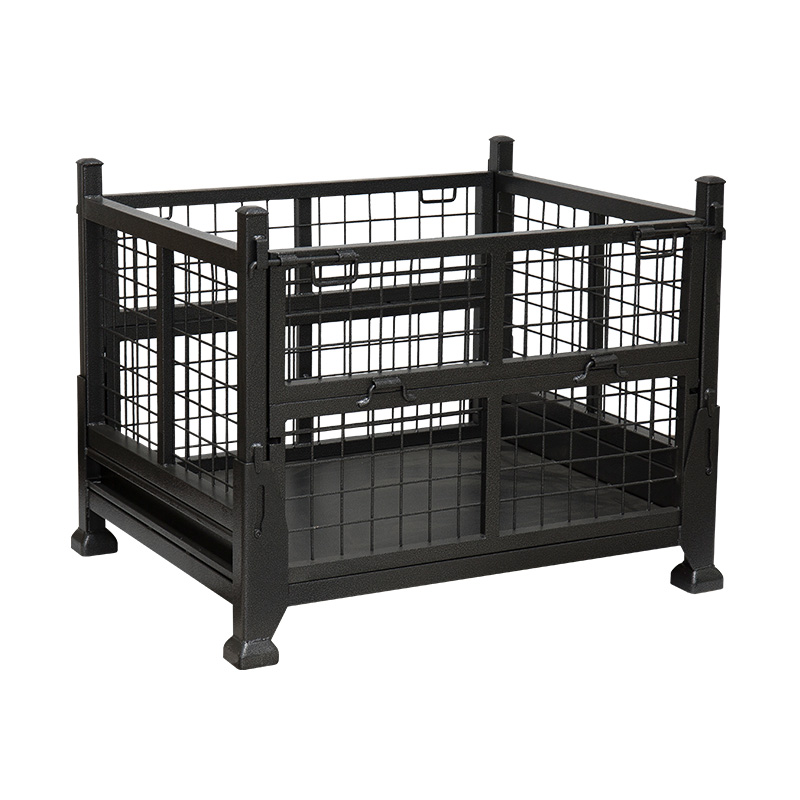
A specialized variation incorporates drop-down gates—hinged wall sections that lower to create wide loading apertures. This design maintains full collapsibility while addressing accessibility challenges. The gate mechanism integrates seamlessly with the folding system, functioning as a standard wall panel during collapse sequences while providing unobstructed access during operations.
Standard configurations include half-drop gates on one or both long dimensions, allowing content access even when cages are stacked three to four levels high. This feature proves invaluable for operations involving bulk materials, manual order picking, or frequent partial load/unload cycles.
Material Specifications and Construction Quality
The durability and performance of any foldable and collapsible pallet cage depend fundamentally on material selection and manufacturing precision. Industry-standard construction utilizes mild steel Q235 or Q195, offering an optimal balance of strength, weldability, and cost-effectiveness.
Wire Mesh Configurations
Wire mesh specifications significantly impact cage performance:
- Wire diameter: Standard options range from 4.0mm for light-duty applications to 6.3mm for heavy-duty industrial use
- Mesh grid size: Common configurations include 50mm x 50mm for general storage and 50mm x 100mm for larger items requiring increased visibility
- Grid pattern: Square grids provide uniform strength distribution, while rectangular patterns optimize material usage for specific load profiles
Surface Treatment Options
Surface treatments determine environmental suitability and service longevity:
- Electro-galvanized/zinc-plated: Provides sacrificial corrosion protection suitable for indoor storage environments with normal humidity levels
- Hot-dip galvanized: Offers superior corrosion resistance for outdoor storage, cold storage facilities, and high-humidity environments
- Powder coating: Applied as a dry powder and cured to form a skin-like finish, available in standard industrial colors (typically blue RAL 5010 or green RAL 6011) for identification and aesthetic consistency
Base Construction Variations
The base structure determines load distribution and handling compatibility:
- Channel steel reinforced bases: U-shaped channel steel integrated into the base structure increases load-bearing capacity and structural integrity
- Sheet metal floors: Solid steel plate construction prevents small item loss and provides uniform weight distribution
- Tubular frame bases: Open designs facilitate drainage and cleaning while reducing overall weight
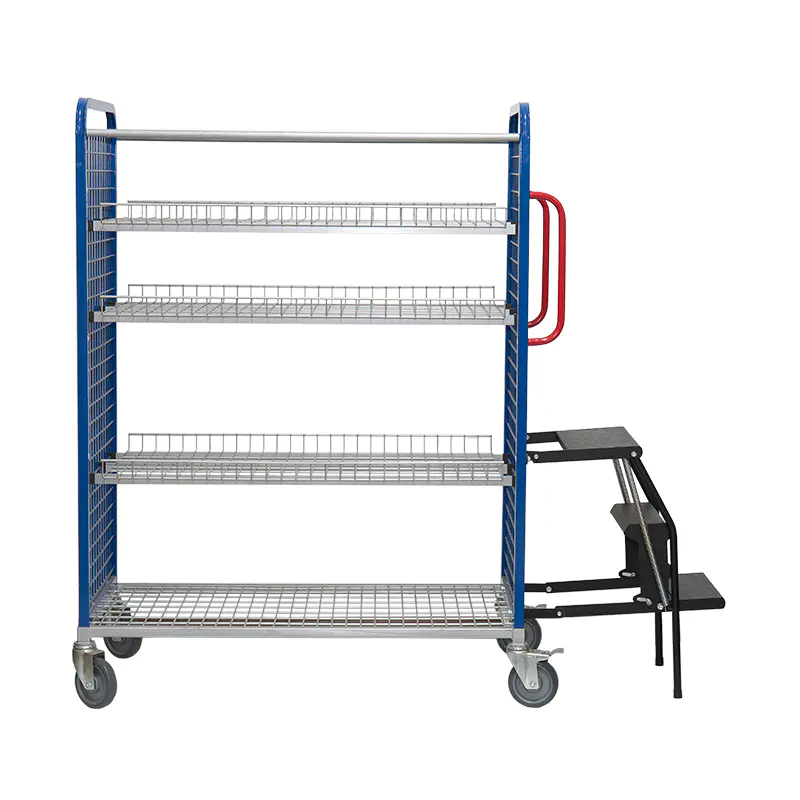
- Mobile bases with casters: Configurations featuring 125mm diameter wheels (typically two swivel with brakes, two fixed) transform static cages into mobile units for order-picking operations
Load Capacity and Dimensional Standards
Understanding load capacity ratings and dimensional standards ensures proper specification for intended applications. Foldable and collapsible pallet cage units typically fall into three duty categories:
| Duty Category |
Dynamic Load Capacity |
Static Load Capacity |
Typical Applications |
| Light Duty |
100-300kg |
500-800kg |
Retail display, light components, document storage |
| Medium Duty |
400-800kg |
1500-3000kg |
General warehousing, automotive parts, assembly operations |
| Heavy Duty |
1000-1500kg |
4000-5000kg |
Metal components, machinery parts, foundry applications |
Standard exterior dimensions follow modular sizing to ensure compatibility with pallet racking and transportation systems:
- 1200mm x 1000mm x 890mm: The most common European standard size, compatible with EUR pallets
- 1000mm x 800mm x 840mm: Compact size ideal for restricted spaces and lighter loads
- 1200mm x 1000mm x 1200mm: Extended height configuration for bulky items
- 800mm x 600mm x 640mm: Half-size units for small parts and workstation applications
Collapsed heights typically range from 200mm to 350mm depending on design complexity and base construction, enabling stacking of 7-10 collapsed units in the vertical space required for one assembled cage.
Operational Efficiency and Workflow Integration
Selecting the appropriate foldable and collapsible pallet cage design requires careful analysis of operational workflows and integration requirements. The frequency of folding operations significantly impacts design suitability.
High-Frequency Cycling Considerations
Operations requiring daily or multiple-times-daily folding benefit from simplified four-post mechanisms. These designs enable single-operator collapse and assembly in under 60 seconds, minimizing labor costs and operational delays. The mechanical simplicity reduces potential failure points, ensuring consistent performance across thousands of cycles.
Stacking and Storage Optimization
Stacking capabilities vary significantly between designs:
- Loaded stacking: Standard units stack 3-4 high when loaded to rated capacity, with specialized heavy-duty designs achieving 6-7 levels
- Empty stacking: Collapsed units typically stack 10-15 high, depending on base design and stability requirements
- Transport efficiency: A standard 53-foot trailer accommodates approximately 144 assembled cages or 324 collapsed units—a 225% increase in return transport efficiency
Material Handling Equipment Compatibility
Standard foldable and collapsible pallet cage designs feature four-way fork entry, allowing forklift access from all sides. Ground clearance typically measures 100mm to facilitate pallet jack usage, while reinforced bases support hand truck and conveyor integration. Cupped or pinned feet designs ensure positive engagement between stacked units, preventing displacement during transport or seismic events.
Industry-Specific Applications and Selection Guidelines
Different industries present unique requirements that influence foldable and collapsible pallet cage selection. Understanding these specialized needs ensures optimal equipment specification.
Automotive and Manufacturing
The automotive sector demands heavy-duty four-post designs capable of handling metal components, brake discs, radiators, and engine parts. Load capacities of 1000kg-1500kg with hot-dip galvanized finishes withstand the rigors of just-in-time delivery systems and outdoor staging areas. The 1200mm x 1000mm footprint aligns with standard automotive packaging specifications.
Agriculture and Food Processing
Agricultural applications benefit from drop-gate configurations facilitating bulk loading of produce, grains, or waste materials. Food-grade powder coatings or stainless steel construction options meet hygiene requirements, while ventilation provided by mesh designs prevents moisture accumulation in stored crops.
Recycling and Waste Management
Recycling operations require robust construction to handle irregular, abrasive materials. Heavy-gauge wire (6.0mm-6.3mm diameter) with reinforced bases withstands the impact of metal scrap, plastics, and paper products. Open mesh designs allow drainage of liquids from recyclable materials while maintaining containment.
Retail and E-Commerce Fulfillment
Order-picking operations utilize mobile cage configurations with caster bases. Half-height designs improve visibility and access for SKU picking, while collapsibility enables efficient reverse logistics for empty container returns. Powder-coated finishes in corporate colors support brand consistency in customer-facing operations.
Cold Storage and Pharmaceuticals
Temperature-controlled environments require specialized considerations. Hot-dip galvanized or stainless steel construction resists corrosion from condensation and temperature cycling. Mesh designs facilitate rapid temperature equilibration, reducing energy costs associated with cooling loaded cages. Smooth welds and sealed bases prevent bacterial accumulation in pharmaceutical applications.
Total Cost of Ownership Analysis
Evaluating foldable and collapsible pallet cage investments requires comprehensive total cost of ownership (TCO) analysis beyond initial purchase price. Key factors include:
Return on Investment Drivers
The economic advantages of collapsible designs manifest across multiple cost centers:
- Transportation savings: Collapsed units reduce return freight costs by 60-80% compared to assembled container returns
- Storage efficiency: Warehouse space requirements for empty containers decrease by 70-85%
- Packaging elimination: Reusable cages eliminate ongoing costs for disposable packaging materials (cardboard, shrink wrap, strapping)
- Damage reduction: Rigid metal construction reduces product damage rates by 40-60% compared to disposable alternatives
- Labor efficiency: Standardized dimensions and handling features reduce loading/unloading time by 25-35%
Service Life Expectations
Quality foldable and collapsible pallet cage units deliver service lives of 10-15 years under normal operating conditions. This longevity spreads initial investment costs over extended periods, typically achieving payback periods of 12-18 months when replacing disposable packaging systems. Maintenance requirements remain minimal, with occasional hinge lubrication and inspection of weld integrity constituting primary care needs.
Sustainability and Environmental Impact
Returnable packaging systems significantly reduce environmental footprints. A single collapsible cage can replace thousands of disposable packaging units over its service life, diverting cardboard and plastic waste from landfills. Additionally, reduced transportation requirements for empty returns decrease fuel consumption and associated carbon emissions by approximately 65% compared to non-collapsible alternatives.
Procurement Considerations and Supplier Evaluation
Successful procurement of foldable and collapsible pallet cage systems requires systematic supplier evaluation and specification development. Critical evaluation criteria include:
Manufacturing Quality Standards
Assess supplier adherence to quality management systems such as ISO 9001 certification. Robotic welding capabilities ensure consistent weld quality and structural integrity. Material traceability and certification verify the use of specified steel grades (Q235, Q195) rather than inferior substitutes.
Customization Capabilities
Evaluate suppliers' ability to accommodate custom specifications:
- Dimensional modifications: Non-standard sizes to fit specific rack configurations or product dimensions
- Load capacity adjustments: Reinforced construction for specialized heavy applications
- Access modifications: Additional drop gates, removable panels, or specialized opening configurations
- Identification features: Nameplates, color coding, RFID mounting points, or barcode labels
- Interior accessories: Dividers, shelves, or dunnage options for product protection
Logistics and Support Services
Comprehensive procurement evaluation addresses logistical capabilities:
- Production capacity: Daily output capabilities ranging from 50-200 units for large-scale deployments
- Lead times: Standard delivery schedules of 3-4 weeks for standard products, 6-8 weeks for custom configurations
- Packaging: Proper bundling with stretch film and plastic banding to prevent transit damage
- After-sales support: Warranty terms, spare parts availability, and technical consultation services
Frequently Asked Questions
Q1: What is the primary difference between foldable and collapsible pallet cage designs?
While the terms are often used interchangeably, "foldable" typically refers to designs with hinged components that fold inward or downward, while "collapsible" may encompass designs where walls detach or mechanisms allow the structure to reduce in size. In practice, most industrial cages combine both characteristics—folding walls that collapse onto the base. The four-post design represents the most common configuration, offering the best balance of simplicity and durability.
Q2: How much space can I save using collapsible pallet cages compared to fixed containers?
Collapsed cages typically achieve a 4:1 to 5:1 space reduction ratio. A standard cage measuring 1200mm x 1000mm x 890mm when assembled collapses to approximately 1200mm x 1000mm x 250mm. This means you can store or transport 4-5 collapsed units in the same space required for one assembled cage, reducing return freight costs by 60-80% and empty storage requirements by 70-85%.
Q3: What load capacity should I specify for my application?
Capacity selection depends on your specific materials. Light-duty applications (100-300kg) suit retail and document storage. Medium-duty (400-800kg) handles general warehouse and automotive parts. Heavy-duty (1000-1500kg) accommodates metal components and machinery. Always include a 20-25% safety margin above your maximum expected load, and consider dynamic load ratings for transport versus static ratings for stationary storage.
Q4: Which surface treatment is best for outdoor storage applications?
Hot-dip galvanizing provides the best corrosion resistance for outdoor or high-humidity environments. The process coats all surfaces including welds and joints, offering protection against rust for 10-15 years even in challenging conditions. Powder coating offers good indoor protection and aesthetic options but may chip or wear in outdoor applications. Electro-galvanizing suits indoor applications with controlled environments only.
Q5: Can collapsible cages be used with standard pallet racking systems?
Yes, standard foldable and collapsible pallet cage dimensions align with common pallet sizes (1200mm x 1000mm, 1000mm x 800mm) ensuring compatibility with selective, drive-in, and push-back racking systems. Verify your rack beam ratings accommodate the combined cage and content weight. Some cage bases feature rackable runners for improved stability on rack beams.
Q6: What is the typical service life of a quality pallet cage?
Quality steel pallet cages constructed from Q235 material with proper surface treatment deliver 10-15 years of service under normal operating conditions. High-frequency folding operations (daily use) may reduce this to 8-10 years, while occasional use in controlled environments can extend service life beyond 15 years. Regular inspection of hinges, welds, and surface coatings maximizes longevity.
Q7: Are custom sizes available for specialized applications?
Yes, most manufacturers offer customization services for dimensions, load capacities, and features. Custom sizes accommodate specific rack configurations, product dimensions, or workflow requirements. Minimum order quantities typically range from 30-50 units for custom specifications. Lead times extend to 6-8 weeks for non-standard designs compared to 3-4 weeks for standard products.
Q8: How do drop-gate designs affect the folding mechanism?
Drop-gate designs integrate seamlessly with standard folding mechanisms. The gate functions as a standard wall panel when closed and latched, allowing the cage to collapse normally. The primary benefit is enhanced accessibility for loading and unloading without compromising the space-saving advantages of collapsibility. Half-drop gates on long sides provide access even when cages are stacked 3-4 high.



 Español
 русский
 عربى
عربى