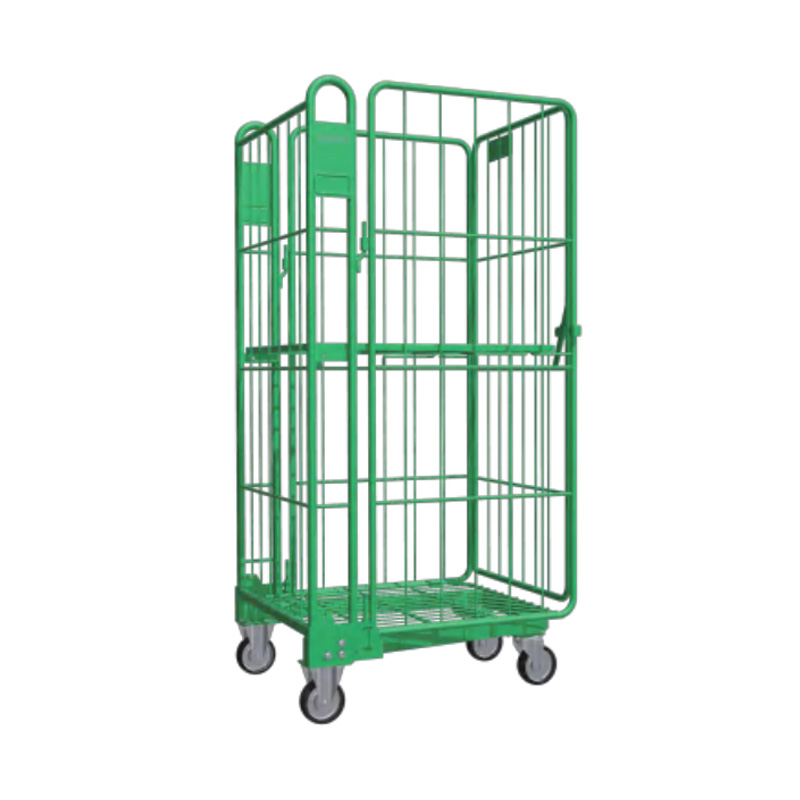
Definition of Nestable in Galvanized Nestable Foldable Roll Container
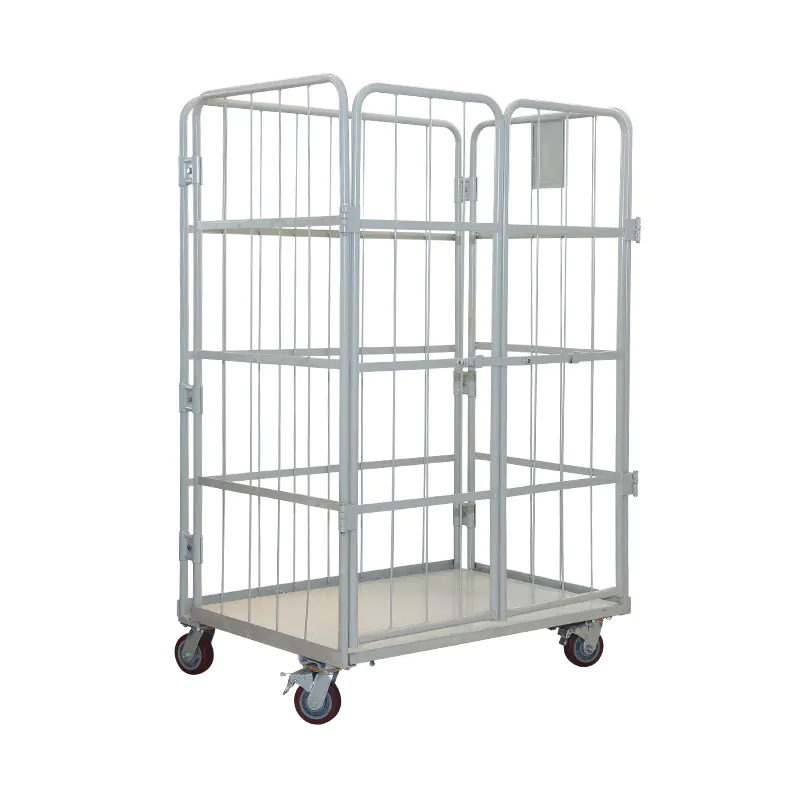
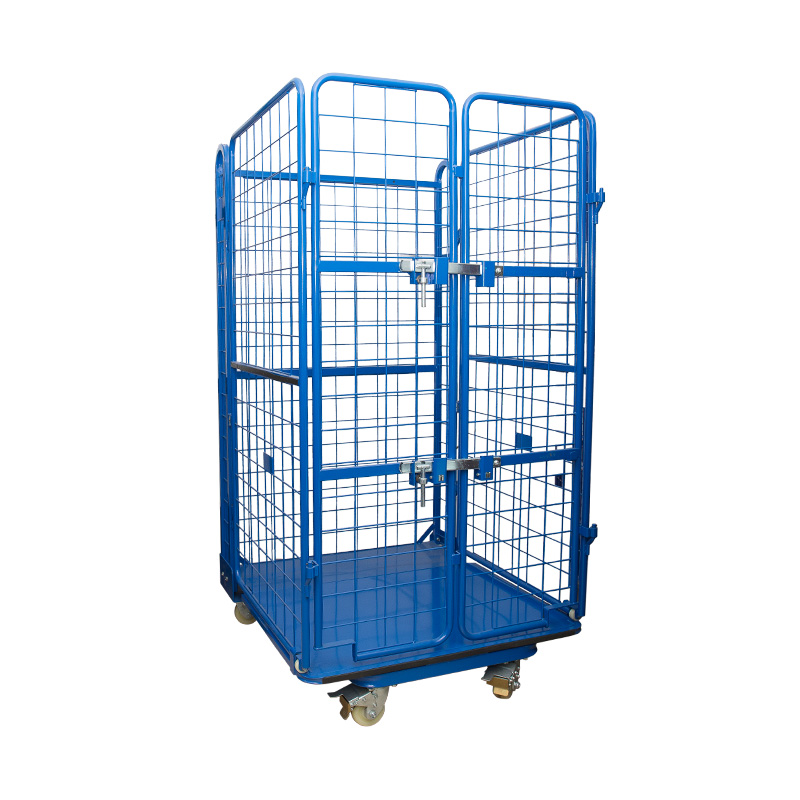
In the industrial logistics and storage industry, the term nestable describes a core functional design feature of roll containers that allows empty units to be inserted or nested inside one another to drastically reduce occupied space.
This design is purpose-built for empty storage, return transportation, and idle inventory management, distinguishing nestable roll containers from standard non-nestable logistics equipment. When combined with galvanized construction and foldable functionality, nestable roll containers become one of the most versatile material handling solutions for B2B operations across manufacturing, retail, warehousing, and distribution sectors.
For B2B buyers, understanding the nestable characteristic is critical, as it directly impacts operational efficiency, transportation costs, storage capacity, and long-term return on investment. Unlike fixed-frame roll cages, nestable models are engineered with tapered side structures, recessed base designs, and compatible frame dimensions that enable seamless nesting without structural damage or functional impairment.
Core Characteristics of Nestable Roll Containers
- Tapered frame structure that creates a gradual inward slope for smooth nesting
- Standardized dimensional compatibility across the same product model
- No disassembly required to achieve nested configuration
- Preservation of structural integrity and load-bearing capacity after repeated nesting
- Compatibility with foldable designs for dual-space-saving functionality
The nestable feature is not a minor add-on but a foundational engineering principle for modern roll containers. Industry data shows that nestable roll containers can reduce empty storage space by 60-70% compared to traditional fixed logistics carts, making this feature a top priority for B2B buyers managing large fleets of material handling equipment.
Structural Design Principles Behind Nestable Roll Containers
The functionality of nestable galvanized foldable roll containers relies on precise structural engineering that balances space-saving performance with durability. Every component is designed to enable seamless nesting while maintaining the strength required for industrial use.
Key Structural Elements Enabling Nestable Functionality
- Tapered Side Frames: The vertical frame tubes angle inward from top to bottom, creating a conical shape that allows one container to fit inside another
- Recessed Base Platform: The base is engineered with a lowered center section to accommodate the caster wheels of nested containers
- Offset Corner Posts: Corner supports are positioned to avoid interference during nesting and folding
- Flexible Foldable Side Panels: Collapsible mesh or solid sides fold inward to further reduce profile for nesting
- Standardized Caster Placement: Wheel housings are recessed to fit within the base of the nesting container
Galvanized steel construction enhances the nestable design by providing corrosion resistance and structural rigidity. The hot-dip galvanization process creates a protective zinc layer that prevents rust and wear, ensuring the nestable mechanism functions smoothly even after years of heavy use in outdoor or humid environments.
Unlike plastic nestable containers that can warp or crack under pressure, galvanized steel nestable roll containers maintain their dimensional accuracy, which is essential for consistent nesting performance. This dimensional stability ensures that galvanized nestable foldable roll container units can be nested and un-nested thousands of times without losing their functional capabilities.
| Design Element |
Function in Nesting |
Space Saving Impact |
| Tapered Frame |
Allows insertion of one container into another |
40% space reduction |
| Foldable Sides |
Collapses vertical profile before nesting |
25% additional space reduction |
| Recessed Casters |
Wheels fit inside base of nested unit |
10% space reduction |
| Combined Design |
Full nestable functionality |
70% total space reduction |
Operational Benefits of Nestable Roll Containers for B2B Buyers
B2B purchasers in logistics, manufacturing, retail, and distribution sectors prioritize nestable roll containers for their measurable operational advantages. These benefits directly impact bottom-line costs and workflow efficiency, making the nestable feature a valuable investment for industrial operations of all sizes.
Transportation Cost Reduction
Empty logistics equipment transportation represents a significant operational expense for businesses. Nestable roll containers solve this challenge by allowing more units to be transported in a single shipment. A standard 40-foot shipping container can hold 8-10 non-nestable roll containers, but can accommodate 28-32 nested galvanized nestable foldable roll containers.
This threefold increase in transportation efficiency reduces fuel costs, labor expenses, and carbon emissions. For businesses with nationwide or international distribution networks, this translates to annual savings of thousands of dollars in logistics expenses.
Storage Space Optimization
Warehouse and storage space is a premium resource for industrial operations. Nestable roll containers eliminate the problem of idle equipment consuming valuable floor space. When not in use, these containers nest together to create compact stacks that require 70% less storage space than conventional roll cages.
For facilities with limited storage capacity, this space-saving design allows businesses to store more equipment in the same area or reclaim valuable floor space for revenue-generating operations like inventory storage or order fulfillment.
Labor Efficiency Improvement
Nestable roll containers reduce manual handling requirements for warehouse staff. The nesting process requires minimal physical effort compared to disassembling or stacking non-nestable containers. Workers can nest up to 10 containers in the time it takes to rearrange a single non-nestable unit, reducing labor time spent on equipment management by 65%.
This efficiency allows staff to focus on core operational tasks rather than equipment handling, improving overall productivity and reducing workplace fatigue and injury risks associated with heavy manual labor.
Equipment Longevity and Return on Investment
Galvanized nestable foldable roll containers are built for durability. The nestable design eliminates the structural stress that occurs when stacking non-nestable containers, preventing frame bending, joint damage, and component failure. Galvanized steel construction further extends service life to 10-15 years with proper maintenance, compared to 3-5 years for standard non-galvanized containers.
This extended service life maximizes return on investment, making nestable roll containers a cost-effective long-term solution for B2B buyers. The combination of durability, space savings, and transportation efficiency creates a rapid payback period typically within 12-18 months of implementation.
Advantages of Galvanized Construction in Nestable Foldable Roll Containers
The galvanized finish is an essential component of high-quality nestable foldable roll containers, providing critical protective properties that enhance performance and longevity in industrial environments. Understanding the benefits of galvanized steel helps B2B buyers make informed purchasing decisions.
Corrosion Resistance Properties
Hot-dip galvanization creates a metallurgically bonded zinc coating that protects the underlying steel from rust, oxidation, and environmental damage. This protective layer is highly resistant to moisture, chemicals, and temperature fluctuations, making galvanized nestable roll containers suitable for both indoor and outdoor use.
Unlike painted or powder-coated finishes that can chip or scratch, the galvanized coating provides complete 360-degree protection, including interior surfaces and weld joints. This corrosion resistance is particularly valuable for operations in humid climates, cold storage facilities, and outdoor logistics yards.
Strength and Structural Integrity
Galvanized steel maintains exceptional structural strength while supporting the nestable and foldable design requirements. The material can withstand heavy loads up to 500kg per unit, making it suitable for transporting industrial components, retail merchandise, food products, and manufacturing materials.
The combination of high-tensile steel and galvanized protection ensures the container maintains its dimensional accuracy critical for nesting performance. Even under heavy loads and frequent use, the frame remains straight and true, ensuring consistent nesting functionality throughout the product's lifespan.
Low Maintenance Requirements
Galvanized nestable roll containers require minimal maintenance compared to other material handling solutions. The corrosion-resistant finish eliminates the need for painting, touch-ups, or rust treatment. Regular cleaning with standard industrial cleaning solutions is sufficient to maintain appearance and functionality.
This low-maintenance design reduces ongoing operational costs and downtime associated with equipment maintenance. For B2B buyers managing large equipment fleets, this translates to significant time and cost savings over the product lifecycle.
Environmental Sustainability
Galvanized steel is 100% recyclable at the end of the product lifecycle, making galvanized nestable foldable roll containers an environmentally sustainable choice. The long service life reduces replacement frequency, and the material can be completely recycled without environmental impact.
Businesses prioritizing sustainability initiatives benefit from choosing galvanized nestable solutions, aligning material handling equipment with environmental responsibility goals while maintaining operational performance.
Foldable Functionality Complementing Nestable Design
The foldable feature works in perfect harmony with the nestable design to create the ultimate space-saving logistics solution. Understanding how these two features integrate helps B2B buyers fully appreciate the value of galvanized nestable foldable roll containers.
How Foldable and Nestable Features Work Together
The foldable mechanism allows the side panels and gate to collapse inward, reducing the container's profile before nesting. This two-step space-saving process creates maximum efficiency: first fold, then nest for optimal space reduction.
- Foldable sides collapse vertically to reduce height profile by 40%
- Collapsed units nest together to reduce horizontal space by 60%
- Combined transformation creates 70-80% total space reduction
- Quick conversion between folded, nested, and operational configurations
This dual functionality makes the containers extremely versatile for dynamic logistics operations. They can be quickly set up for loading, collapsed for transport, and nested for storage, adapting seamlessly to changing operational needs.
Foldable Mechanism Design and Durability
High-quality galvanized nestable foldable roll containers feature reinforced hinge systems and locking mechanisms designed for thousands of folding cycles. The foldable components use heavy-duty pins and brackets that maintain alignment and structural integrity even with frequent use.
The folding mechanism is intuitive and requires no tools, allowing workers to convert the container in less than 30 seconds. Safety features include automatic locking systems that secure panels in both folded and operational positions, preventing accidental collapse during use.
Operational Versatility
The combination of nestable and foldable features creates unparalleled versatility for various industrial applications. These containers adapt to multiple roles within a single operation, eliminating the need for specialized equipment for different tasks.
They can function as standard roll cages for order picking, collapsible transport units for reverse logistics, and compact storage units for idle inventory. This versatility reduces capital expenditure by minimizing the number of specialized equipment types required in a facility.
Industrial Applications of Galvanized Nestable Foldable Roll Containers
Nestable roll containers serve diverse industries due to their versatile design and robust construction. B2B buyers from different sectors can leverage the benefits of these containers to solve specific operational challenges.
Retail and Distribution Centers
Retail operations and distribution centers use nestable roll containers for store replenishment, inventory management, and reverse logistics. The space-saving design is ideal for backroom storage in retail locations, while the mobility supports efficient order picking processes.
Major retail operations report 30% improvement in order fulfillment efficiency after implementing galvanized nestable foldable roll containers. The containers protect merchandise during transport and can be quickly nested and returned to distribution centers for reuse.
Manufacturing and Production Facilities
Manufacturing environments use these containers for work-in-progress transport, component storage, and waste material handling. The galvanized construction withstands industrial environments, while the nestable design keeps production floors clear of idle equipment.
The containers' 500kg load capacity accommodates heavy manufacturing components, and the foldable design allows them to be stored compactly when production lines change over or during scheduled downtime.
Food and Beverage Industry
The food and beverage sector benefits from the corrosion-resistant galvanized finish, which is suitable for cold storage and humid environments. Nestable roll containers facilitate efficient movement of ingredients, packaged goods, and finished products throughout the supply chain.
The smooth galvanized surface is easy to clean and sanitize, meeting food safety standards. The space-saving design is particularly valuable in cold storage facilities where space utilization directly impacts energy costs.
Logistics and Third-Party Logistics (3PL) Providers
Logistics companies rely on nestable roll containers to maximize transportation efficiency and minimize storage costs. The ability to nest containers during return trips reduces empty miles and increases vehicle utilization rates.
3PL providers managing multiple client accounts appreciate the containers' versatility, as they can adapt to different product types and storage requirements across various customer operations.
Healthcare and Pharmaceutical Industry
Healthcare facilities use nestable roll containers for secure transport of medical supplies, linen, and equipment. The galvanized surface is hygienic and easy to disinfect, while the foldable design allows compact storage in limited hospital spaces.
The quiet-rolling casters and maneuverable design make these containers suitable for healthcare environments where noise reduction and precise movement are important considerations.
Key Selection Criteria for B2B Buyers: Nestable vs. Non-Nestable
B2B buyers evaluating roll container options must understand the critical differences between nestable and non-nestable models to select the best solution for their operations. This comparison focuses on factors that impact operational efficiency and cost-effectiveness.
Space Utilization Comparison
Nestable roll containers provide superior space utilization for operations that handle empty equipment regularly. The 70% space reduction in storage and transportation creates immediate advantages for businesses with reverse logistics requirements.
Non-nestable containers may be suitable for operations that keep units continuously loaded with minimal empty storage or return transportation. However, the vast majority of industrial logistics operations benefit significantly from the nestable design's space-saving advantages.
Cost-Benefit Analysis
While nestable roll containers may have a slightly higher initial purchase price, the operational savings quickly offset this investment. Transportation cost reductions, storage space savings, and labor efficiency improvements create a favorable return on investment timeline of 12-18 months for most applications.
Long-term cost analysis consistently shows galvanized nestable foldable roll containers provide better total cost of ownership than non-nestable alternatives, especially for businesses with large equipment fleets.
Operational Flexibility Assessment
Nestable containers offer greater operational flexibility, adapting to changing requirements and seasonal fluctuations in demand. The ability to quickly convert between operational, folded, and nested configurations makes these containers suitable for dynamic business environments.
Businesses experiencing growth or seasonal demand variations particularly benefit from the nestable design's flexibility, as it allows scaling equipment usage without proportional increases in storage requirements.
Compatibility with Existing Operations
Modern warehouse management systems and material handling workflows are designed to accommodate nestable logistics equipment. The standardized dimensions of galvanized nestable foldable roll containers ensure compatibility with conveyor systems, pallet jacks, and standard shipping containers.
B2B buyers should verify that selected nestable containers conform to industry standard dimensions to ensure seamless integration with existing equipment and workflows.
Quality Standards and Specifications for Nestable Roll Containers
B2B buyers must evaluate specific quality standards and specifications when selecting galvanized nestable foldable roll containers to ensure they meet operational requirements and provide long-term value.
Material Specifications
High-quality nestable roll containers use premium steel with appropriate gauge thickness for structural integrity. The galvanized coating should meet international standards for corrosion protection, typically with a zinc coating thickness of 80-120 microns for optimal protection.
The frame construction should feature continuous welding at stress points for maximum strength, while mesh panels should have uniform wire spacing and secure attachment to the main frame.
Load Capacity and Durability Standards
Industrial-grade nestable roll containers should have a minimum static load capacity of 500kg and dynamic load capacity of 300kg to accommodate typical industrial loads. The nesting design should maintain these capacities without compromising structural stability.
Quality containers undergo rigorous testing for fatigue resistance, impact resistance, and repeated nesting cycles to ensure they can withstand the demands of daily industrial use.
Caster and Mobility Specifications
Caster quality significantly impacts the functionality of nestable roll containers. Industrial-grade casters should support the full load capacity while providing smooth maneuverability. Standard configurations include two fixed and two swivel casters, often with brake mechanisms for safety.
The caster mounting system should be robust and recessed to enable proper nesting, with wheel materials suitable for the intended floor surfaces and operating environments.
Dimension Standardization
Standard external dimensions for nestable roll containers typically range from 800×600×1400mm to 1200×800×1700mm, with internal dimensions optimized for common product sizes. The taper angle for nesting is precisely engineered at 3-5 degrees to ensure smooth insertion without excessive play.
Standardized dimensions ensure compatibility with transportation equipment, storage systems, and industry-wide logistics operations.
Maintenance Best Practices for Nestable Roll Containers
Proper maintenance ensures galvanized nestable foldable roll containers maintain their functionality and extend their service life. Implementing these best practices helps B2B buyers maximize their equipment investment.
Regular Inspection Procedures
Establish a routine inspection schedule to identify potential issues before they affect performance. Weekly visual inspections should focus on:
- Structural integrity of the frame and weld points
- Functionality of folding mechanisms and locking systems
- Caster condition and movement smoothness
- Galvanized coating condition and any signs of corrosion
Documenting inspections helps track equipment condition and schedule preventive maintenance before minor issues become major problems.
Cleaning and Protection Protocols
Galvanized surfaces require minimal cleaning but benefit from regular removal of accumulated debris. Use mild cleaning solutions and avoid abrasive materials that could scratch the galvanized coating.
For containers used in harsh environments, periodic application of a protective zinc-rich touch-up paint can extend corrosion protection in areas with minor coating damage from impact or abrasion.
Lubrication and Mechanical Maintenance
Folding hinges, locking mechanisms, and caster wheels require periodic lubrication to maintain smooth operation. Use industrial-grade lubricants designed for metal components in high-use environments.
Pay special attention to moving parts involved in the nesting and folding mechanisms, as proper function of these components is critical to the container's core space-saving benefits.
Repair and Replacement Guidelines
Address minor repairs promptly to prevent further damage. Most components can be repaired or replaced without replacing the entire container, extending service life and reducing replacement costs.
Establish clear guidelines for when to repair versus replace containers based on structural damage, load capacity compromise, or nesting functionality impairment.
Cost Analysis and ROI for Nestable Roll Container Investments
B2B buyers need comprehensive cost analysis to understand the financial benefits of investing in galvanized nestable foldable roll containers. This analysis examines both immediate costs and long-term savings.
Initial Investment Considerations
The initial purchase price of nestable roll containers is justified by the long-term operational benefits. While non-nestable containers may have a lower upfront cost, they lack the space-saving and efficiency features that deliver ongoing savings.
When calculating initial investment, consider the total cost of ownership rather than just purchase price, including transportation, storage, maintenance, and replacement costs over the equipment lifecycle.
Quantifiable Annual Savings
Businesses implementing nestable roll containers typically experience measurable annual savings across multiple operational areas:
- Transportation savings: 40-60% reduction in return logistics costs
- Storage savings: 50-70% reduction in space requirements
- Labor savings: 25-35% reduction in equipment handling time
- Maintenance savings: 30-40% lower upkeep costs
These savings vary based on operation size but consistently deliver significant financial benefits for businesses of all scales.
Long-Term Value Proposition
The 10-15 year service life of galvanized nestable foldable roll containers provides extended value beyond the initial investment. This long lifespan reduces capital expenditure frequency and provides predictable budgeting for equipment replacement.
The containers' versatility allows them to adapt to changing business needs, eliminating the need for frequent equipment re-specification and replacement as operations evolve.
Implementation Planning for Maximum ROI
Maximize return on investment by strategically implementing nestable roll containers across operations. Start with high-impact areas such as return logistics and storage optimization, then expand to other operational areas.
Train staff on proper folding, nesting, and handling techniques to ensure full utilization of the containers' space-saving features and prevent misuse that could reduce service life.
Environmental Advantages of Galvanized Nestable Foldable Roll Containers
Sustainable business practices are increasingly important for B2B buyers, and galvanized nestable foldable roll containers offer significant environmental benefits that align with green initiatives.
Resource Conservation
The extended service life of galvanized nestable containers reduces the frequency of equipment replacement, conserving raw materials and manufacturing energy. A single 15-year nestable container replaces three to five non-galvanized units over the same period.
The space-saving design reduces transportation requirements, decreasing fuel consumption and carbon emissions. Fewer delivery trips mean lower environmental impact for logistics operations.
Recyclability and Circular Economy
Galvanized steel is 100% recyclable without loss of quality, supporting circular economy principles. At the end of their service life, nestable roll containers can be completely recycled into new steel products with no waste sent to landfills.
The recycling process requires only a fraction of the energy needed for virgin steel production, further reducing the environmental footprint of these containers.
Energy Efficiency Benefits
Reduced transportation requirements directly translate to lower fuel consumption and greenhouse gas emissions. Nestable containers reduce the number of vehicles needed for equipment transport by 65-70%, significantly lowering carbon footprints.
In storage facilities, the compact nesting design reduces the space required for equipment storage, decreasing heating, cooling, and lighting energy consumption for warehouse operations.
Sustainable Business Certification Support
Implementing environmentally friendly material handling equipment like galvanized nestable foldable roll containers supports sustainability certifications and green business initiatives.
Businesses can include these environmental benefits in their corporate social responsibility reporting, demonstrating commitment to sustainable operations to customers, partners, and regulatory bodies.
Frequently Asked Questions About Nestable Roll Containers
Q1: What does nestable mean for roll containers?
Nestable means empty roll containers can be inserted inside each other to reduce storage and transportation space by 60-70% compared to non-nestable models.
Q2: How does nestable design work with foldable feature?
The foldable sides collapse first to reduce profile, then units nest together for maximum space savings, creating a two-step space optimization system.
Q3: What are the benefits of galvanized construction?
Galvanized coating provides superior corrosion resistance, durability, low maintenance, and 10-15 years of service life for industrial applications.
Q4: How much space can I save with nestable containers?
You can save approximately 70% of storage space and reduce transportation requirements by 65% compared to using non-nestable roll containers.
Q5: What weight capacity do these containers support?
Standard galvanized nestable foldable roll containers support 500kg static load capacity and 300kg dynamic load capacity for material transport.
Q6: How long do these containers typically last?
With proper maintenance, galvanized nestable roll containers provide 10-15 years of reliable service in industrial environments.
Q7: Can nestable containers be used outdoors?
Yes, the galvanized coating provides excellent weather resistance, making them suitable for both indoor and outdoor logistics operations.
Q8: How quickly can containers be converted for use?
The foldable and nestable design allows conversion between storage and operational modes in less than 30 seconds without tools.
Q9: Are nestable containers more expensive than standard models?
Initial cost is slightly higher, but operational savings deliver full ROI within 12-18 months through reduced transport and storage costs.
Q10: What industries benefit most from nestable containers?
Retail, manufacturing, food & beverage, logistics, healthcare, and distribution operations all benefit significantly from nestable roll container design.



 Español
 русский
 عربى
عربى