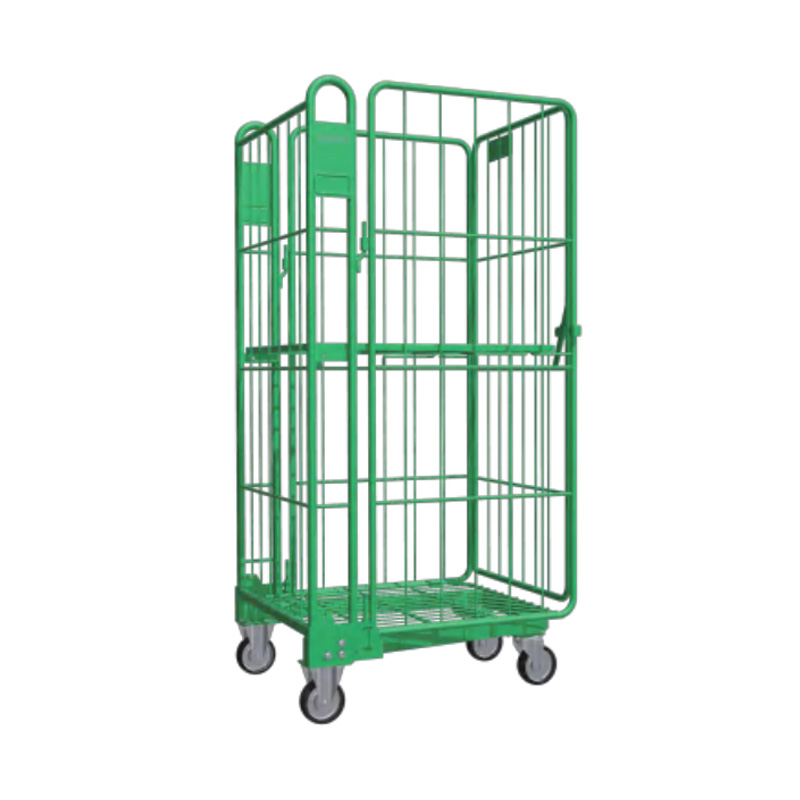
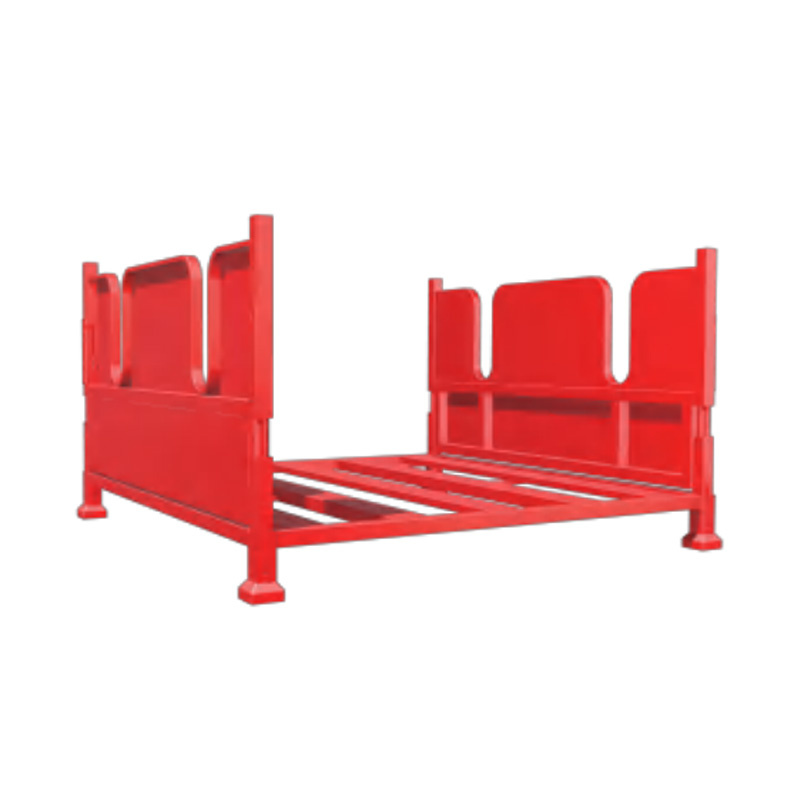
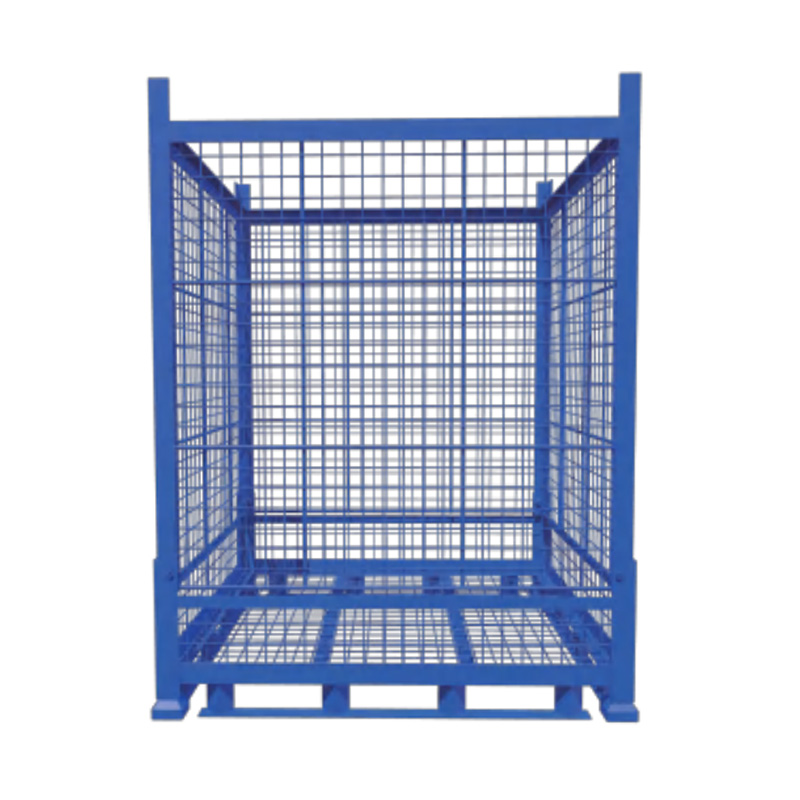
Material handling and storage systems are fundamental components of modern logistics, manufacturing, and supply chain operations. Selection of the appropriate containment solution directly affects operational efficiency, safety, throughput, and total cost of ownership. Two widely used industrial containment systems are foldable and collapsible pallet cage systems and fixed (non‑collapsible) cage systems. Both solutions support the storage and transport of goods, yet they differ significantly in structural design, load distribution, space utilization, handling characteristics, and lifecycle performance.
Fundamentals of Cage‑Based Storage Systems
Structural Overview
Industrial cage systems are designed to support unit loads during storage and transport. They generally consist of:
- Base pallet structure – provides a rigid platform for forklift or automated guided vehicle (AGV) engagement.
- Side walls and end walls – confine products and resist lateral forces.
- Corner posts or frames – transfer vertical loads from upper surfaces to the base and ultimately to the supporting infrastructure.
- Attachment hardware and reinforcements – ensure integrity under dynamic handling conditions.
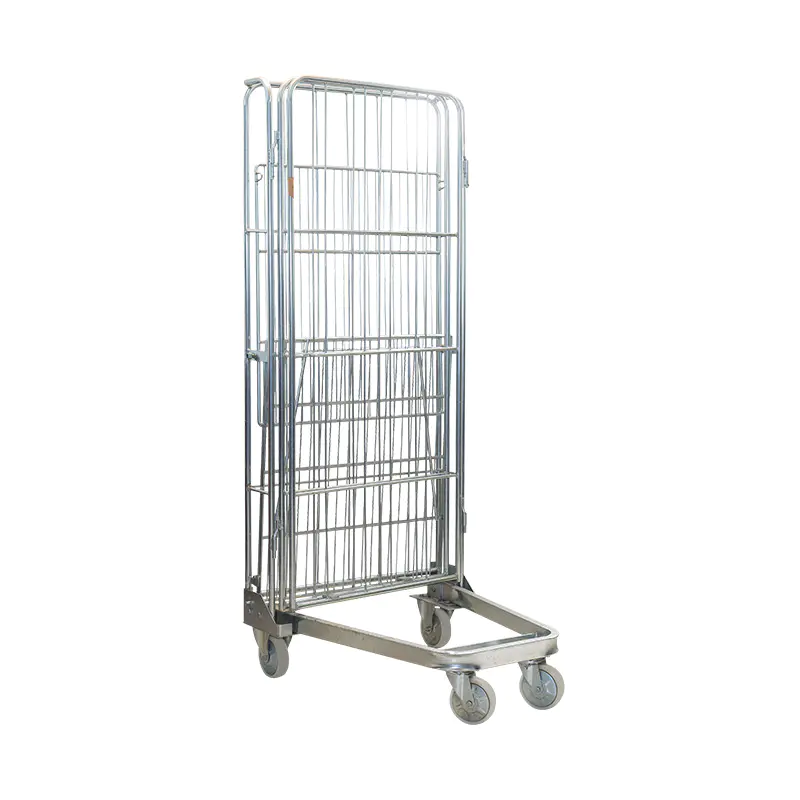
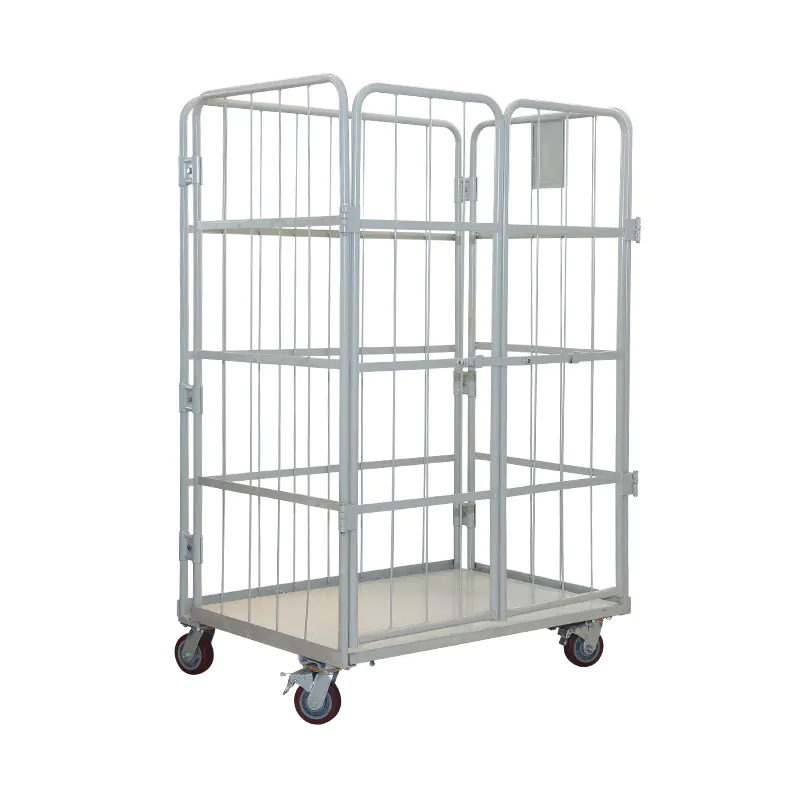
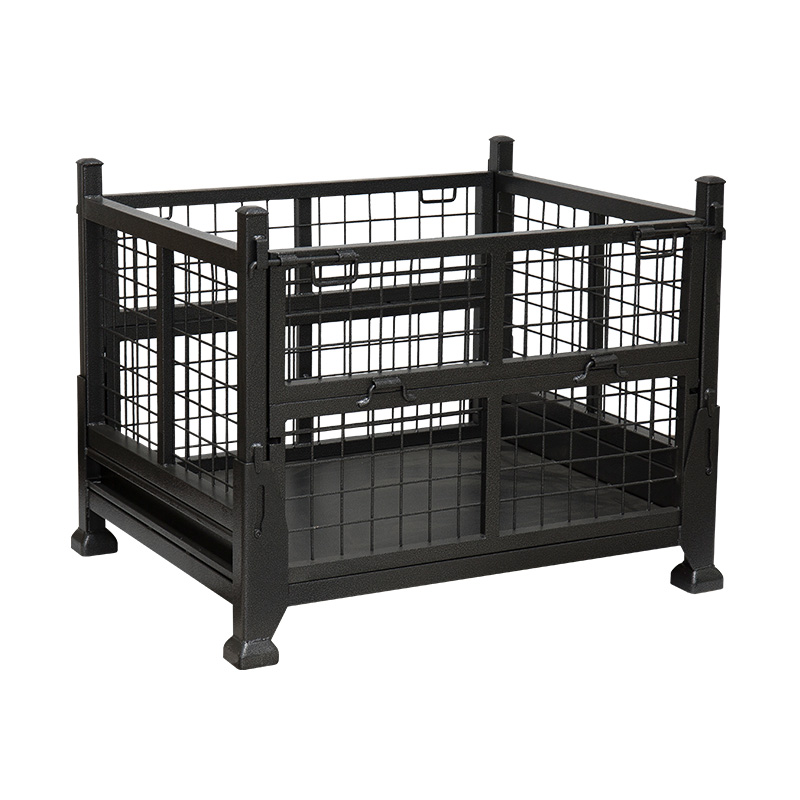
In a foldable and collapsible pallet cage, engineered hinges or quick‑release connectors enable the cage walls to fold onto the base when not in use, reducing empty return volume and optimizing space usage. In contrast, fixed cages have permanently rigid walls and frames that do not change configuration.
Load Capacity Definition
Load capacity refers to the maximum allowable load that a cage can safely carry, expressed as:
- Static load capacity – the maximum weight that can be supported when the unit is stationary (e.g., sitting on a warehouse floor).
- Dynamic load capacity – the maximum weight the cage can carry during movement (e.g., lift truck transport), accounting for dynamic stresses.
Load capacity is influenced by materials, structural design, weld quality, and manufacturing tolerances.
Stacking Limits Definition
Stacking limits define the safe vertical loading limits when units are stacked on top of one another. Stacking performance is governed by the cage’s ability to transfer vertical loads through its structural members without excessive deformation or collapse.
Stacking limits differ when:
- The unit is empty.
- The unit is loaded with product.
- The stacked configuration involves mixed loaded and empty units.
For foldable systems, stacking considerations also include stability of folded walls and engagement of locking mechanisms.
Load Capacity: Comparative Analysis
Material and Structural Considerations
Foldable and fixed cage systems share core materials such as high‑strength steel, reinforced panels, and industrial‑grade fasteners. However, key design differences influence load capacity:
Panel Joints and Hinge Interfaces
- Foldable designs integrate hinge assemblies, drop‑pins, or latch mechanisms to allow panel articulation. These interfaces can introduce localized stress concentrations and require precise alignment to maintain structural integrity.
- Fixed systems eliminate moving interfaces, providing continuous load paths that distribute forces with fewer interruptions.
Engineered hinge assemblies in foldable designs incorporate locking features that engage load‑bearing surfaces during operation. When correctly engaged, these interfaces can approach the load capacity of fixed cages; yet, foldable units require meticulous quality and tolerance control to ensure consistent performance.
Frame Continuity
- In fixed cages, continuous vertical posts and welded joints typically create uninterrupted load paths, contributing to higher static and dynamic capacity.
- In foldable and collapsible pallet cage solutions, the vertical load path may rely on locking brackets and engagement surfaces that must align precisely under load.
From an engineering perspective, systems with fewer discontinuities generally demonstrate greater resilience under peak load conditions due to reduced potential for localized buckling.
Static Load Capacity
Static load capacity influences shelving design, storage density, and safety planning. Static capacity is typically higher than dynamic capacity due to the absence of inertial effects.
Comparison Table — Static Load Capacity
| Feature |
Foldable and Collapsible Pallet Cage |
Fixed Cage |
| Typical static load limit |
Moderately high; dependent on hinge engagement and locking feature strength |
Generally higher due to uninterrupted frame design |
| Load distribution uniformity |
Requires precise panel alignment |
Uniform distribution through rigid frame |
| Sensitivity to assembly errors |
Moderate; improper engagement can reduce capacity |
Low; rigid frames less dependent on assembly accuracy |
| Application under long‑term storage |
Suitable when properly maintained |
Well‑suited for long‑term and high‑load applications |
In most industrial practice, fixed cages achieve higher static load capacities when all other parameters (material grade and construction quality) are equivalent. Foldable systems can attain comparable static capacity in mid‑range use cases but often require additional design emphasis on locking engagement surfaces.
Dynamic Load Capacity
Dynamic load capacity, critical for transport operations, is influenced by acceleration, deceleration, and handling shocks.
- Foldable systems must ensure that articulation hardware and locking features resist shear and bending loads during movement.
- Fixed cages inherently resist dynamic forces due to rigid connections.
Comparison Table — Dynamic Load Capacity
| Characteristic |
Foldable and Collapsible Pallet Cage |
Fixed Cage |
| Resistance to handling shocks |
High if locking mechanisms are secure |
Very high due to rigid structure |
| Impact of mechanical wear |
Hinges and locks can loosen over time |
Minimal; few moving parts |
| Suitability for automated handling |
Feasible with proper maintenance |
Excellent; little variation over lifecycle |
| Safety margins under dynamic loads |
Requires periodic inspection |
Consistent across operational cycles |
In dynamic environments, fixed cages typically offer more predictable performance. Foldable units require robust maintenance protocols, frequent inspection of pins and latches, and precise engagement procedures to ensure dynamic capacities are reliably achieved.
Stacking Limits: Detailed Considerations
Vertical Load Transfer Mechanisms
Vertical loads in stacked configurations travel through support points at the corners and along structural ribs. The manner in which these loads are transferred directly affects stacking limits.
Fixed Cage Load Paths
- Vertical posts and beams are welded or bolted to provide rigid load paths.
- Load transfer is direct, with minimal reliance on mechanical connectors.
- Fixed systems yield predictable compression behavior up to yield points of materials.
Foldable Cage Load Paths
- Load transfer occurs through a combination of base pallets, engaged wall panels, and locking hardware.
- During stacking, the top unit’s load must be transmitted through engaged hinges and posts to the lower unit’s main vertical members.
- Some designs use auxiliary stacking braces to augment load paths.
Key Stacking Factors
- Engagement Integrity – All locks/hardpoints must be fully engaged for full stacking performance.
- Wall Rigidity – Sidewalls that support loads can deform if not designed for vertical compression.
- Tolerance Accumulation – Minor gaps in foldable systems can become significant under heavy stack loads.
Empty vs Loaded Stacking
- Empty stack limits are generally higher for foldable cages, since the collapse load is less dependent on panel engagement.
- Loaded stacking must consider combined weight of stacked units and product weight distribution.
Stacking Scenarios
Table — Stacking Limit Scenarios
| Stacking Scenario |
Foldable and Collapsible Pallet Cage |
Fixed Cage |
| Empty units stacked |
High performance if designed with reinforced corners |
Very high due to rigid structure |
| Uniformly loaded stacked units |
Moderate to high performance; dependent on engagement integrity |
High and predictable capacity |
| Mixed loading (empty + loaded) |
Moderate; requires careful planning |
High with minimal variation |
| High stacking density (multiple units) |
Engineering review recommended |
Routine if loads are within limits |
In practice, fixed configurations allow planners to apply conservative stacking multipliers with confidence. Foldable systems, while capable, often require more precise control of stacking conditions and frequent inspection to ensure locking integrity.
Operational and Lifecycle Factors
Maintenance Impact on Capacity
Mechanical components such as hinges, pins, and locks are susceptible to wear and misalignment. Effective maintenance practices are essential for preserving nominal load and stacking capacities in foldable systems.
By contrast, fixed systems benefit from the absence of moving connections, simplifying maintenance and reducing variability in performance over time.
Environmental Considerations
Environmental exposures (moisture, corrosion agents, temperature cycles) affect materials and mechanical joints differently:
- Foldable systems require corrosion‑resistant plating or coatings around hinge surfaces to maintain smooth engagement and alignment.
- Fixed systems benefit from uniform protective coatings and fewer crevices where corrosion can degrade load paths.
Safety and Compliance
Comparative risk assessments should factor in:
- Regular inspection schedules for moving interfaces.
- Training for assembly and engagement procedures.
- Load and stacking signs or sensors to prevent misuse.
Safety standards relevant to industrial storage containers should be consulted when establishing operational limits.
Engineering Evaluation Framework
Selecting between foldable and fixed cage solutions should be guided by a structured evaluation framework.
Key Evaluation Criteria
- Expected Load Profiles: Determine typical static and dynamic weight scenarios including worst‑case loads.
- Stacking Density Requirements: Define maximum stack heights and load combinations.
- Handling Infrastructure: Evaluate automation systems, forklift models, and movement patterns.
- Space Optimization Goals: Quantify empty return volume and storage footprint.
- Inspection and Maintenance Capacity: Assess available resources for periodic mechanical inspection.
- Lifecycle Expectations: Align design life with organizational asset utilization goals.
Summary
Comparison of load capacity and stacking limits between foldable and collapsible pallet cage systems and fixed cages reveals distinct engineering trade‑offs:
-
Fixed cages deliver predictable, robust load capacity and stacking performance with minimal dependency on mechanical engagement integrity. Their rigid structure simplifies maintenance and provides stable performance over long lifecycle durations.
-
Foldable and collapsible pallet cage solutions introduce flexibility and improved space efficiency, especially in return logistics. With well‑engineered hinge mechanisms and proper maintenance practices, these units can approach the performance of fixed systems in many operational scenarios. However, their performance is sensitive to engagement accuracy, mechanical wear, and environmental conditions.
A systems engineering approach that considers handling dynamics, load distribution, inspection protocols, and lifecycle constraints is essential when choosing the appropriate containment strategy. Practical deployments should balance structural performance with operational requirements to achieve optimal material handling outcomes.
Frequently Asked Questions (FAQ)
Q1: What factors limit stacking performance in foldable cages?
A1: Stacking performance is limited by engagement integrity of folding interfaces, tolerance accumulation in panels, and vertical load transfer through mechanical locking points.
Q2: Can foldable cages match fixed cage stacking heights?
A2: In specific engineered applications with reinforced locking systems, foldable cages can achieve similar stacking heights, but this often requires careful validation under actual load conditions.
Q3: Are dynamic load capacities significantly different between the two systems?
A3: Fixed cages typically offer more predictable dynamic capacities due to rigid frames. Foldable systems need periodic checks of mechanical joints to maintain performance.
Q4: How does maintenance impact long‑term load capacity?
A4: Maintenance ensures mechanical joints, hinge surfaces, and locking features remain aligned and free of wear, preserving nominal load capacity over time, especially in foldable designs.
Q5: Should empty and loaded stacking limits be treated differently?
A5: Yes. Empty stacking is generally less demanding, while loaded stacking must account for product weight distribution and cumulative compressive loads.
References
- Industry standards and best practices in industrial containment and stacking safety.
- Material handling design guidelines regarding load capacity and stacking limits.
- Technical evaluations of collapsible industrial storage systems in logistics environments.



 Español
 русский
 عربى
عربى