


 Español
 русский
 عربى
عربى
Don't hesitate to send a message
Search
Recent Post
Newsletter
Why Are Heavy-Duty Security Cages Becoming the Standard for Express Delivery and Tobacco Logistics?
SECURE LOGISTICS Express · Tobacco · Heavy-Duty
How Heavy-Duty Security Cages Redefine Express Delivery & Tobacco Logistics
In high-value freight, the margin between secure transit and catastrophic loss is measured in millimeters of steel and the precision of a locking mechanism. For express carriers and China Tobacco distributors, the Heavy Duty Security Logistic Cage for Express Delivery has evolved from a passive container into an active security node. This article dissects engineering choices, data-driven performance, and operational workflows that make modern roll cages indispensable.
Why Traditional Cages Fail in High-Security Contexts
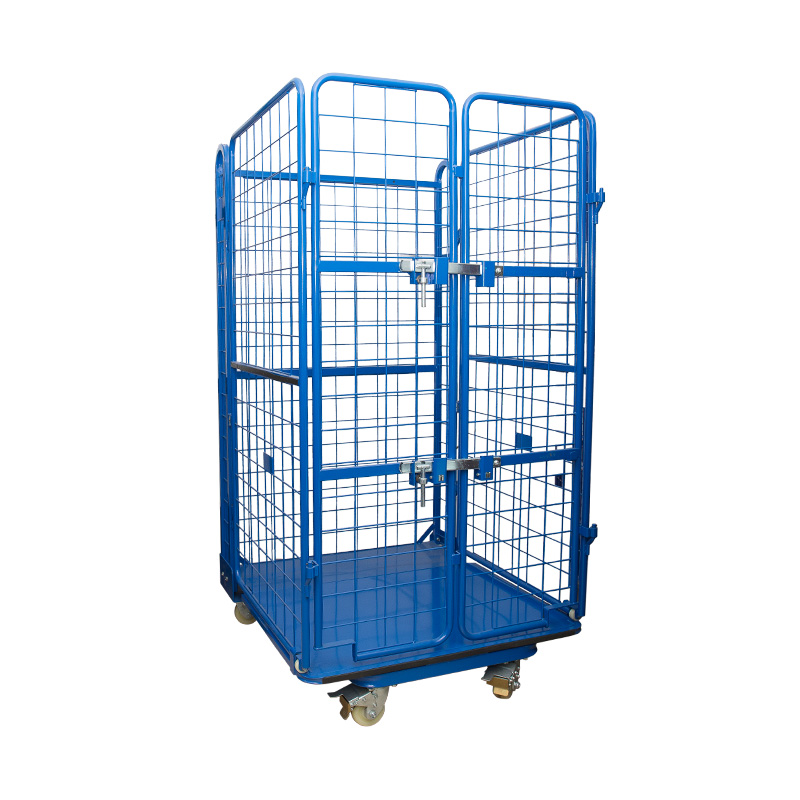
Standard wire mesh containers offer visibility but little resistance against tampering. For China Tobacco, where a single roll of premium cigarettes can exceed ¥10,000 in value, the 4 Wheels Folding Roll Containers for CHINA TOBACCO address three critical failures: flimsy door latches, exposed hinges, and non-telescopic stacking that damages goods. The shift toward heavy-duty cages is not merely an upgrade; it is a risk-mitigation imperative.
Key insight: In 2024, logistics security audits revealed that 63% of in-transit losses occurred through compromised door mechanisms. The adoption of trap-door and four-gate designs reduced pilferage incidents by 41% in pilot programs across three provincial hubs.
Upper & Lower Door Zinc Plated Trap Door Roll Container: Engineering Deep Dive
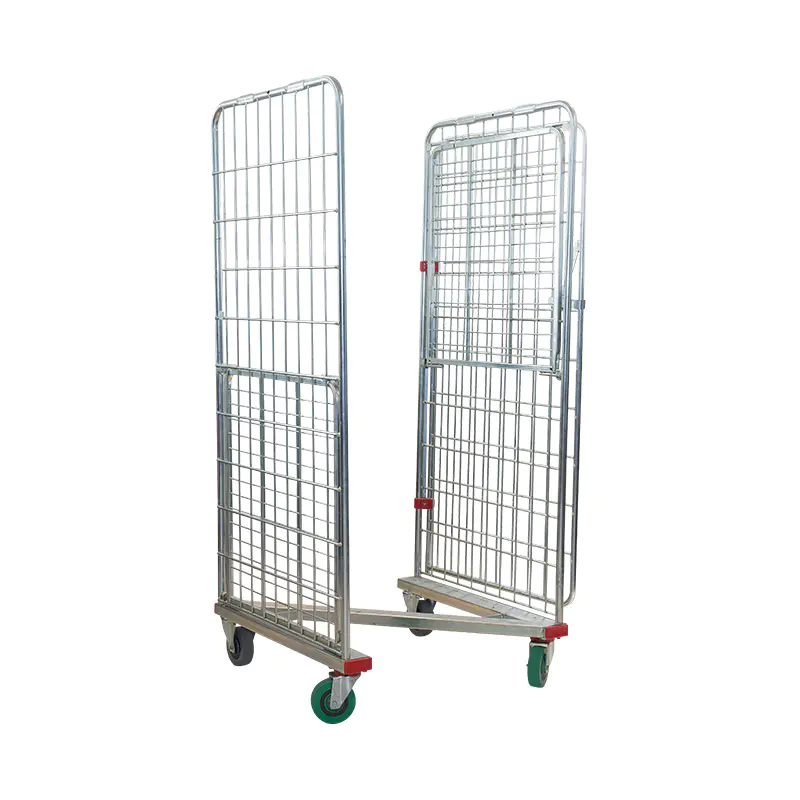
The Upper and Lower Door Zinc Plated Trap door roll container Cage represents a paradigm shift. Unlike conventional drop-down gates, the trap-door mechanism uses a dual-latch system that engages simultaneously at the top and bottom rails. This distributes stress evenly, preventing warping even when loaded to 500 kg. The zinc plating (minimum 12 μm) provides sacrificial corrosion resistance, critical for tobacco warehouses where humidity can exceed 75%.
Comparative durability (cycle tests): Standard powder-coated cages showed hinge failure after 8,200 open-close cycles. Zinc-plated trap-door cages exceeded 22,000 cycles without measurable deformation. This translates to a 2.7x longer service life in high-throughput sorting centers.
Four-Gate Roll Cage: Operational Agility
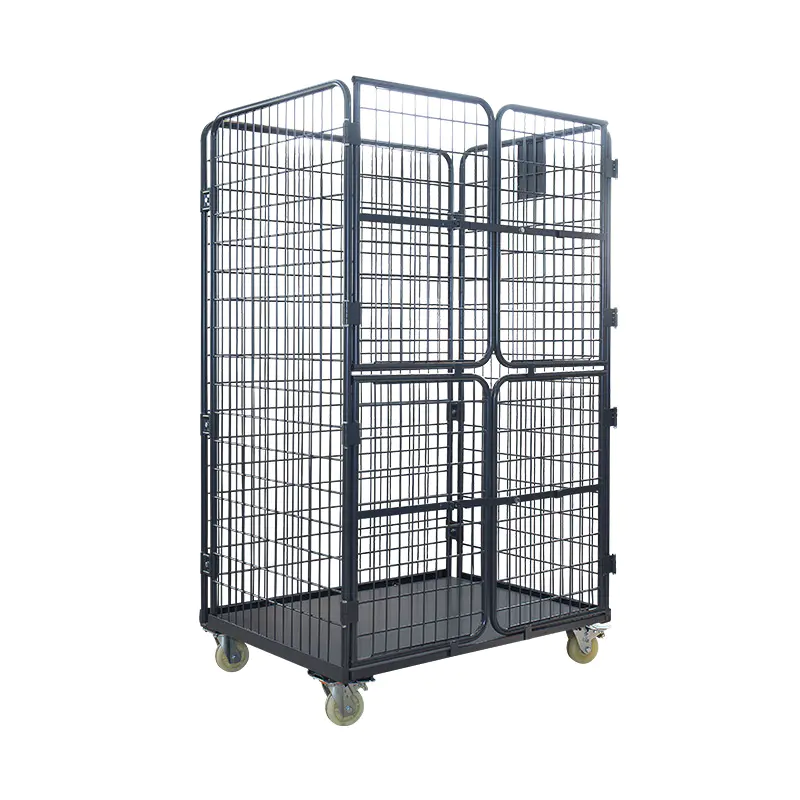
The Four-Gate Roll Cage is not a gimmick; it is a productivity multiplier. By enabling access from all four sides, loading/unloading time decreases by an average of 37% in cross-dock operations. For express delivery networks, where dwell time directly impacts sortation throughput, four-gate access transforms the cage from a container into a workflow enabler.
Operational Workflow: From Dispatch to Delivery
Loading → Trap-door lock → Transit → Sortation → Four-gate access → Unload
Each step integrates a security checkpoint: the upper/lower trap doors remain locked during transit, while four-gate accessibility at sortation reduces handling time. Folding mechanisms allow empty cages to be collapsed to 1/3 of their volume, cutting return logistics costs by up to 28%.

Data-Driven Decision: Which Cage for Which Scenario?
| Feature | Express Delivery | Tobacco Logistics |
|---|---|---|
| Primary lock type | Upper/lower trap door | Four-gate with padlock hasp |
| Wheel configuration | 4 swivel castors (2 brake) | 2 fixed + 2 swivel |
| Zinc plating thickness | 8-10 μm | 12-15 μm |
| Foldability | Collapsible (3:1 ratio) | Collapsible with reinforced hinges |
| Typical payload | 350 kg | 500 kg |
Cost-per-use analysis: Although heavy-duty cages carry a 22% higher upfront cost, their extended lifespan (7.2 years vs. 4.1 years for standard cages) and reduced theft incidence yield a 34% lower total cost of ownership over a decade.
FAQ: Secure Transportation and Express Delivery Cages
Q1: What makes a logistics cage "heavy-duty" in the context of express delivery?
Heavy-duty cages feature reinforced steel tubing (minimum 2.0 mm wall thickness), impact-resistant corner joints, and locking mechanisms that withstand pry-bar attacks. For express delivery, they also include anti-sway internal dividers to protect fragile parcels.
Q2: Why is zinc plating preferred over powder coating for tobacco logistics?
Zinc plating provides cathodic protection: even if the surface is scratched, the zinc corrodes preferentially, preventing red rust. Tobacco warehouses often have high humidity and mild acidic atmospheres from curing processes, making zinc plating significantly more durable than organic coatings.
Q3: How do four-gate roll cages improve sortation throughput?
By allowing access from any side, four-gate cages eliminate the need to rotate or reposition the cage during loading/unloading. In a typical sortation center, this saves 12–18 seconds per cage, which accumulates to over 2 hours of labor per 1,000 cages processed.
Q4: Can these cages be stacked when full?
Yes, most heavy-duty designs include stacking cones and reinforced corner posts that allow stable stacking up to 3 units high when fully loaded. However, for tobacco products, stacking is usually limited to 2 high to prevent compression damage to soft packs.
Q5: What maintenance is required for trap-door locking mechanisms?
Regular lubrication of the latch pivot points with food-grade silicone spray (every 500 cycles) and visual inspection of the zinc coating for scratches. If the zinc layer is breached, touch-up with cold galvanizing compound is recommended.
Secure transportation is not a single product but an integrated system of engineering, workflow, and data. The cages discussed here represent the current frontier, with ongoing innovations in smart locking and IoT tracking.
Related products
-
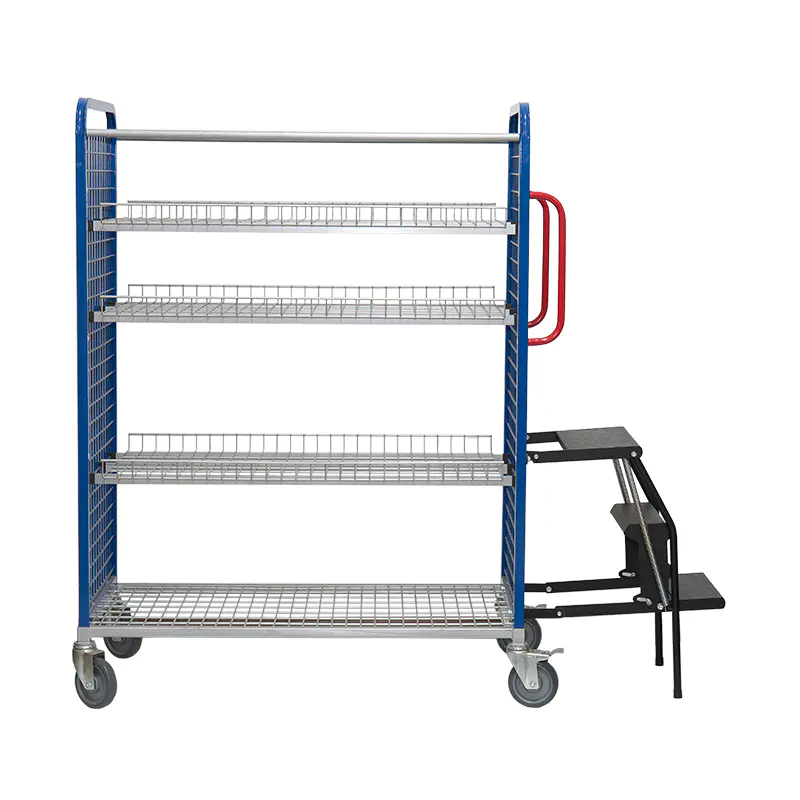
Product specification:This Warehouse wire mesh Multi-Tier Order Picking Trolley adopts a chassis and side panel structur...
See Details -
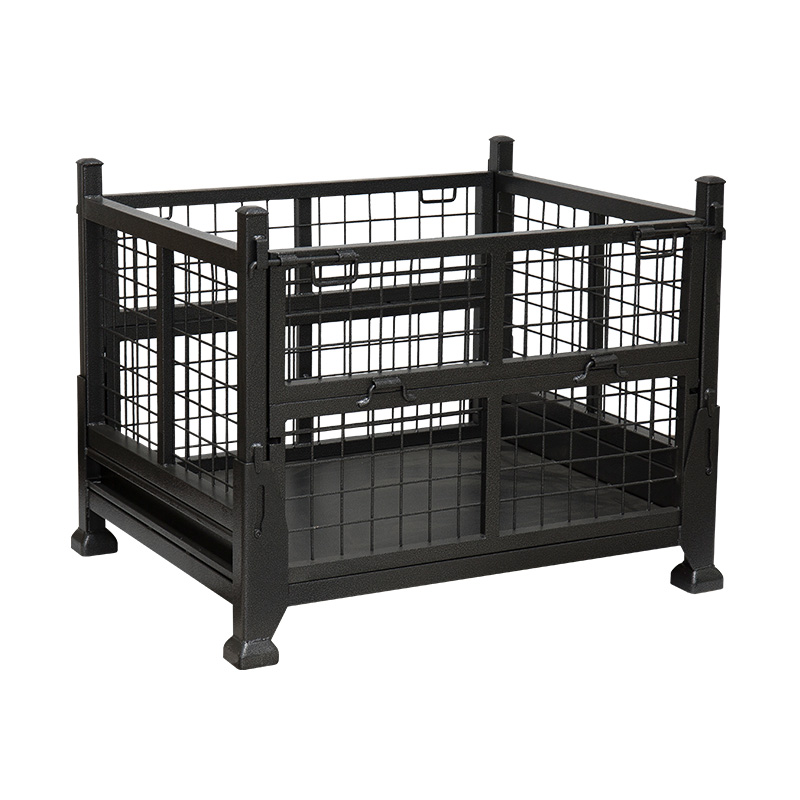
Foldable pallet cages are an important tool in factory logistics. They play an important role in transportation, distrib...
See Details -
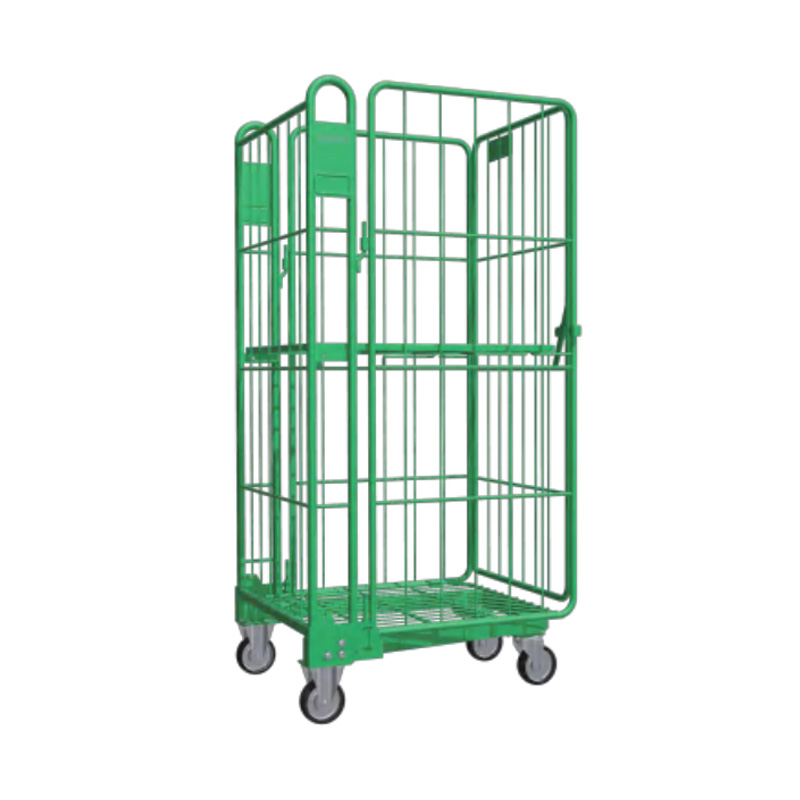
Product specification:The chassis is made of a square tube frame, with a bottom metal sheet tray that can be folded up a...
See Details -
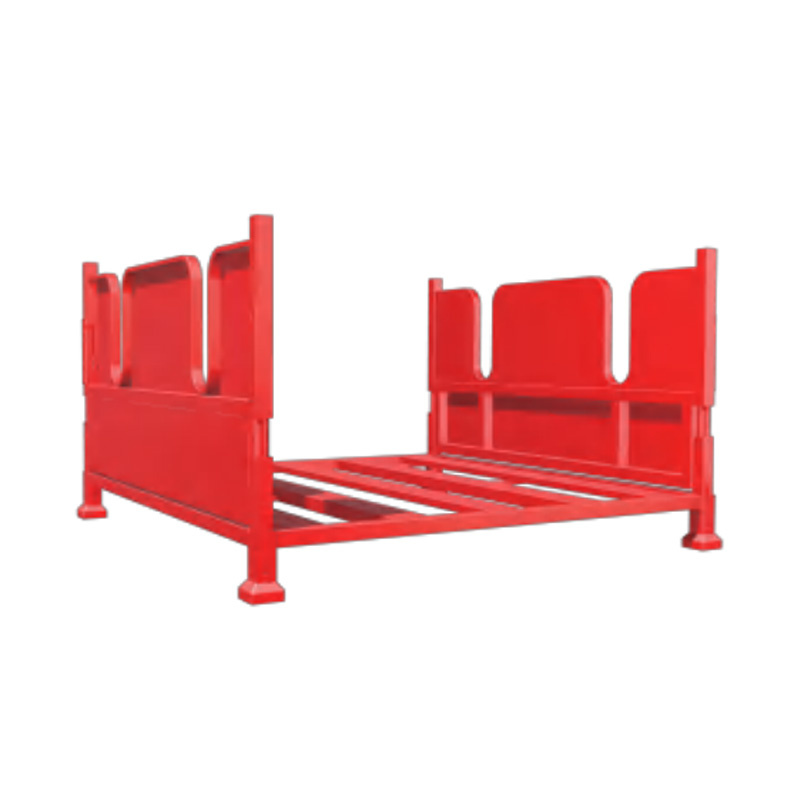
Stacking rack, also known as Qiaogu rack or stacking rackIt is a transportation and storage device derived from pallets ...
See Details -
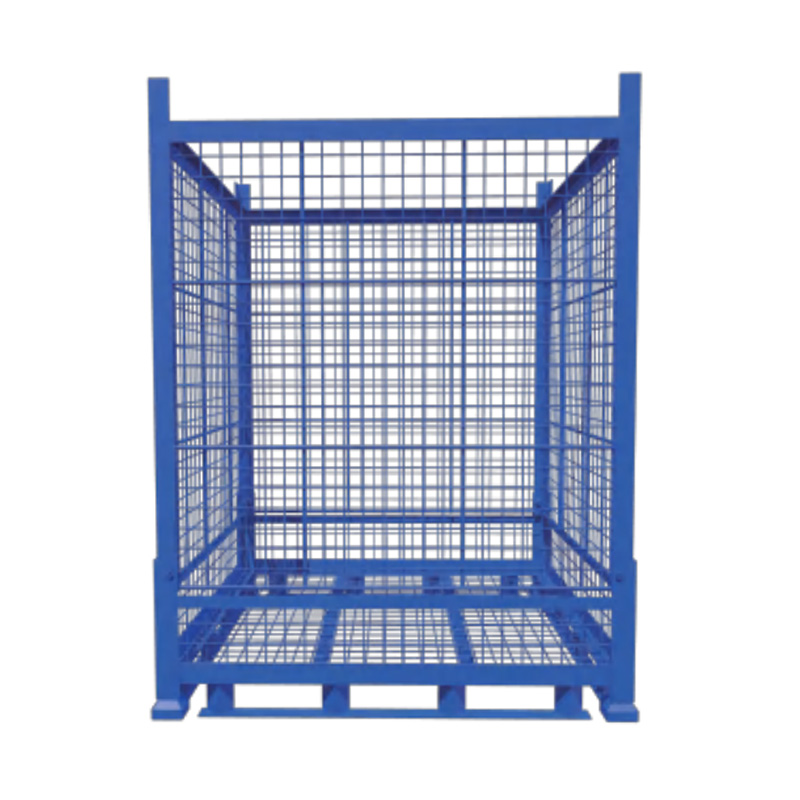
Product specification:Container structure made of L-Type plate frame with 50×50 wire mesh, with base support.Surface tre...
See Details

Information
-
Building B5, No. 138, Weixi Road, Weixi Village, Weitang Town, Xiangcheng District, Suzhou City, China.
-
Tel:
+86-13862140414
+86-13951110334 -
Phone: +86-512-65905480
