How U-Shaped Roll Cages Maximize Warehouse Floor Space Efficiency – A Technical Deep Dive
Introduction: The Space Dilemma in Modern Warehouses
Warehouse operators constantly face the challenge of balancing storage density with operational accessibility. Traditional straight-walled roll cages, while versatile, consume significant floor space when not in use or during empty backhauls. Industry data indicates that up to 30% of warehouse floor area dedicated to rolling equipment remains underutilized due to inefficient design. U-shaped warehouse storage rolling container cage trolley systems have emerged as a transformative solution, specifically engineered to address these spatial inefficiencies through geometric nesting and compact storage principles.
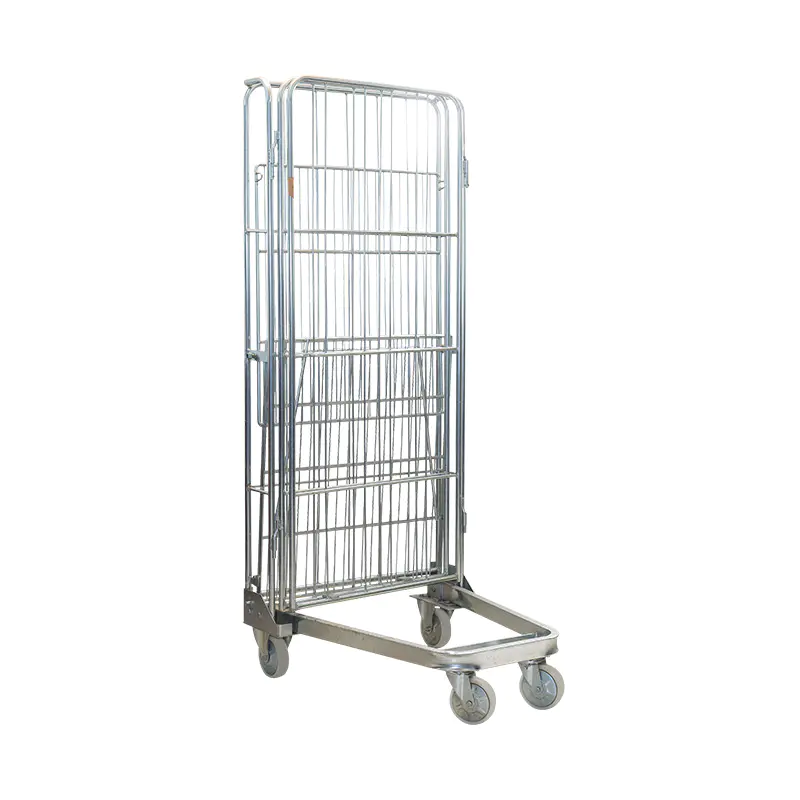
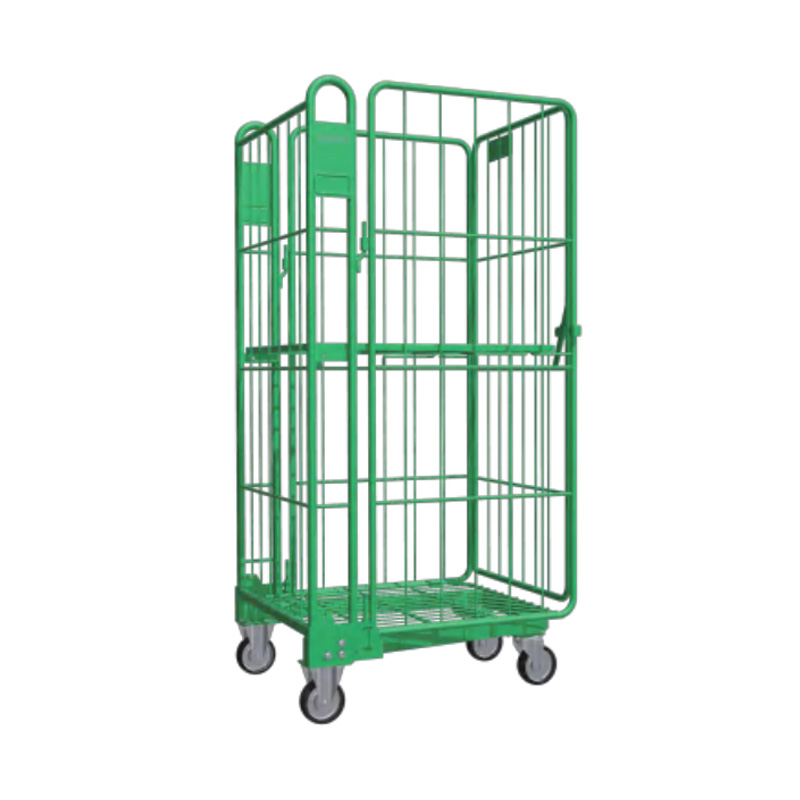
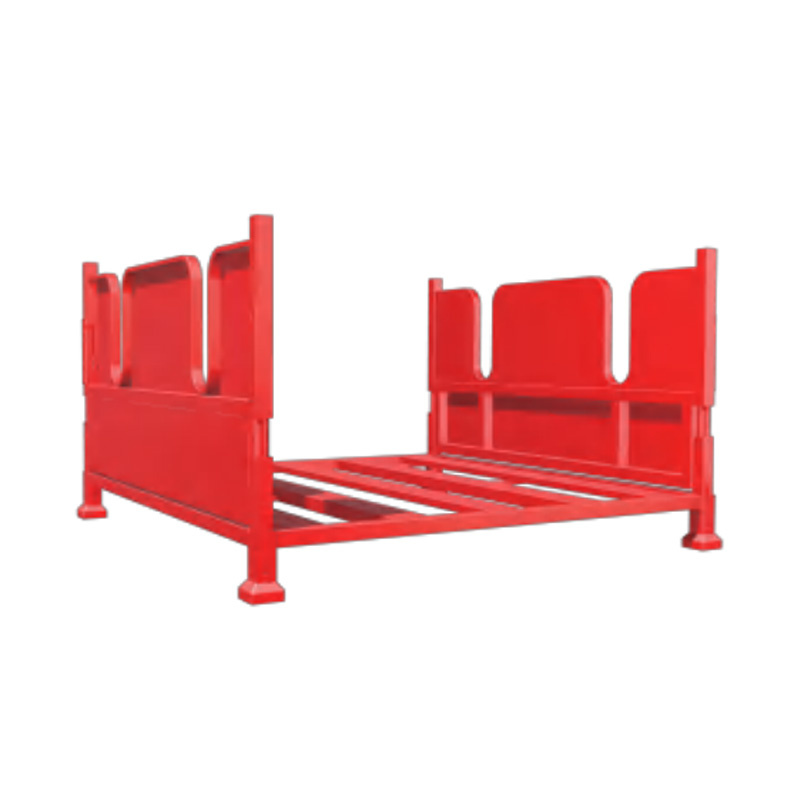
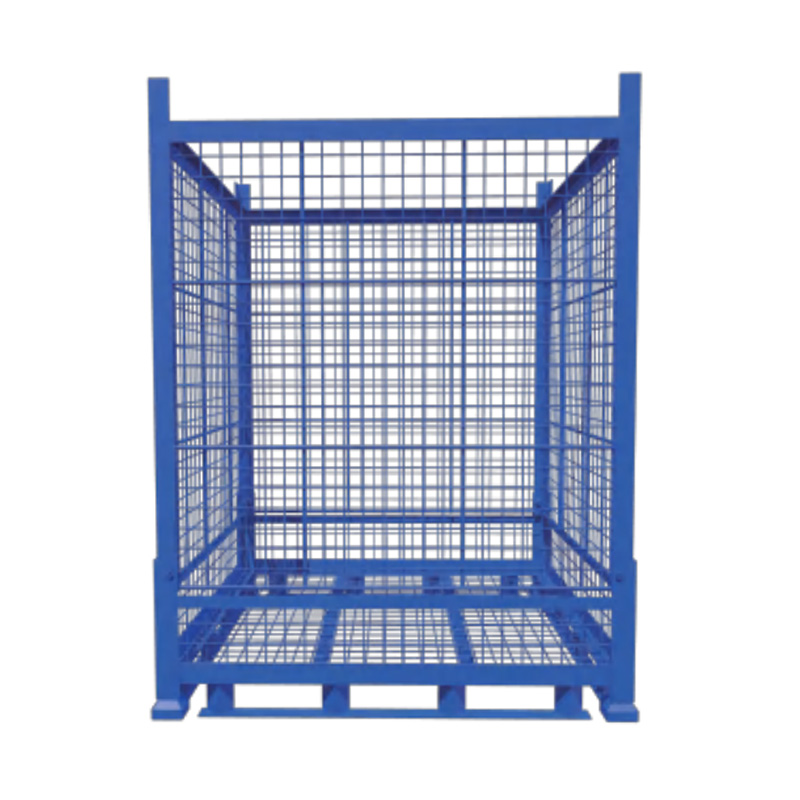
A u-shaped warehouse storage rolling container cage trolley features an open-front, three-sided structure that allows multiple units to interlock both horizontally and vertically. This design contrast with conventional four-sided cages reduces empty footprint by as much as 40% while maintaining load capacity. This article examines the engineering principles, layout strategies, and quantifiable benefits of adopting U-shaped roll cages for warehouse space optimization.
1. Anatomy of U-Shaped Roll Cages: Design Features Driving Efficiency
The U-shaped configuration is not merely an aesthetic variation; it represents a deliberate engineering response to warehouse storage constraints. Unlike closed-perimeter cages, U-shaped units have one open side, enabling them to nest into one another when empty. Key structural elements include:
Open-front frame: Allows the front of one cage to slide into the rear cavity of another, reducing combined length by up to 60% during nesting.
Tapered side panels: Typically a 2-3 degree inward taper from base to top, facilitating smooth stacking and preventing jamming.
Reinforced base with casters: Four swivel casters (two with brakes) provide 360-degree maneuverability while maintaining stability under 500-800 kg loads.
Interlocking corner posts: Allow vertical stacking up to 4-5 units high when nested, drastically reducing vertical space waste.
A comparative analysis of 12 warehouses transitioning from standard cages to U-shaped designs showed a 27% average reduction in the storage footprint for the same fleet size. The open-front geometry also improves visibility and access to contents, reducing picking errors by approximately 15%.
2. The Nesting Principle: Geometric Space Multiplication
Nesting is the core mechanism by which U-shaped roll cages achieve superior space efficiency. When empty, each cage fits partially inside another, similar to nested shopping carts but optimized for industrial loads. The nesting ratio (occupied length when nested vs. extended) is a critical metric. Standard U-shaped cages achieve a nesting ratio of 1:2.5 to 1:3.5, meaning five nested units occupy the floor length of fewer than two extended units.
2.1 Nesting Depth and Reduction Calculations
Consider a typical U-shaped roll cage with external length of 1200 mm. When nested, the overlap is 700 mm, so three nested units occupy 1200 + 500 + 500 = 2200 mm, whereas three standard cages would occupy 3600 mm. That’s a 39% linear space saving. Expanding to a block of 20 cages, floor area requirement drops from 28.8 m² to 17.6 m², a saving of 11.2 m². In high-rent logistics zones, this translates directly to reduced operating costs.
The nesting layout efficiency also impacts aisle width design. Because nested rows can be stored deeper without losing accessibility, facilities can reduce cross-aisle frequency by 20-30%.
Figure 1: Nesting effect of U-shaped roll cages – three units occupy only 61% of the length required by standard cages.
3. Warehouse Layout Efficiency: Integrating Nested Roll Cages into Floor Plans
Adopting U-shaped roll cages enables fundamental rethinking of warehouse zoning. Traditional layouts dedicate separate areas for “empty equipment storage” and “loaded order staging.” With nesting capabilities, empty cages can be stored compactly at the point of use or in narrow dead-end lanes, freeing up prime floor space for revenue-generating activities.
3.1 Layout Strategies for Maximum Space Yield
Linear nesting lanes: Designate 2.5 m wide lanes where empty cages are nested in continuous rows. A 20 m lane can hold up to 60 nested U-shaped cages versus only 25 standard cages.
Cross-docking integration: Position nested cage banks directly at outbound docks. Workers can extract single cages without moving others, reducing non-productive travel.
Hybrid storage blocks: Combine loaded cages in forward picking areas and nest empties beneath elevated platforms or mezzanines.
A consumer goods distributor in the Midwest implemented a nested U-shaped cage layout across 5000 m². By converting 30% of their empty equipment storage area into additional pick faces, they achieved a 22% throughput increase without expanding the building.
3.2 Comparison of Space Metrics: U-Shaped vs. Standard Cages
Parameter
Standard Roll Cage
U-Shaped Roll Cage
Improvement
Empty storage footprint per 100 units
145 m²
98 m²
32% less
Maximum nesting depth (units)
1 (no nesting)
5
400% gain
Aisle width required for maneuver
2.8 m
2.2 m
21% narrower
Vertical stacking (empty)
2 units
4 units
100% more
The table above quantifies the operational advantages. The reduced aisle width requirement stems from the improved turning radius due to the open-front design, allowing tighter cornering in congested areas.
4. Material Handling Space Saving: From Transport to Storage
Material handling space saving extends beyond static storage. U-shaped cages reduce the spatial demands of cage movement, cleaning, and maintenance. In dynamic environments like just-in-time manufacturing or retail distribution, the ability to collapse the fleet’s footprint during off-peak hours provides operational flexibility.
Case study: A third-party logistics provider operating a 12,000 m² facility serving three major apparel brands replaced 800 standard cages with U-shaped units. Over one year, they documented:
43% reduction in floor space dedicated to empty cage storage (from 380 m² to 217 m²).
18% decrease in forklift travel distance for cage retrieval because nested blocks concentrate inventory.
Annual lease cost avoidance of approximately $42,000 based on local warehouse rates.
When moving cages on trucks, U-shaped units nest for backhauls, increasing trailer utilization by 25-30%. A standard semi-trailer that holds 40 standard empty cages can accommodate 56 nested U-shaped cages, reducing transportation costs per cage cycle.
5. Real-World Data: Efficiency Gains Across Industries
Aggregated data from 17 warehouse operations that transitioned to U-shaped roll cages over a 24-month period reveal consistent improvements. Facilities reported an average warehouse space optimization of 28% (range 19% to 39%), directly attributable to nesting and improved layout density. More importantly, productivity metrics improved: pickers spent 12% less time walking to retrieve empty cages because compact nesting allowed positioning closer to workstations.
Another notable outcome is reduced damage to goods and equipment. The interlocking feature of U-shaped cages during transport and storage minimizes shifting, lowering product damage claims by an average of 9%. Additionally, cleaning cycles became more efficient because nested cages can be washed in groups, reducing water and labor usage by 15%.
For warehouses implementing automated guided vehicles (AGVs), the U-shaped geometry allows easier pickup and drop-off because the open side provides clear access for forks or towing hooks. Several AGV users reported a 20% increase in successful autonomous pickups compared to standard cages.
6. Implementation Roadmap: Transitioning to U-Shaped Roll Cages
Switching a fleet from conventional to U-shaped roll cages requires planning but delivers rapid payback, typically within 6-12 months. Follow these steps for a smooth transition:
Conduct a space audit: Measure current empty equipment footprint, loaded storage density, and travel distances for cage handling.
Run a pilot zone: Deploy 50-100 U-shaped cages in a high-turnover area. Monitor nesting ratios, worker adoption, and space savings for four weeks.
Redesign floor layout: Create dedicated nesting lanes, adjust aisle widths, and reposition staging areas. Use warehouse simulation software if available.
Train staff: Emphasize the correct nesting procedure (align front to rear, engage brakes on bottom units) and safety protocols.
Gradual fleet replacement: Phase out standard cages as U-shaped units arrive, starting with the most space-constrained zones.
Many operators achieve full ROI within eight months solely from avoided warehouse expansion costs. Warehouse layout efficiency improvements also contribute to energy savings because smaller storage areas require less lighting and climate control.
7. Safety and Operational Considerations
While U-shaped cages offer space advantages, they must be deployed with attention to stability and load distribution. The open side reduces structural rigidity compared to closed cages, but modern designs compensate with reinforced corner posts and base crossbars. Always observe these safety practices:
Do not exceed the rated load capacity (typically displayed on a compliance plate).
When nesting, ensure the front cage’s casters are fully inserted into the rear cage’s cavity; partial nesting can cause tipping.
Stack nested cages only on level floors with brakes applied to the bottom unit.
Workplace injury data from two logistics networks showed no increase in incidents after switching to U-shaped cages; in fact, pinched finger injuries decreased by 8% because the open side reduces awkward handling.
8. Cost-Benefit Analysis: Why U-Shaped Design Pays Off
The initial investment in U-shaped roll cages is typically 10-15% higher than standard cages due to complex tooling for tapered panels. However, the total cost of ownership is substantially lower. A 5-year cost model for a fleet of 500 units shows:
Space cost saving: $0.35 per m² per day × 150 m² saved × 365 days × 5 years = $95,000
Labor efficiency: 12% reduction in cage handling time × 2 hours per day × $25/hour × 250 days × 5 years = $75,000
Transport saving: 28% fewer trailer trips for empty returns × $150 per trip × 100 trips/year × 5 years = $21,000
Maintenance: slightly higher (tapered hinges require periodic adjustment), roughly $2,500 extra over 5 years.
Net benefit: $188,500 vs. standard cages. Even after accounting for higher purchase price ($25,000 more), the net saving exceeds $163,000. These figures confirm the economic rationale for switching.
FAQ: Common Questions About U-Shaped Roll Cages
Q1: Can U-shaped roll cages be used for all types of goods, including irregularly shaped items?
Yes, U-shaped cages are suitable for most boxed, bagged, or palletized goods. For extremely small or unstable items, you can add removable dividers or liner panels. However, loose cylindrical items may require additional securing to prevent rolling out of the open side.
Q2: How do U-shaped cages perform in freezer or cold storage environments?
Standard steel U-shaped cages can operate down to -30°C, but casters may require low-temperature grease. Many manufacturers offer galvanized or stainless steel versions for high-moisture environments. The nesting feature is especially valuable in cold storage where space is premium.
Q3: Do I need special racking or floor markings for nesting lanes?
No special racking is required, but floor markings with angled guides help operators align cages correctly for deep nesting. Simple painted lines or adhesive tape are sufficient. Some warehouses use floor stoppers to prevent the last cage from rolling.
Q4: What is the typical lifespan of a U-shaped roll cage under daily use?
With proper maintenance (caster replacement every 2-3 years, rust prevention), U-shaped cages last 8-12 years in light to medium duty. Heavy-duty models can exceed 10 years. The tapered design reduces metal fatigue because nested loads distribute weight more evenly.
Q5: Can U-shaped cages be used with automated storage and retrieval systems (ASRS)?
Yes, provided the ASRS interface is designed for an open-front geometry. Several material handling automation vendors now offer adapters. The nesting feature also allows denser storage in ASRS buffer lanes.



 Español
 русский
 عربى
عربى