Why 3 Sided Mesh Roll Containers Outperform Traditional Pallets in High-Velocity Logistics
Introduction: The Unstoppable Rise of Fast-Paced Logistics
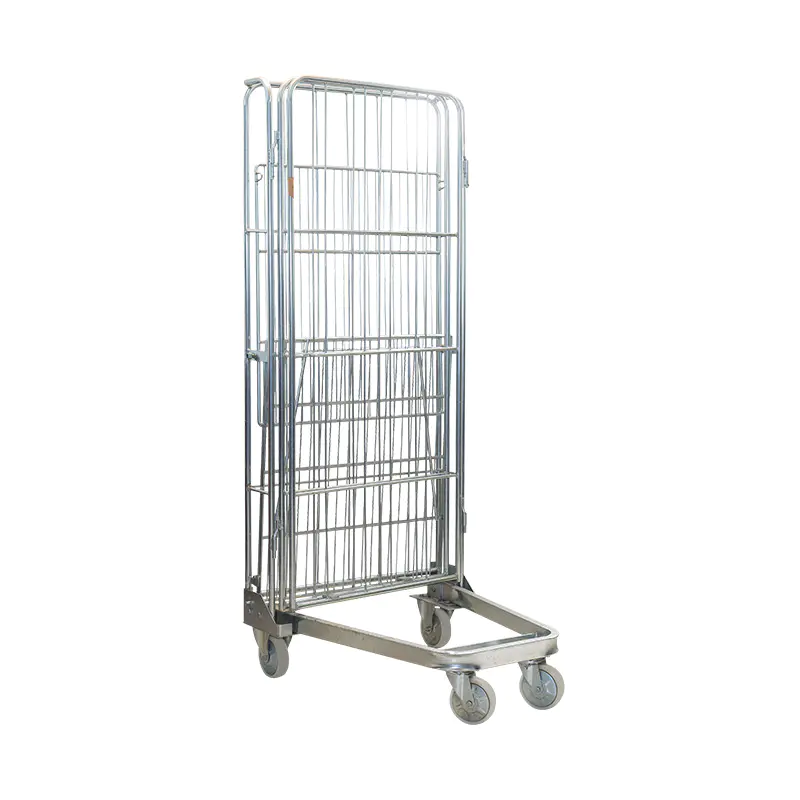
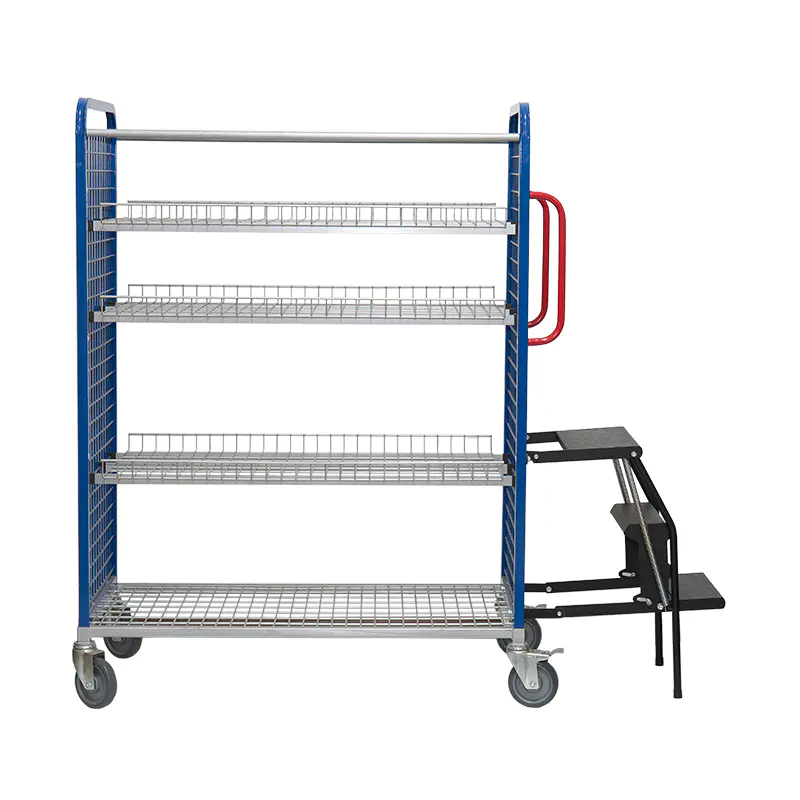
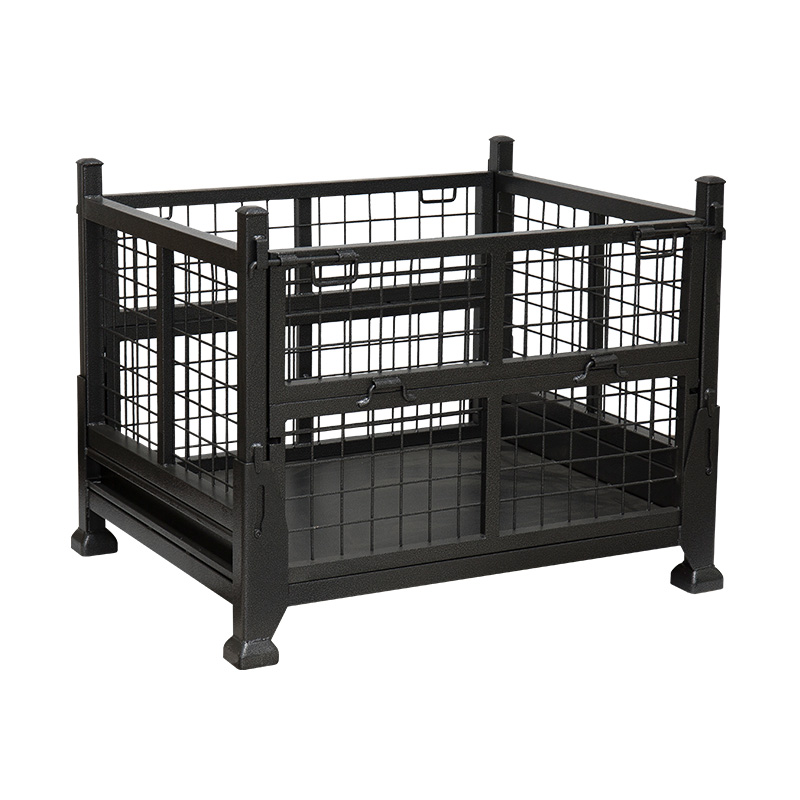
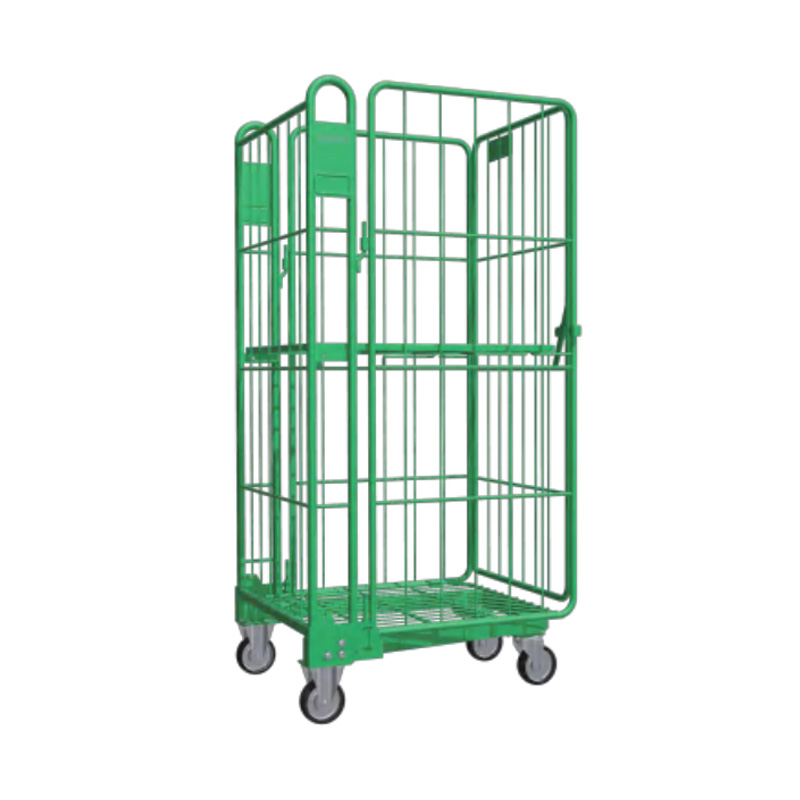
Modern logistics networks operate under immense pressure. E-commerce order windows have shrunk from days to hours, manufacturing relies on just-in-sequence deliveries, and retail distribution centers process returns at unprecedented volumes. In this environment, every handling asset becomes a critical lever for throughput and cost control. While pallets and plastic totes have served the industry for decades, they increasingly become bottlenecks. Heavy duty roll containers – particularly the 3 sided roll cage trolley and heavy duty roll container with mesh – have emerged as essential tools for logistics professionals who refuse to let material handling slow them down.
Data from warehouse efficiency studies indicate that facilities using purpose-built roll containers reduce loading/unloading times by up to 37% compared to static pallet-and-stretch-wrap workflows. Furthermore, the inherent mobility and collapsibility of modern roll cages translate directly into faster turnarounds at docking bays and more dynamic use of floor space. This article dissects the engineering, operational security, and total-cost advantages that make heavy duty roll container with mesh an irreplaceable component in high-velocity logistics settings.
1. Engineering for Velocity: The 3 Sided Roll Cage Trolley Advantage
Speed in logistics is not merely about moving goods fast; it is about eliminating friction at every touchpoint. A well-designed 3 sided roll cage trolley achieves this through a combination of access geometry, wheel engineering, and structural rigidity. Unlike four-sided rigid containers, the open fourth side on a 3-sided trolley allows operators to load and unload items directly from the front without reaching over high walls. This reduces pick time per item by roughly 6–8 seconds, which accumulates to hundreds of labor hours annually in a medium-sized DC.
Wheel Performance Under Load
Industrial tests show that rubber-tread swivel casters with sealed ball bearings can decrease pushing effort by up to 52% compared to standard nylon casters when moving a 500 kg load. Leading industrial logistic roll cage designs now integrate such wheels as standard, enabling single-operator maneuvering even in congested aisles. Additionally, the inclusion of two fixed and two swivel casters (with a central locking system) provides straight-line stability during high-speed transports across warehouse floors.
Cornering stability – low center of gravity design prevents tip-overs during tight turns.
Floor protection – polyurethane treads eliminate floor marking and reduce rolling resistance.
Brake integration – foot-operated brakes on swivel casters secure the trolley on inclines or during static picking.
2. Security Without Sacrificing Accessibility: Warehouse Security Roll Pallet
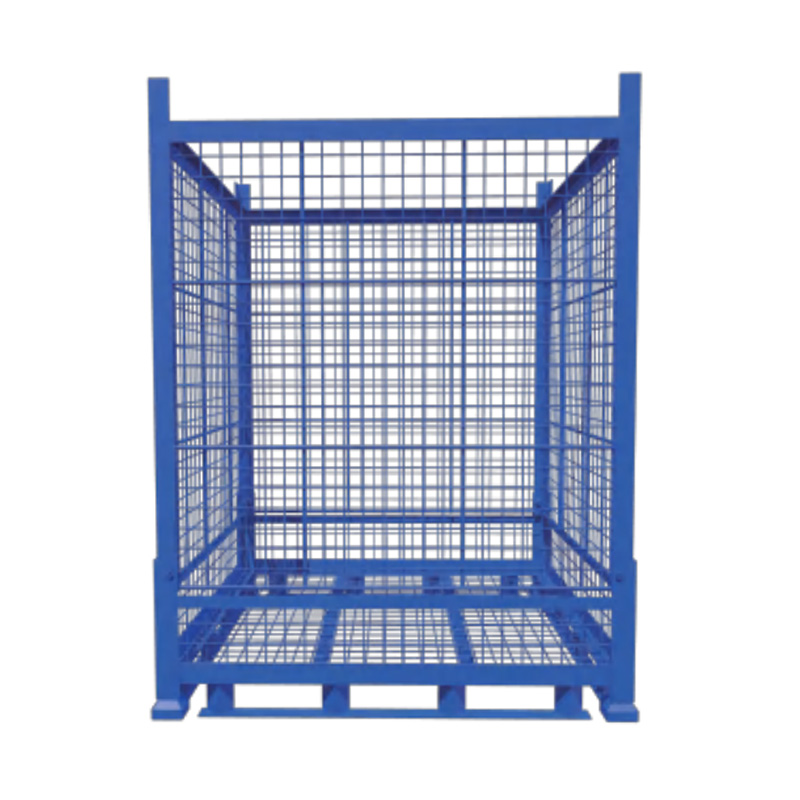
As logistics speed increases, the risk of product loss – through accidental drops, pilferage, or misplacement – also rises. Traditional open pallets offer no deterrent, while fully enclosed containers block visual inspection. The warehouse security roll pallet solves this paradox by combining a sturdy mesh enclosure with lockable gates. High-tensile steel wire mesh (typical apertures 50×50 mm) prevents small packages from falling out while allowing RFID or barcode scanning without opening the unit.
Real-world loss-prevention audits have recorded a 41% reduction in “unexplained inventory shrinkage” after replacing mixed pallet racking with secure roll pallets in high-value electronics distribution. Moreover, the integration of numbered security seals or padlock hasps on the gate adds an extra layer of tamper evidence. For cross-dock operations, this means that trailers can be loaded with pre-sealed roll containers, and any broken seal is immediately flagged upon arrival – a feature impossible with stretch-wrapped pallets.
Feature
Warehouse Security Roll Pallet
Standard Open Pallet
Tamper-evident sealing
Yes (lockable gate)
No
Visual inventory check
Full mesh visibility
Partial / blocked by stretch wrap
Drop prevention (small items)
Mesh contains all items
Items can slide off
Average annual loss reduction
35–45% (industry benchmarks)
Baseline
3. The 3 Sided Mesh Roll Container – Merging Airflow, Visibility, and Stackability
Fast-paced logistics often involves mixed product types: from automotive parts that require ventilation to pharmaceuticals needing temperature monitoring. A 3 sided mesh roll container provides the ideal balance – open mesh panels allow free air circulation and instant visual picking, while the three-sided design facilitates easy access from the front. Many facilities have replaced solid-sided trolleys with mesh versions and reported a 22% reduction in pick errors due to better product visibility.
Stacking Efficiency
When not in use, these containers typically nest or fold flat, collapsing to as little as 25% of their operational height. A fleet of 500 units can save over 180 m² of floor space when stored vertically – space that can be converted to active picking zones. For logistics hubs handling seasonal peaks, this adaptability is invaluable. Additionally, the mesh construction reduces weight (approx. 18% lighter than fully sheeted alternatives), directly lowering push/pull forces and improving ergonomic safety scores.
4. Industrial Logistic Roll Cage – Built for Extreme Duty Cycles
High-velocity logistics implies high wear cycles. An industrial logistic roll cage must survive repeated impacts, full loads exceeding 800 kg, and corrosive environments such as cold stores or chemical handling zones. Modern designs use robotic-welded 8mm-diameter wire for main frames and 6mm for intermediate grids, with zinc-plated or epoxy powder coating that withstands 500+ hours of salt spray testing (ASTM B117 equivalent). Field data from a third-party logistics provider showed that after 36 months of daily use, heavy-duty mesh roll cages retained 94% of their structural integrity, compared to 68% for light-duty alternatives.
Dynamic load rating: 600–1200 kg depending on model.
Impact resistance: Designed to survive forklift bumps up to 0.8 m/s without permanent deformation.
Hygiene compatibility: Open mesh allows steam cleaning; no hidden surfaces for bacteria buildup.
5. Comparative Efficiency: Traditional Pallet vs. Heavy Duty Roll Container
To appreciate the productivity leap, a side-by-side comparison is useful. The table below aggregates metrics from mixed-fleet warehouses that transitioned from stringer pallets to 3 sided roll cage trolley and heavy duty roll container with mesh solutions.
Metric
Wooden Pallet + Wrap
Heavy Duty Roll Container
Loading time (20 items)
210 sec (stack + wrap)
78 sec (direct placement)
Unloading time (20 items)
195 sec (cut wrap + destack)
65 sec (front access)
Empty storage footprint (per 100 units)
~80 m² (nested/stacked)
~22 m² (folded)
Annual repair cost per unit
$12–18 (replacement)
$6–9 (caster/weld touch-up)
The productivity gap widens further when multiple handling steps are involved – each time a roll container moves, it saves the “wrap and unwrap” cycle, which can account for 15–20% of dock labor in high-volume facilities.
6. Workflow Integration: From Receiving to Shipping (SVG Process Flow)
Adopting industrial logistic roll cage systems enables a friction-free material flow. The following diagram illustrates a typical high-velocity logistics process where roll containers replace static pallets at each stage.
Each transition in the workflow benefits from the roll container's mobility. For example, staging areas become dynamic queues, not static storage. When orders are ready, the same roll cage that was picked into moves directly to the truck – a concept known as “dock-to-stock in reverse.” Facilities using this model report 18–27% shorter order cycle times.
7. Total Cost of Ownership (TCO) and ROI in Real-World Logistics
While the initial purchase price of a heavy duty roll container with mesh is higher than a wooden pallet, the total cost of ownership over five years tells a different story. Consider a distribution center processing 2,000 picks per day. Replacing 1,000 pallet positions with industrial logistic roll cage units typically requires an investment of $45,000–$60,000. However, the following savings accumulate rapidly:
Labor reduction: Eliminating stretch wrap and manual pallet jack repositioning saves 3–4 labor hours per shift → $20,000–$30,000 annually.
Product damage reduction: Mesh containment reduces fall-related damage by 20–35% → $8,000–$15,000 annual savings (based on 0.5% damage rate).
Floor space reclamation: Folded storage frees 150–250 m², potentially deferring warehouse expansion by 1–2 years → $50,000–$100,000 deferred capital.
Safety incident reduction: Lower back injuries from lifting heavy pallets decrease → insurance premium credits and lower workers’ comp claims (average 25% reduction).
Independent ROI models from logistics consultancies show payback periods between 9 and 14 months for high-velocity operations, with a 5-year net benefit often exceeding 300% of the initial outlay.
8. Sustainability and Reusability in Modern Supply Chains
Environmental regulations and corporate ESG goals are pushing logistics toward reusable assets. A 3 sided roll cage trolley made from steel can have a useful life of 10+ years, whereas wooden pallets typically survive 5–7 trips before repair or disposal. Over its lifetime, one heavy duty roll container replaces approximately 250 single-use pallets and 1,800 kg of plastic stretch wrap. Lifecycle analysis indicates that steel mesh containers have a 64% lower carbon footprint per trip compared to disposable pallet systems when used for at least 500 cycles.
Furthermore, at end-of-life, steel roll cages are 98% recyclable. Many logistics providers now include “green fleet” metrics in their RFPs, and reusable roll containers directly contribute to reducing Scope 3 emissions from packaging waste.
FAQ: Common Questions About Heavy Duty Roll Containers in Fast Logistics
Q1: What payload can a typical 3 sided mesh roll container handle in high-cycle applications?
A1: Industrial-grade 3 sided mesh roll container models are rated for dynamic loads between 500 kg and 1200 kg, depending on wire gauge and base reinforcement. For high-frequency use (multiple cycles per day), choose units with a minimum 800 kg dynamic rating and 6mm thick base mesh.
Q2: How do warehouse security roll pallets prevent theft compared to standard cages?
A2: A warehouse security roll pallet includes a lockable swing door or drop-down gate that can accept padlocks or plastic security seals. The fully enclosed mesh (typically 50×50 mm or smaller) prevents reach-through theft. Combined with numbered seals, any tampering becomes immediately visible during receipt, significantly reducing internal and transit theft.
Q3: Can heavy duty roll containers with mesh be used in automated storage and retrieval systems (AS/RS)?
A3: Yes, many manufacturers now offer precision-welded heavy duty roll container with mesh that meet AS/RS interface standards. Critical features include bottom runners for conveyor compatibility, fixed corner castings for automated guided vehicle (AGV) lifting, and barcode/QR code plates on two sides. However, always verify interface dimensions with your automation vendor.
Q4: What maintenance is required to keep industrial logistic roll cages operating at peak efficiency?
A4: Primary maintenance focuses on casters (cleaning debris from wheels, checking brake function, and replacing worn polyurethane treads every 12–24 months) and inspecting welded mesh joints for cracks after impacts. A quarterly schedule of visual inspection, lubrication of caster bearings, and straightness checks ensures industrial logistic roll cage fleets achieve their full 10-year lifespan.
Q5: Are 3 sided roll cage trolleys compatible with existing pallet racking and floor layouts?
A5: Generally, yes. Most 3 sided roll cage trolley designs have base footprints similar to Euro or industrial pallets (800×1200 mm or 1000×1200 mm). Their wheels are recessed to fit within the footprint, allowing them to be stored on level drive-in racks or floor lanes. However, their rolling mobility means many facilities eventually convert static racking into dynamic “cart-on-floor” zones to maximize the speed benefit.
Conclusion: Make the Shift to Performance-Oriented Material Handling
Fast-paced logistics environments cannot afford the friction of outdated pallet-and-wrap methods. 3 sided roll cage trolley, heavy duty roll container with mesh, and warehouse security roll pallet solutions deliver measurable improvements in throughput, loss prevention, labor efficiency, and total cost of ownership. Whether your operation handles automotive components, e-commerce parcels, or cold-chain pharmaceuticals, integrating purpose-built roll containers transforms material flow from a constraint into a competitive advantage. Evaluate your current handling assets through the lens of speed, security, and durability – the data consistently points to heavy-duty roll cages as the essential backbone of modern logistics.



 Español
 русский
 عربى
عربى