


 Español
 русский
 عربى
عربى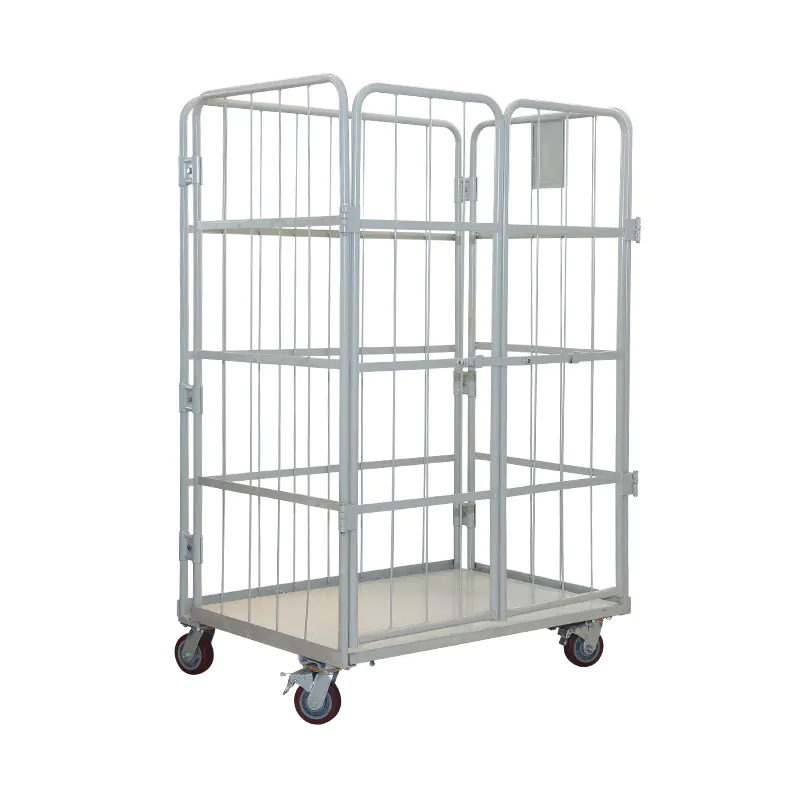
Don't hesitate to send a message
Search
Recent Post
Newsletter
How Roll Cages Revolutionize Warehouse Supply Chains and Workplace Safety
The Integral Role of Mobile Security in Modern Logistics
Modern industrial logistics demands a balance between speed, spatial organization, and physical safety. As supply chains handle higher volumes of goods, reliance on fixed shelving and manual lifting slows workflows and increases product damage. Industrial operations need an agile, secure solution to bridge the gap between heavy storage racks and fast-moving transport vehicles.
Mobile security containers have become indispensable across distribution centers, retail hubs, and manufacturing floors. By transforming static inventories into highly maneuverable assets, these specialized containment units eliminate redundant handling steps, protect fragile shipments, and reduce workplace injuries. This technical analysis explores the industrial utility, mechanical design, and regulatory compliance protocols for high-capacity material handling systems.
Defining the Industrial Utility of Security Enclosures
To properly address what are roll cages for, one must view them as mobile transport units that merge high-capacity containment with smooth rolling capabilities. These systems allow warehouse workers to consolidate dozens of individual parcels, loose components, or high-value retail goods into a single secure module. Instead of making multiple trips with hand trucks or pallets, operators can transport a large volume of mixed goods safely in one movement.
In supply chain management, understanding what is a roll cage for goes beyond basic movement. These units function as active distribution tools. They allow companies to pre-sort stock by delivery route or aisle destination directly inside the distribution center, eliminating downstream sorting errors. The wire mesh design provides instant visibility for inventory checks while preventing inventory items from shifting or falling during transport.
50% Reduction in Loading Times
40% Decrease in Product Damage
30% Improvement in Floor Space
The modern industrial workflow relies heavily on specific hardware setups, notably the U-shaped Warehouse Storage Rolling Container Cage Trolley. This specific U-frame configuration allows multiple empty units to nest closely together when not in use. By sliding the bases into one another, warehouses can reclaim up to 70 percent of their floor space during periods of low activity or backhaul transit, maximizing square footage efficiency.
Anatomy of an Industrial Roll Cage Trolley
The reliability of a high-performance roll cage trolley depends on its structural engineering. These units must withstand daily mechanical impacts, uneven floor surfaces, and heavy loads while maintaining smooth mobility. Below is a breakdown of the primary engineering elements found in industrial-grade models:
- Base Framework: Built from heavy-duty square or tubular steel channels, engineered to support weights from 500 kg to over 800 kg without warping.
- Infill Mesh Panels: High-tensile steel wire spot-welded at every intersection, creating a rigid barrier that keeps small cargo items secure.
- Caster Assemblies: Features two fixed and two swivel casters with precision bearings to ensure excellent directional control and minimal rolling resistance.
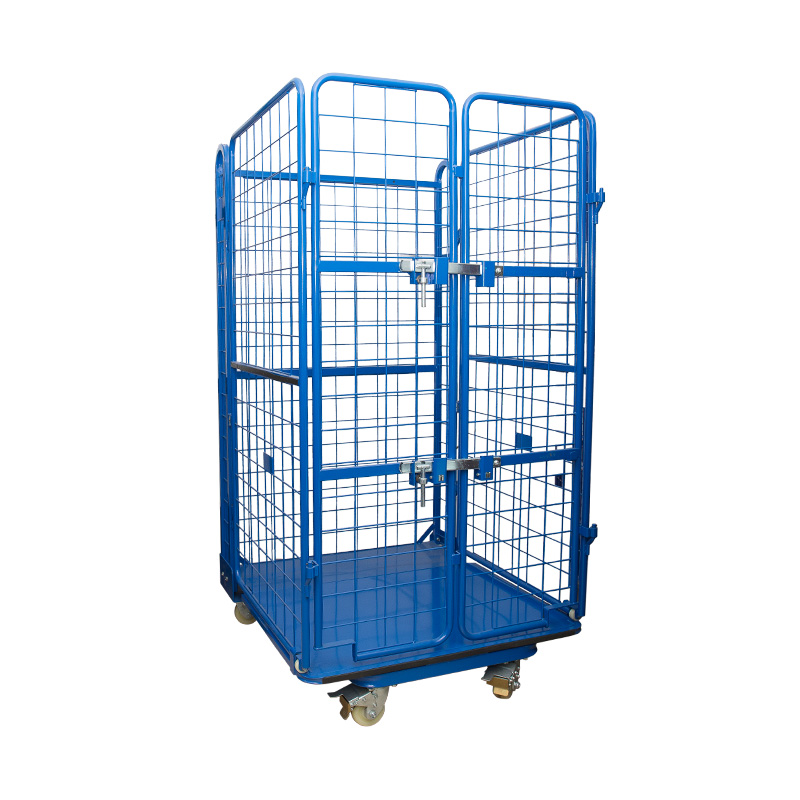
- Locking Mechanisms: Heavy-duty slide bolts or integrated padlock tabs that secure multi-door variants against unauthorized stock access.
Material choice dictates the lifespan and operating environment of a cage trolley. Bright electro-zinc plating provides excellent resistance against moisture and abrasion in climate-controlled facilities, while hot-dip galvanizing is preferred for sub-zero cold storage and outdoor loading docks. Choosing the correct structural finish ensures structural integrity over long operational lifespans.
Industrial Applications: Where and Why They Are Deployed
Mobile containment cages are essential throughout the modern industrial supply chain. Their open-mesh visibility, high load capacity, and mobility make them vital across many fields, including the following:
Retail Order Fulfillment
Units allow team members to pick inventory across different storage zones and transport it directly to regional retail delivery vehicles. This cuts out intermediate palletizing steps and reduces localized handling overhead.
Automotive & Manufacturing Assembly Lines
Heavy, irregular machine sub-assemblies and hardware are delivered straight to production stations. The rigid steel cage protects delicate machinery components from passing forklift traffic.
Hospitality & Commercial Laundries
Large batches of linens, uniforms, and textiles are safely stored and moved. Choosing zinc-plated or stainless steel options helps prevent rust in high-humidity laundry processing areas.
Pharmaceutical & Cleanroom Support
High-value medical stock can be sealed behind locked security mesh panels. This provides an unbroken chain of custody from deep fulfillment zones straight to the pharmacy floor.
Using these specialized carts minimizes single-box transport runs, helping facilities establish lean, efficient workflows. For operations focusing on cross-docking—where incoming stock is transferred straight to outbound trucks with minimal intermediate storage—these rolling units allow entire loads to be re-routed in seconds rather than minutes.
Safety Protocols: Mitigating Risks During Transit
While mobile containers improve facility performance, moving roll cages introduces distinct ergonomic and physical challenges that require strict safety protocols. A fully loaded container carries significant momentum. If an operator loses control on an incline or uneven floor surface, the resulting runaway equipment can cause severe injuries or major structural damage to facility property.
The fundamental rule of mobile cage transport: Always push the unit forward; never pull it behind you. Pushing uses the operator's larger leg muscle groups, reduces lower back strain, and keeps the cart out of the operator's blind spot. Pulling can lead to foot trap injuries or pin the operator against walls if momentum shifts unexpectedly.
To establish safe working habits, logistics managers should implement a formal training program centered on these key operational guidelines:
| Operational Parameter | Potential Hazard Risk | Mandatory Preventative Action |
|---|---|---|
| Load Center of Gravity | Top-heavy loading can cause tipping during sharp turns. | Place the heaviest inventory items at the base; stack lighter cargo on top. |
| Path Trajectory Control | Blind corner collisions with workers or forklifts. | Keep travel speeds to a walking pace; stop and check at all aisle junctions. |
| Incline Navigation | Runaway equipment on slopes or vehicle loading ramps. | Work in pairs on ramps over 2 degrees; never park a cage on an active slope. |
| Surface Interface | Abrupt wheel stops from floor debris, cracks, or door tracks. | Keep travel lanes clear of debris; use larger caster sizes for floor joints. |
Proper equipment inspections are also vital. Operators must check for bent steel wire strands, worn caster bearings, and broken latch mechanisms before using a trolley. Any unit showing signs of structural bending or hard-to-turn wheels should be tagged out of service immediately for maintenance to keep warehouse operations running safely.
Maximizing Space with Nestable Design Architecture
In high-density industrial facilities, floor space is premium real estate. Fixed-frame transport boxes present a spatial challenge when empty, as they occupy the same footprint regardless of whether they hold stock or remain completely empty. This issue highlights the tactical value of the nestable rolling container.
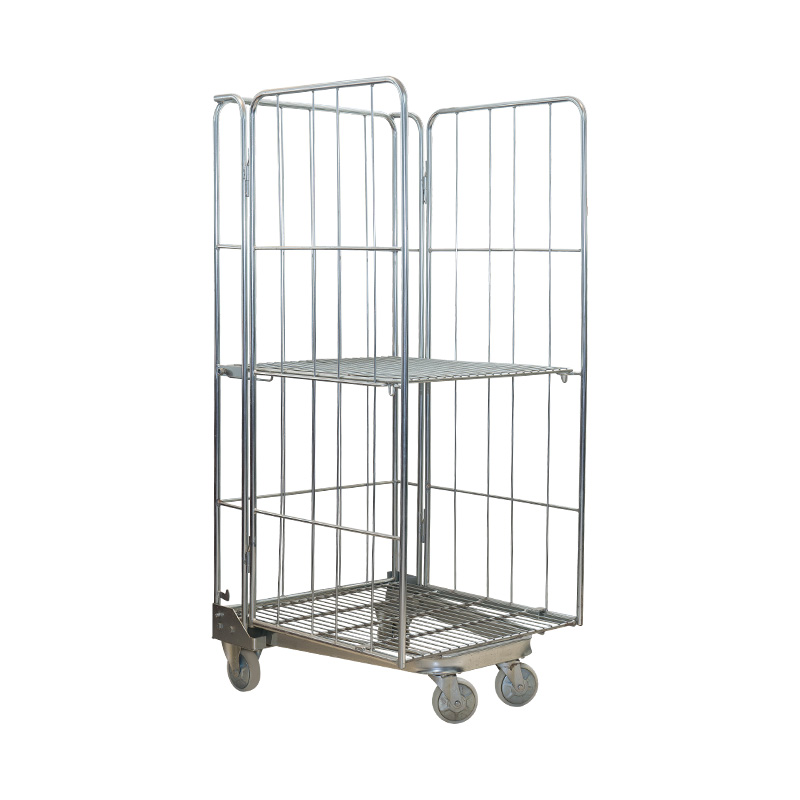
The folding A-frame or U-frame configuration resolves this problem through simple mechanical design. When empty, the unit base folds upward or swings aside, allowing its side panels to tuck neatly into the back frame of the unit in front of it. This space-saving design is invaluable for returning delivery vehicles, where stacking empty containers tightly leaves more room for incoming palletized shipments.
Ergonomic Engineering and Physical Load Management
Ergonomic design is a key focus for industrial health and safety regulators. Repetitive manual handling of heavy containers can cause cumulative muscle strain if the equipment is poorly designed. High-quality rolling units address this risk by optimizing initial push-force dynamics.
The force needed to start moving a parked cart depends directly on caster wheel diameter and material composition. Large-diameter wheels (typically 125 mm to 150 mm) made from hard-tread polyurethane or vulcanized rubber minimize initial rolling resistance. This design choice helps protect workers from overexertion during starting maneuvers, keeping muscle strain well within safe occupational health guidelines.
In addition, incorporating integrated ergonomic handles at standard shoulder height prevents staff from gripping the structural outer mesh panels. This design element lowers the risk of hand injuries from passing objects and ensures workers maintain proper posture while handling heavy loads.
Procurement Strategies for Industrial Material Handling
Investing in material handling equipment requires looking beyond initial purchase prices. Procurement teams must evaluate equipment based on total cost of ownership, operational durability, and how well the units fit existing facility infrastructure. Choosing the wrong container specifications can cause frequent equipment failures, higher repair costs, and unexpected bottlenecks in your facility workflows.
To choose the right equipment for your facility, consider these core operational requirements:
- Dimensional Alignment: Verify that the external dimensions of the rolling unit match your delivery vehicle doors and layout aisle widths perfectly.
- Environmental Factors: Use stainless steel or zinc plating for cold storage and high-moisture zones, while tough powder coatings work well for standard warehouse environments.
- Braking Configurations: Add dual-pedal total-lock braking systems to swivel caster sets if your staff needs to park units on slight slopes or hydraulic dock levelers.
- Access Gate Engineering: Choose half-drop gates, split barn doors, or open fronts based on how quickly your teams need to load stock and how securely items must be held during transport.
By running operational tests with various configurations, logistics managers can select equipment that fits seamlessly into daily operations. Investing in high-quality materials and smart ergonomic features helps companies build safer, more reliable supply chains that handle high cargo volumes with ease.
Frequently Asked Questions
Q1: What are the primary structural differences between 2-sided, 3-sided, and 4-sided roll containers?
The differences depend on your balance of cargo access and load security. Two-sided units use strap restraints to offer fast, dual-side loading access, making them perfect for uniform boxes. Three-sided versions add a solid back panel for better stability, while four-sided units feature lockable front gates for maximum protection against falling inventory during long transport routes.
Q2: How do you choose between polyurethane, nylon, and rubber caster wheels for warehouse use?
Your choice depends on your warehouse floor surface and load needs. Nylon casters roll easily on smooth concrete floors and resist flat-spotting under heavy weights, but they generate more noise. Polyurethane casters offer a great middle ground, running quietly while protecting delicate floors. Vulcanized rubber casters deliver a smooth ride over outdoor debris and floor seams, though they require more effort to start moving under heavy loads.
Q3: What maintenance steps are required to keep these mobile containers operating safely over time?
Facilities should schedule regular quarterly inspections to keep equipment in top shape. Maintenance teams need to clean wrapped packing tape and shrink wrap out of caster axles, grease internal bearings, and check that all frame welds are free of cracks. They should also verify that latch rods slide smoothly and replace any bent side panels that might prevent units from nesting together properly.
Q4: Can these rolling storage units be safely moved using standard warehouse forklifts?
Standard rolling units are designed for manual floor handling or transport inside delivery vehicles, not for direct forklift lifting. Lifting them with standard forks can warp the base frame or damage the caster mounts. If your operation requires forklift transport, you must use specialized containers equipped with integrated fork pockets or heavy-duty skid runners engineered to handle vertical mechanical lifting.
Related products
-
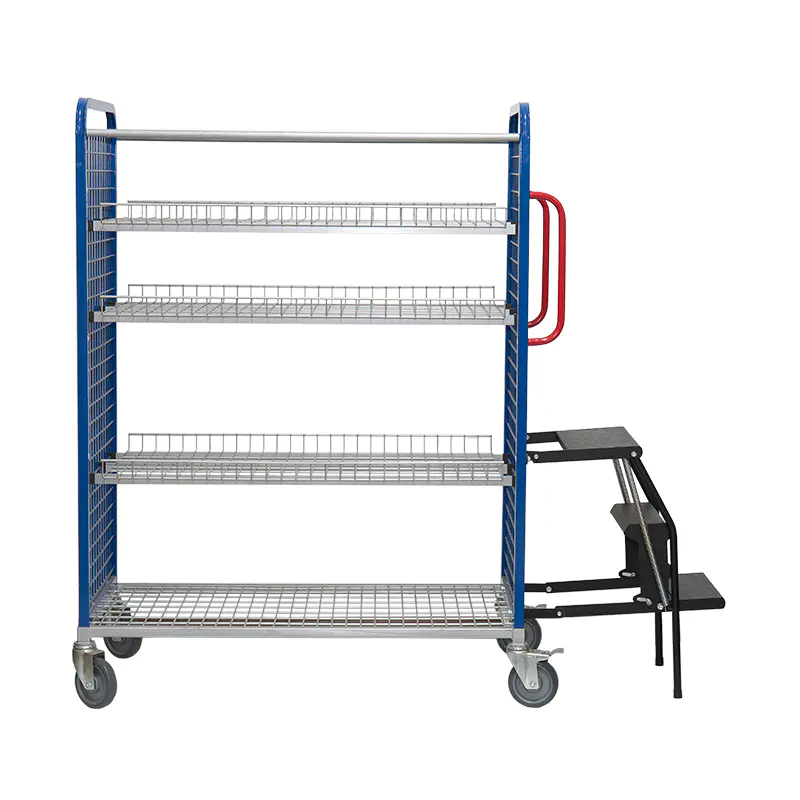
Product specification:This Warehouse wire mesh Multi-Tier Order Picking Trolley adopts a chassis and side panel structur...
See Details -
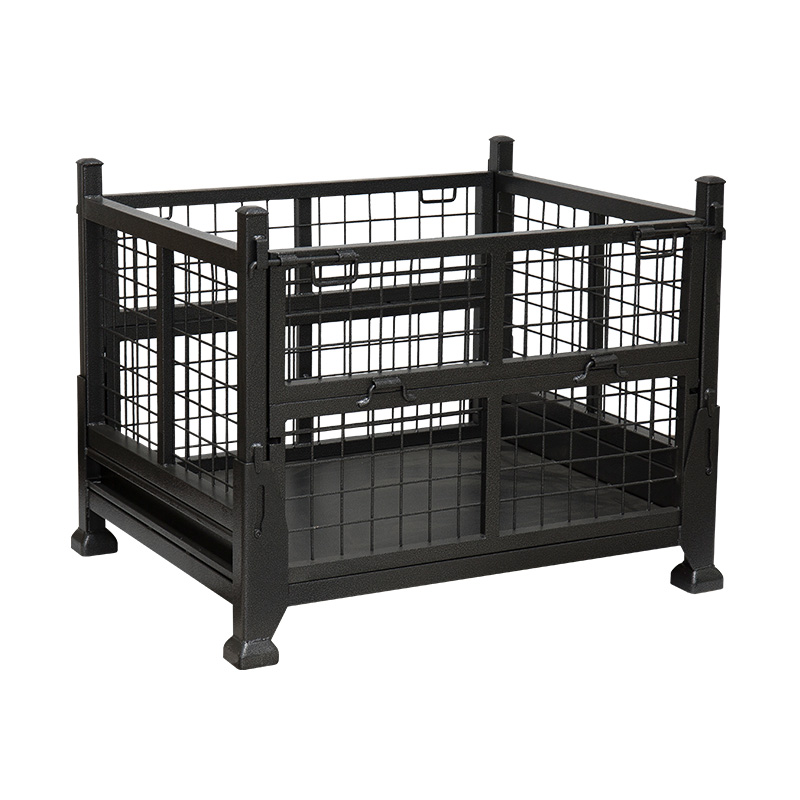
Foldable pallet cages are an important tool in factory logistics. They play an important role in transportation, distrib...
See Details -
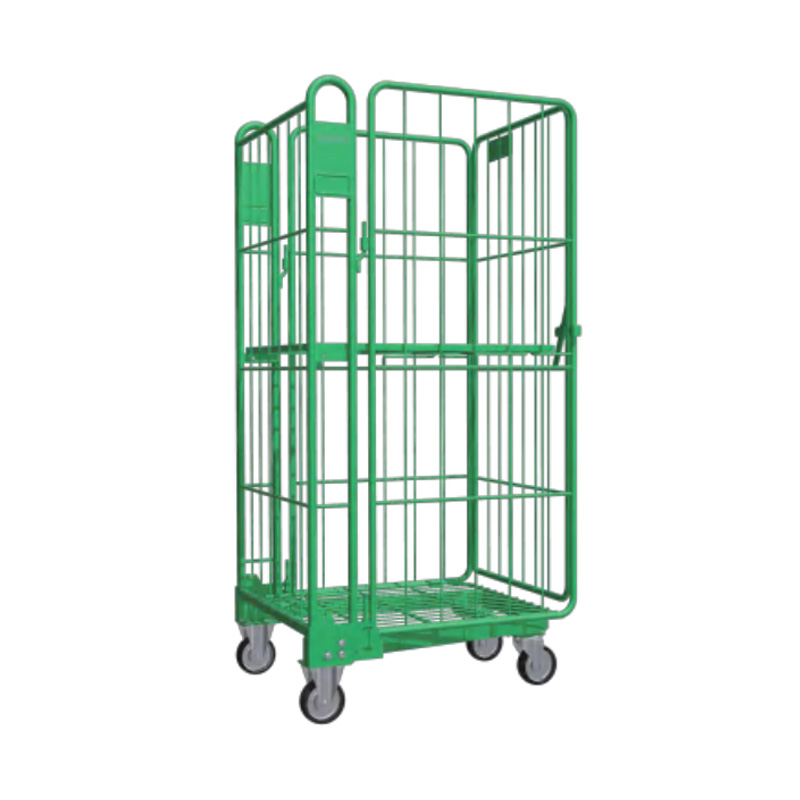
Product specification:The chassis is made of a square tube frame, with a bottom metal sheet tray that can be folded up a...
See Details -
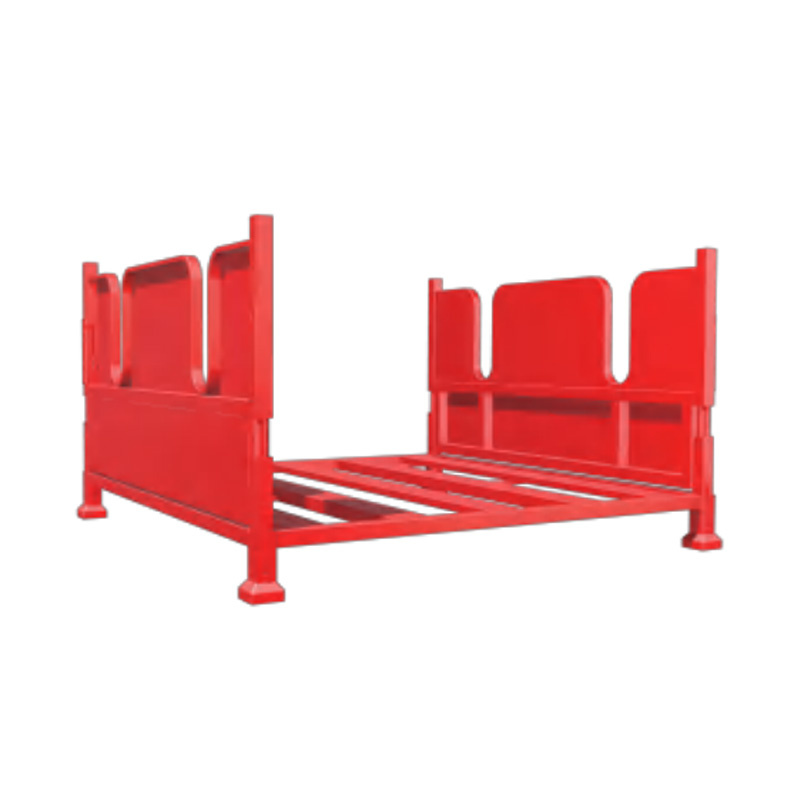
Stacking rack, also known as Qiaogu rack or stacking rackIt is a transportation and storage device derived from pallets ...
See Details -
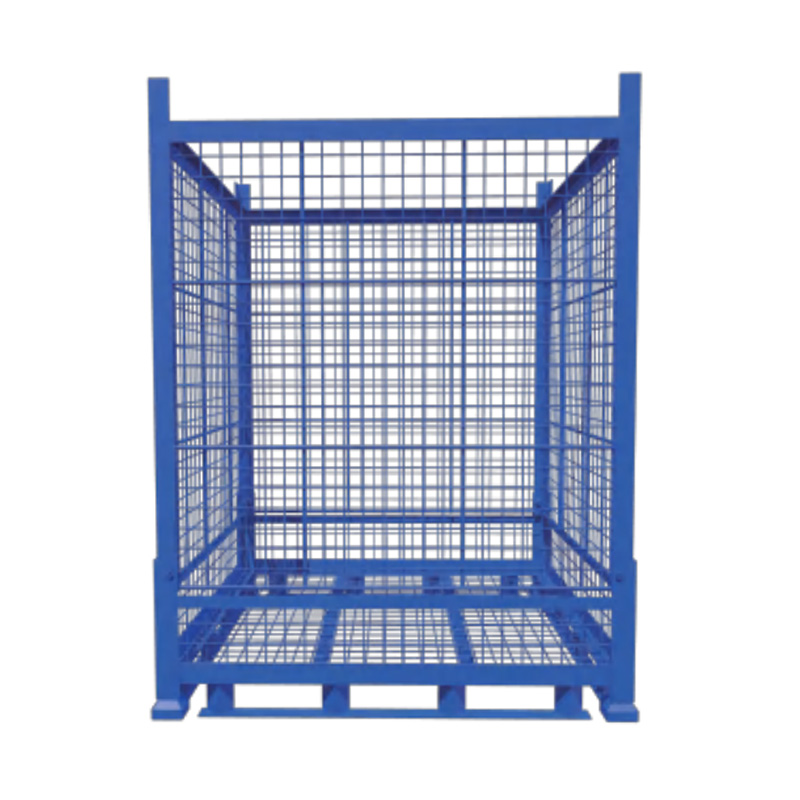
Product specification:Container structure made of L-Type plate frame with 50×50 wire mesh, with base support.Surface tre...
See Details

Information
-
Building B5, No. 138, Weixi Road, Weixi Village, Weitang Town, Xiangcheng District, Suzhou City, China.
-
Tel:
+86-13862140414
+86-13951110334 -
Phone: +86-512-65905480
