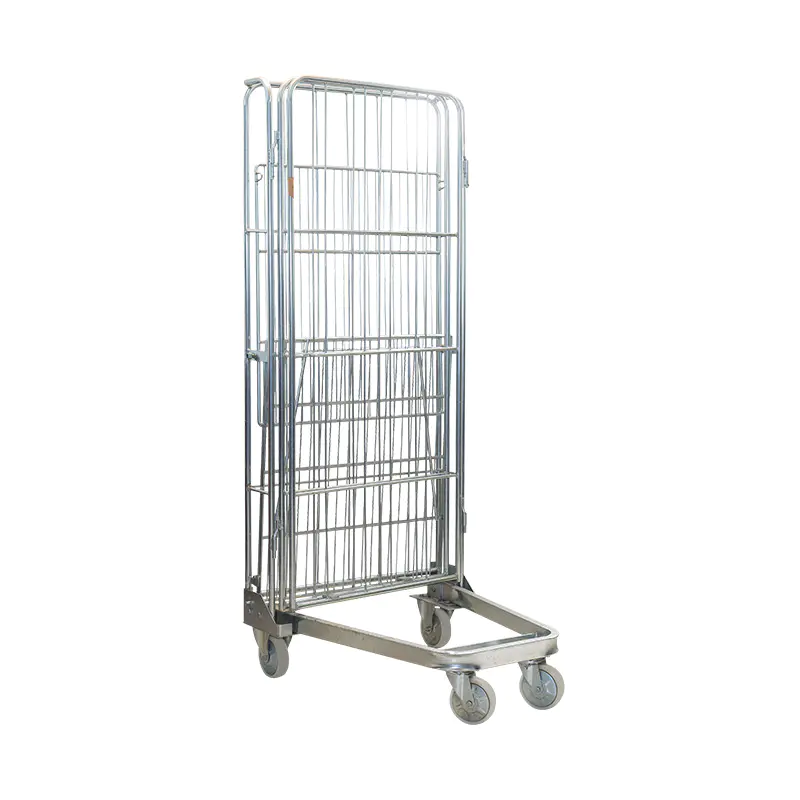
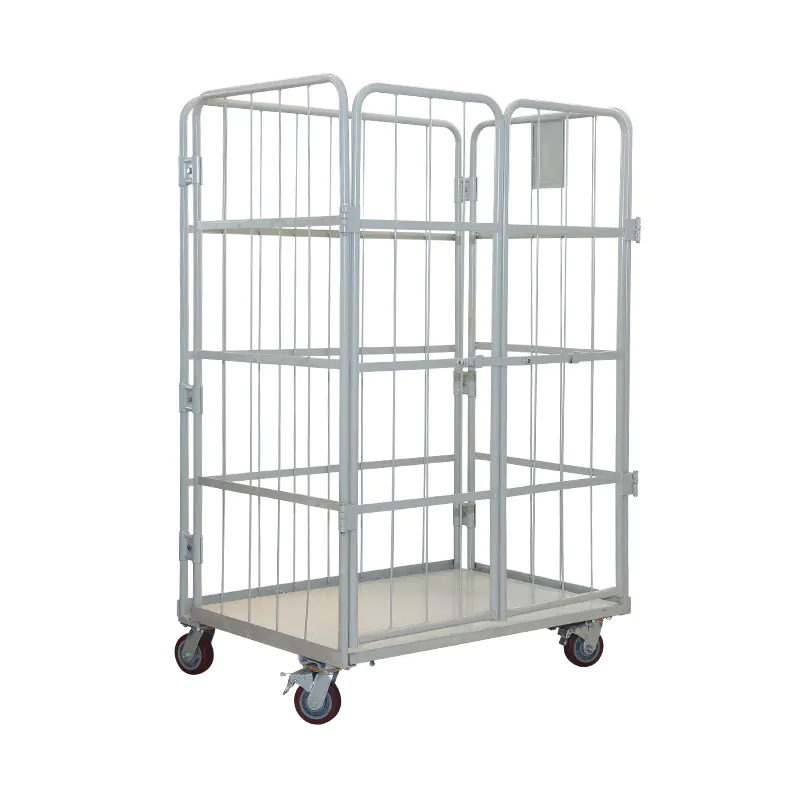
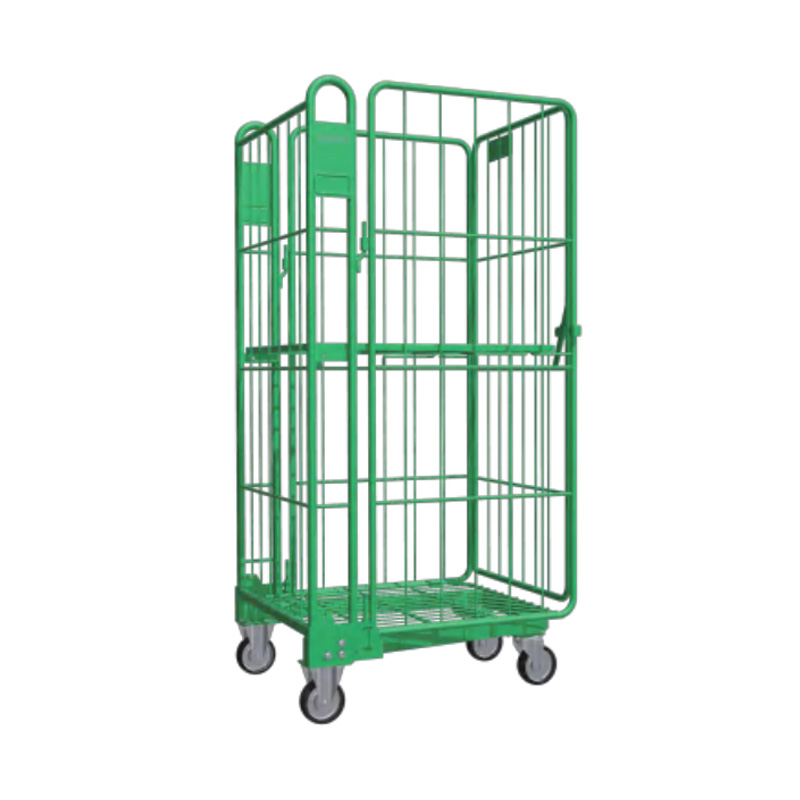
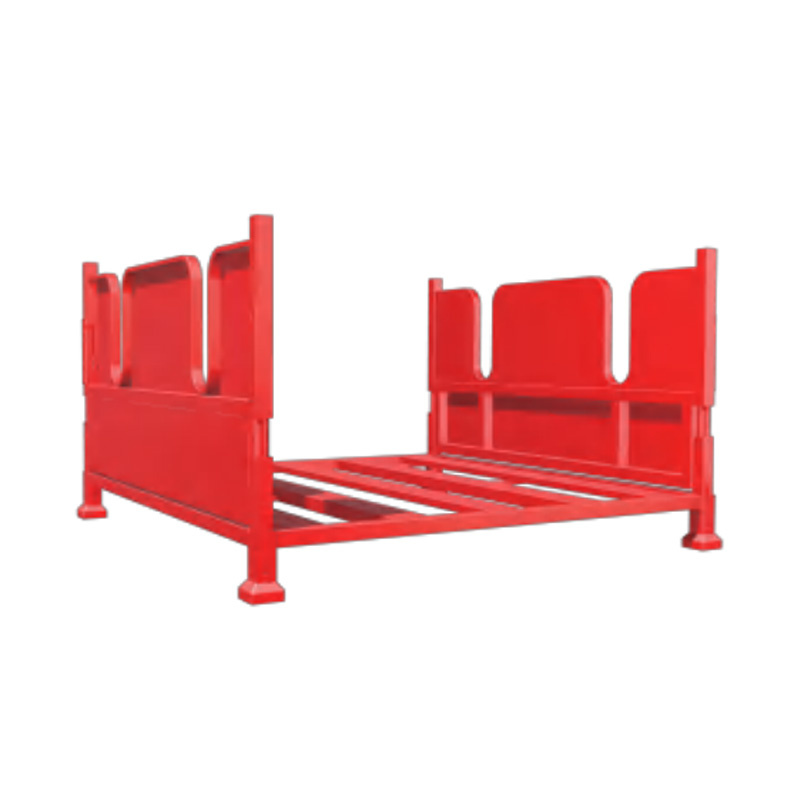
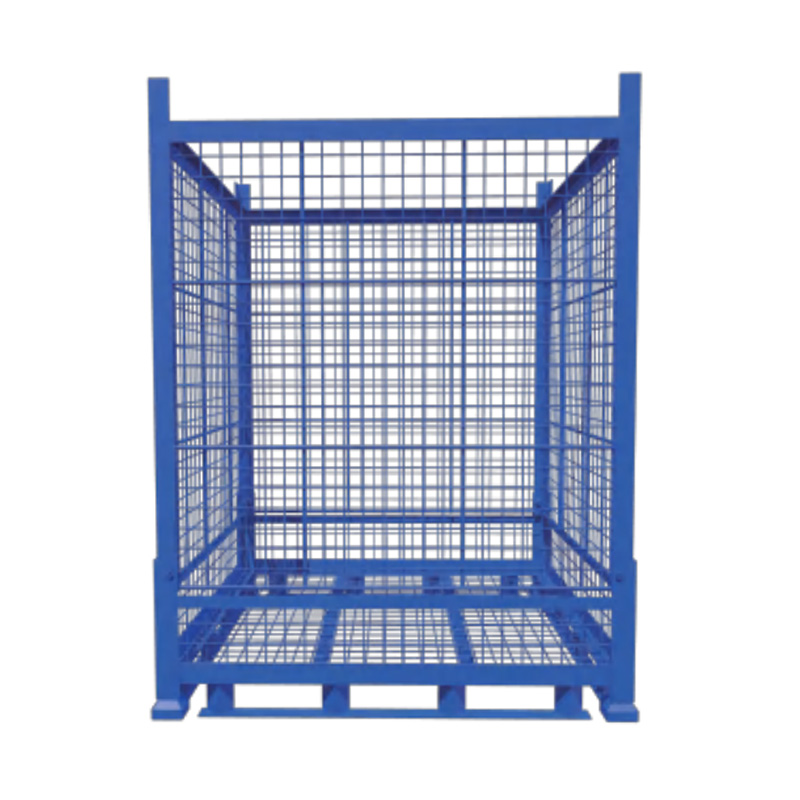
A galvanized nestable foldable roll container is an essential tool in modern logistics and warehouse operations. Designed for efficient storage, transport, and stacking of goods, these roll containers combine durability, mobility, and space-saving features. One critical aspect that ensures the reliability and longevity of these containers is the welding and joint methods used during their manufacturing. Proper welding and joint design influence load capacity, structural integrity, corrosion resistance, and overall safety.
Understanding the Structure of a Galvanized Nestable Foldable Roll Container
A galvanized nestable foldable roll container typically consists of a frame, base, side panels, and wheels. Each component contributes to its overall strength, mobility, and stackability.
- Frame: The frame forms the skeleton of the roll container. Usually made from steel, it provides structural stability. The quality of welding here directly impacts the container’s durability.
- Side Panels: These panels prevent goods from falling during transport. Panels are often foldable for nesting, allowing multiple containers to be stacked efficiently.
- Base: The base supports the weight of stored goods. Reinforced welds at connection points prevent sagging or failure under heavy loads.
- Wheels and Casters: While not directly welded into the frame, the mounting points rely on strong joints to ensure smooth mobility.
The galvanization process protects the steel from rust and corrosion, but its effectiveness also depends on how welding and joint techniques are executed. Poorly welded joints can create areas prone to corrosion, even in galvanized containers.
Key Welding Methods Used in Galvanized Nestable Foldable Roll Containers
1. MIG (Metal Inert Gas) Welding
MIG welding is one of the most commonly used techniques in manufacturing galvanized nestable foldable roll containers. It involves feeding a continuous wire electrode through a welding gun while an inert gas shields the molten metal from atmospheric contamination.
Advantages for roll containers:
- Provides strong, continuous welds ideal for the frame and base joints.
- Minimizes distortion in thin steel sheets, which is important for foldable panels.
- Allows for efficient, automated production in industrial settings.
Application: MIG welding is often applied to frame intersections, panel supports, and base reinforcements. Its precision ensures that the container can handle heavy loads without compromising safety.
2. TIG (Tungsten Inert Gas) Welding
TIG welding uses a non-consumable tungsten electrode and an inert gas shield. While more labor-intensive than MIG welding, TIG produces high-quality welds with superior appearance and precision.
Advantages for roll containers:
- Creates clean, smooth joints with minimal spatter, which is beneficial for galvanized surfaces.
- Reduces the risk of burn-through on thin steel panels.
- Offers excellent control over weld penetration, ensuring long-term durability.
Application: TIG welding is commonly used on areas requiring precise alignment, such as foldable hinges and side panel joints.
3. Spot Welding
Spot welding is another method frequently used for galvanized nestable foldable roll containers, particularly for sheet metal panels. This technique uses electrical resistance to join two metal surfaces at discrete points.
Advantages for roll containers:
- Fast and efficient for mass production.
- Provides uniform weld points that distribute stress evenly across panels.
- Maintains the integrity of the galvanized coating if performed with correct parameters.
Application: Spot welding is primarily used to attach side panels to frames or secure reinforcing strips.
4. Arc Welding (Stick Welding)
Arc welding, sometimes referred to as stick welding, uses a consumable electrode coated in flux to create a strong bond. Although less common in modern automated production, it is occasionally used for heavy-duty components.
Advantages for roll containers:
- Produces robust joints capable of supporting high loads.
- Flexible for repairs or custom modifications in warehouses or workshops.
Application: Arc welding is generally applied to frame corners or reinforcement areas in heavy-duty galvanized nestable foldable roll containers.
Common Joint Designs in Galvanized Nestable Foldable Roll Containers
Welding techniques alone do not determine the structural integrity of a roll container. The joint design is equally important. Key joint types include:
1. Butt Joints
A butt joint is formed when two metal components are aligned edge-to-edge. In galvanized nestable foldable roll containers, butt joints are often used to connect frame tubes and panels. Proper welding ensures maximum load distribution and prevents weak points.
Advantages:
- Provides strong connections when reinforced with MIG or TIG welding.
- Maintains a smooth surface, minimizing damage to goods.
2. Lap Joints
Lap joints involve overlapping two pieces of metal before welding. This design is particularly useful for foldable panels, as it allows the joint to pivot without compromising strength.
Advantages:
- Excellent for foldable side panels.
- Increases contact area, improving stress distribution.
- Can maintain galvanization protection when properly welded.
3. Corner Joints
Corner joints are used at frame intersections, such as where vertical and horizontal supports meet. They provide structural stability and define the container’s shape.
Advantages:
- Critical for maintaining the roll container’s load-bearing capacity.
- Often reinforced with additional welding beads or gussets.
4. T-Joints
T-joints connect a perpendicular member to a main frame. These joints are commonly used for welded side braces or base supports.
Advantages:
- Distributes weight evenly across the frame.
- Enhances resistance to twisting or deformation under heavy loads.
Best Practices for Welding Galvanized Nestable Foldable Roll Containers
1. Pre-treatment and Surface Preparation
Galvanized steel contains a zinc coating that can produce fumes and affect weld quality. Best practices include:
- Cleaning and degreasing the surface before welding.
- Removing excessive zinc coating at the joint area to ensure a strong weld.
- Using proper ventilation or fume extraction to ensure worker safety.
2. Weld Reinforcement and Inspection
- Apply consistent weld beads to prevent weak points.
- Use visual and ultrasonic inspection to ensure weld integrity.
- Check that foldable hinges are free of distortion after welding.
3. Post-Welding Treatment
- Apply anti-corrosion coating to any exposed steel after welding.
- Inspect and test foldability to ensure that joints do not impede movement.
- Ensure wheels and casters are correctly mounted to avoid stress on welds.
Industry Applications and Buyer Considerations
Warehouse and Logistics
Galvanized nestable foldable roll containers are widely used in logistics for transporting and storing goods efficiently. Buyers often prioritize:
- Durability under frequent use
- Resistance to corrosion in humid or outdoor environments
- Easy folding and nesting for space efficiency
Retail and Distribution Centers
Retail operations value the mobility and foldability of these containers. Weld quality affects:
- Safety of goods during handling
- Ease of maneuvering in narrow aisles
- Long-term cost savings due to reduced container replacement
Manufacturing and Industrial Use
Industries handling heavy or bulky items require high-strength welded joints:
- Butt, lap, and T-joints in the frame ensure containers can support heavy loads.
- Reinforced MIG or TIG welds prevent deformation in demanding environments.
Conclusion
The welding and joint methods used in a galvanized nestable foldable roll container are fundamental to its performance, durability, and safety. MIG, TIG, spot, and arc welding techniques are employed depending on the component and load requirements. Joint designs such as butt, lap, corner, and T-joints further enhance structural integrity and foldability. For buyers and warehouse operators, understanding these methods helps ensure that the containers they select meet operational needs, resist corrosion, and maintain reliability over time. Proper pre-treatment, welding practices, and post-weld inspection ensure that galvanized nestable foldable roll containers deliver consistent performance in a wide range of industrial and logistical applications.



 Español
 русский
 عربى
عربى