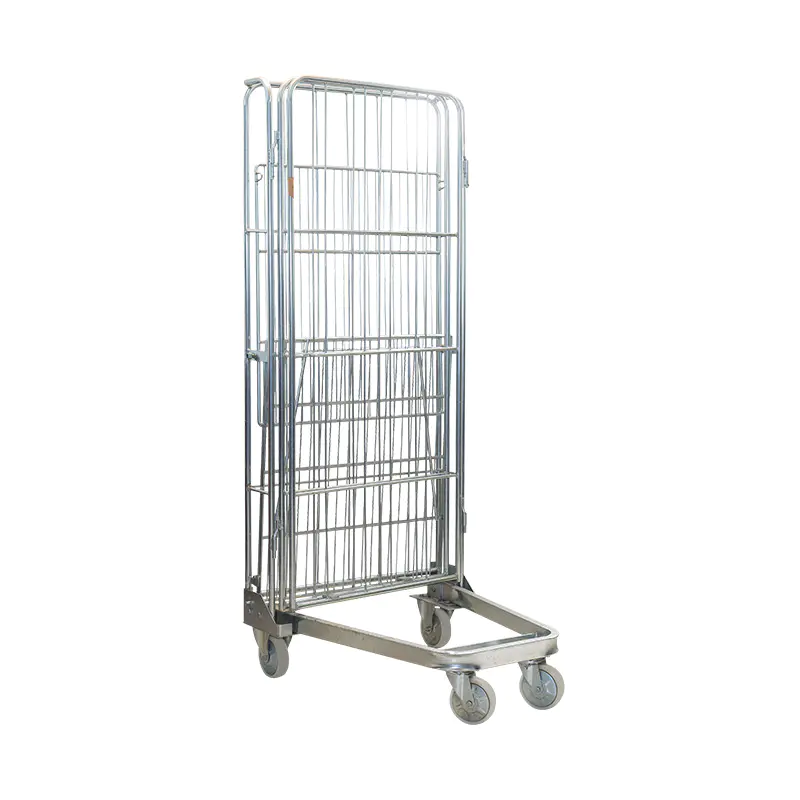
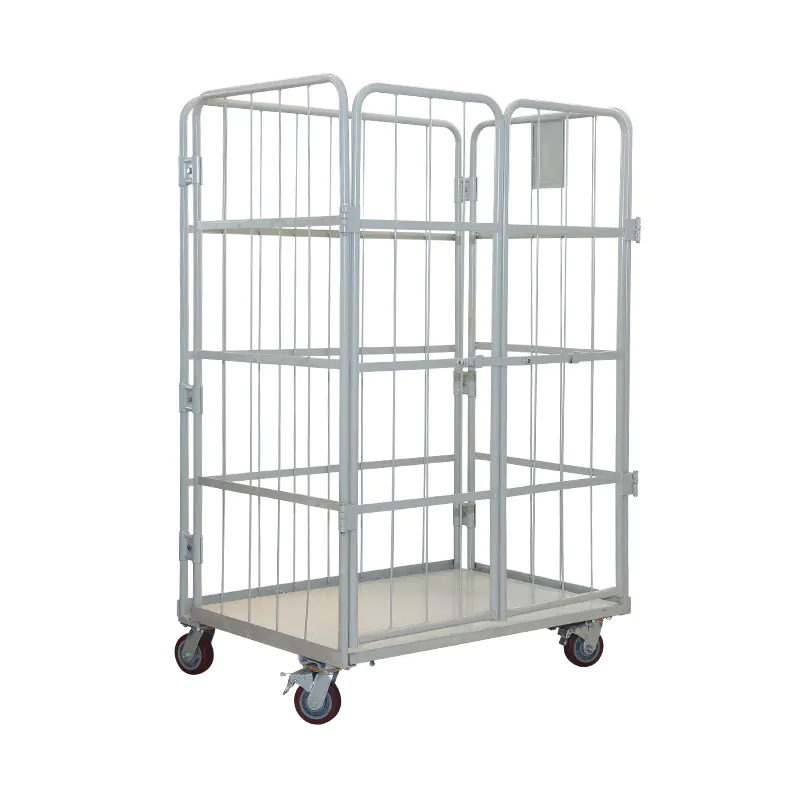
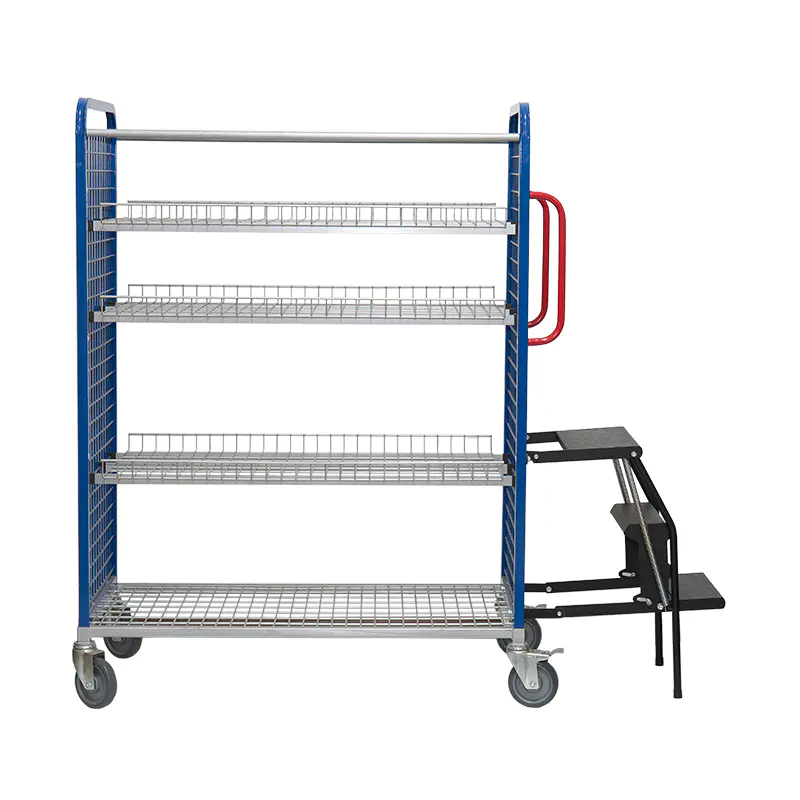
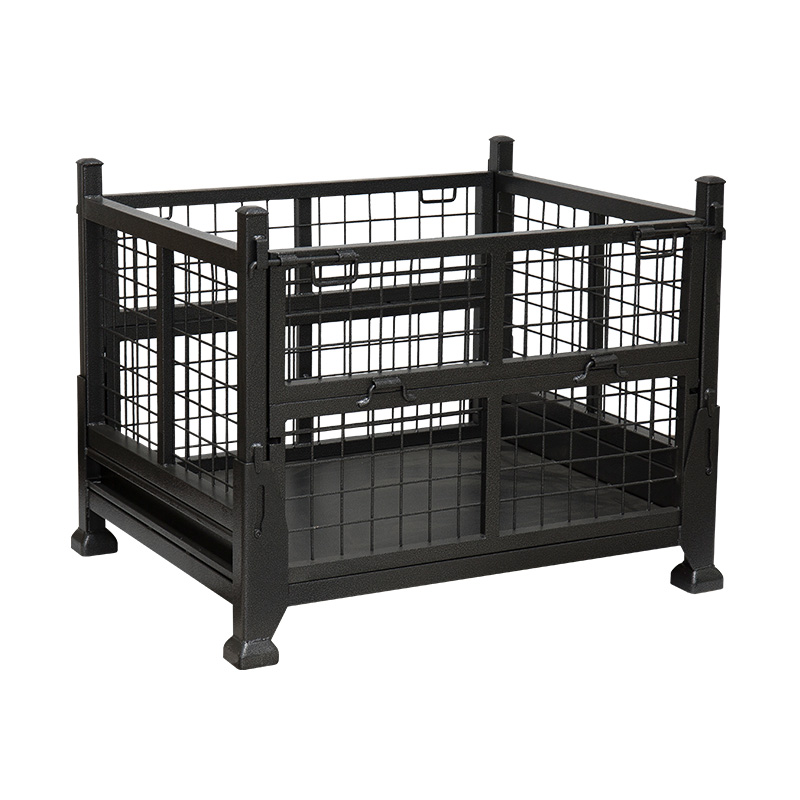
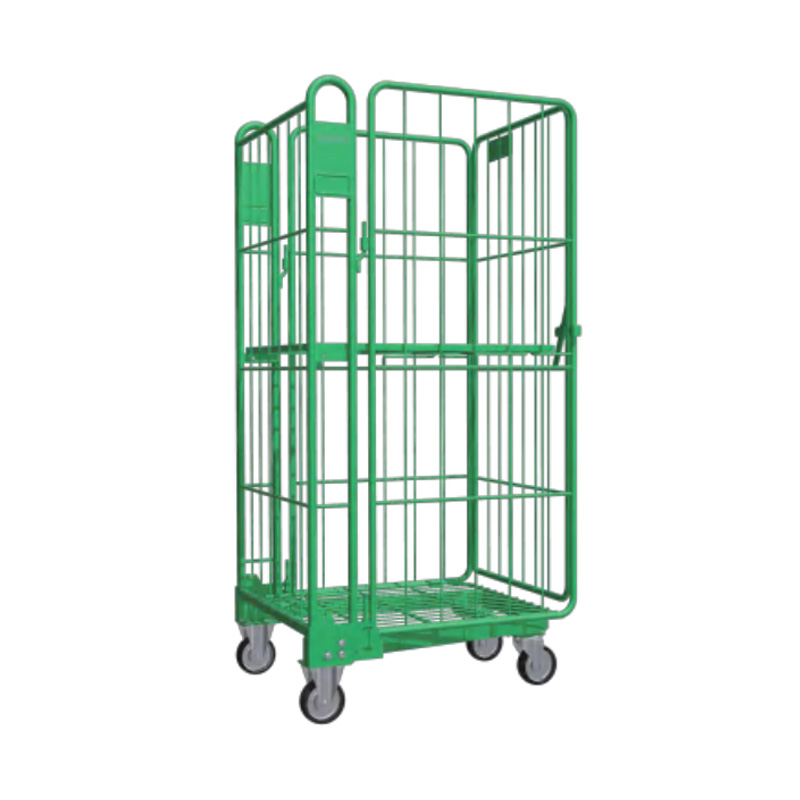
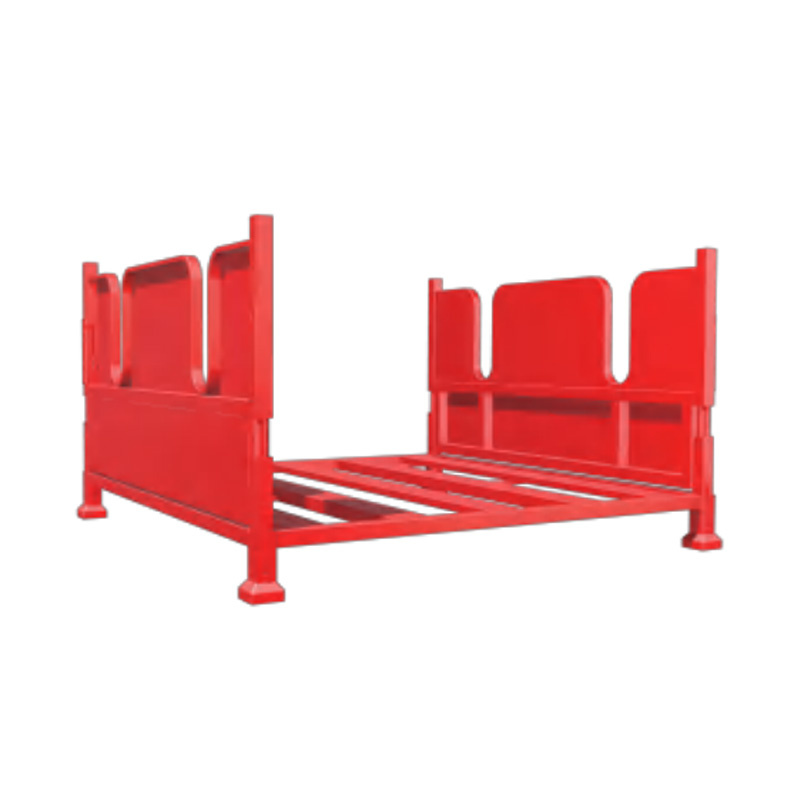
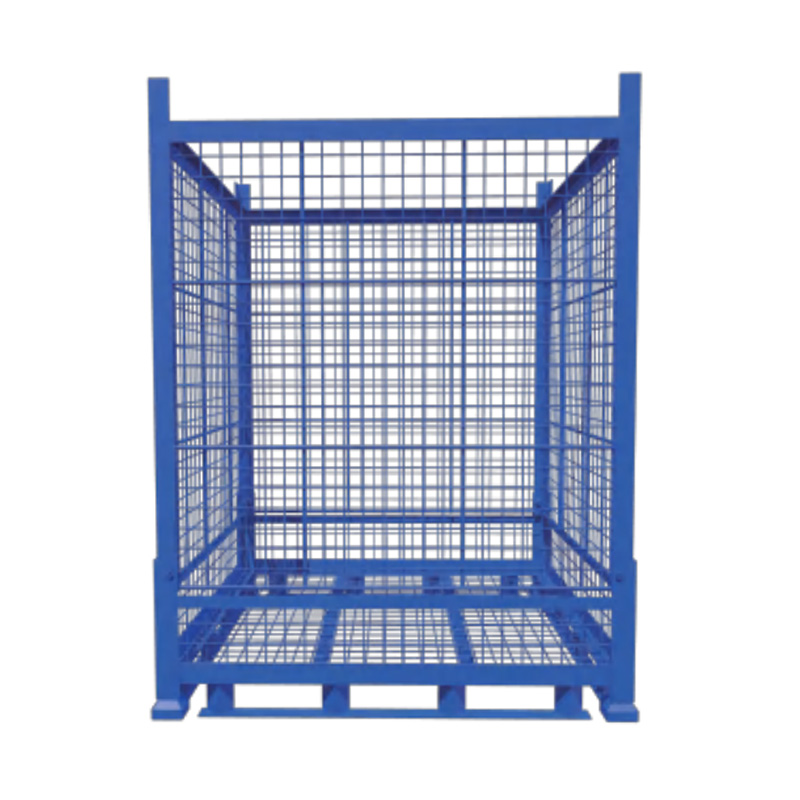
Warehouse and material handling systems rely on engineered load carriers to support internal logistics workflows. Among these carriers, zinc plated trap door roll container cage designs are widely used for moving, storing, and staging goods across production and distribution environments. Selecting the appropriate roll container design impacts operational efficiency, space utilization, system interoperability, lifecycle cost, and safety performance.
1. Introduction to Roll Container Designs
1.1 Functional Role in Material Handling Systems
Roll containers are engineered load carriers configured on wheels that enable the controlled movement and temporary storage of materials within warehouses, manufacturing floors, and distribution centers. They bridge the gap between static storage (like shelving and pallets) and dynamic handling assets (like conveyors and automated guided vehicles). Their functions are multifaceted:
- Transport intermediate goods between process stages.
- Stage work‑in‑progress in assembly cells or packing stations.
- Buffer inventory ahead of picking or quality inspection.
- Serve as load carriers in mixed automated systems.
A common configuration includes a metal cage frame that provides containment and protection for items while enabling access through trap doors or side panels. A zinc plated trap door roll container cage uses corrosion‑resistant metal finishing that extends service life in environments with moisture or aggressive cleaning protocols.
1.2 Structural Categories
Roll container designs generally fall into two structural categories:
- Fixed Roll Containers — Rigid, non‑collapsible frames with permanently welded or bolted structural elements.
- Foldable Roll Containers — Mechanisms that enable parts of the frame to collapse or fold, reducing the occupied volume when not in use.
Each category introduces different behaviors in terms of storage density, handling ergonomics, durability under load, and integration with automated systems.
2. Engineering Characteristics of Fixed Roll Container Designs
Fixed designs embody the traditional structural philosophy for load carriers: a static frame engineered for maximum rigidity and life under repeated stress cycles.
2.1 Structural Integrity
Fixed designs prioritize stiffness and resistance to deformation. Their load‑bearing members (vertical posts and horizontal bracing) are usually welded or bolted in a way that minimizes flex under load. Key implications include:
- Consistent load distribution across the frame.
- Predictable dynamic response during movement.
- Reduced risk of frame distortion when repeatedly impacted by handling equipment (e.g., forklifts, pallet jacks).
From a mechanical standpoint, materials and joining methods are chosen to ensure that stresses induced during daily use remain well within elastic limits, reducing the likelihood of permanent deformation.
2.2 Lifecycle Durability
Because there are no articulating or movable joints beyond wheels and trap doors, fixed designs tend to exhibit:
- Lower component wear rates over extended cycles.
- Reduced need for re‑tightening or realignment of load‑bearing members.
- Simplified maintenance regimes due to fewer mechanisms.
In environments where handling intensity is high (e.g., continuous distribution operations), these characteristics translate into stable, predictable asset behavior.
2.3 Integration with Existing Systems
Fixed designs support established handling patterns in many conventional logistics systems. They offer predictable dimensions and behavior that facilitate:
- Interoperability with conveyors, lifts, and automated guided vehicles.
- Standardized docking at packing and sorting stations.
- Stable interaction with trapping mechanisms used for goods containment.
Because design tolerances are stable, fixed frames are easier to validate within workflow simulations and safety analyses.
3. Engineering Characteristics of Foldable Roll Container Designs
Foldable designs introduce mechanical articulation that enables the frame to collapse or fold when empty. This collapsibility reduces storage footprint at the expense of introducing movable joints.
3.1 Mechanism and Kinematics
Foldable roll containers incorporate mechanisms such as hinged side panels or collapsing frames. Typical design strategies include:
- Swing‑out side frames that fold inward.
- Collapsible corner posts that retract or compress.
- Detachable panels that can be removed and stacked.
Engineering these mechanisms involves consideration of:
- Hinge durability and retention under repeated cycles.
- Locking systems that secure the frame in both open and closed states.
- Kinematic constraints that prevent unintentional collapses during movement.
The design must balance ease of operation with safety and structural stability.
3.2 Space Optimization
The primary driver for foldable designs is space efficiency. When containers are empty or partially loaded, they can be folded into a reduced volume. Benefits include:
- Lower storage density requirements for empty carriers.
- Reduced transportation cost when returning empties.
- Higher utilization of staging areas in warehouses with limited space.
Systems engineers evaluate foldable containers in terms of occupied volume per unit and the resulting impact on storage planning and throughput.
3.3 Mechanism Durability and Maintenance
Introducing articulation increases the number of mechanical elements subject to wear. Key aspects include:
- Hinges and joints that require lubrication and inspection.
- Locking mechanisms that must maintain secure engagement under load.
- Increased inspection points compared to fixed designs.
Maintenance regimes must account for cadence of hinge wear and allow for adjustment or replacement without systemic disruption.
4. Comparative Functional Assessment
To support a rational choice between foldable and fixed designs, this section outlines direct comparisons across key performance dimensions.
4.1 Storage Footprint Metrics
Table 1: Storage Footprint Comparison
| Performance Metric |
Fixed Roll Container |
Foldable Roll Container |
| Volume when full |
Full design volume |
Full design volume |
| Volume when empty |
Full design volume |
Reduced (up to ~60% less) |
| Storage density in racks |
Lower efficiency |
Higher efficiency |
| Return logistics cost |
Higher |
Lower |
Key Observations:
- Both designs occupy the same volume when fully configured for use.
- Foldable designs offer a clear advantage in empty return logistics due to reduced volume.
- Storage density benefits for foldable designs support constrained staging environments.
4.2 Structural Stiffness and Load Response
Table 2: Structural Performance Indicators
| Indicator |
Fixed Design |
Foldable Design |
| Frame stiffness |
High |
Moderate to high |
| Susceptibility to dynamic loads |
Lower |
Higher |
| Joint fatigue risk |
Low |
Moderate |
Key Observations:
- Fixed designs demonstrate consistently higher stiffness due to lack of articulation.
- Foldable designs introduce joint fatigue considerations that must be engineered into maintenance planning.
- For operations with high dynamic loading (e.g., heavy contents being moved frequently), fixed designs provide predictable structural response.
4.3 Operational Throughput
Operational throughput encompasses cycle times for loading, transport, and unloading.
- Fixed designs may enable slightly faster cycle times in high‑speed operations because no folding/unfolding steps are required.
- Foldable designs may introduce additional handling steps, especially when containers need to be folded or unfolded frequently.
Throughput impact depends on workflow design; systems with dedicated folding stations or automated folding mechanisms may mitigate this cost.
5. Systems Integration Considerations
Selecting a roll container design is not merely a component choice; it influences upstream and downstream processes in logistics architectures.
5.1 Interplay with Automated Handling
In warehouses using automated guided vehicles (AGVs), conveyors, or robotic sorters, container geometry and behavior must align with system tolerances. A zinc plated trap door roll container cage with standard dimensions and predictable behavior is easier to integrate.
Foldable designs introduce:
- Variable geometry states that must be accounted for in sensor and vision systems.
- Potential constraints on gripping or docking mechanisms if folding remains incomplete.
Systems engineers often specify interlocks or sensors that verify container configuration before engagement with automated equipment.
5.2 Safety and Ergonomics
Occupational safety is a critical integration parameter. Foldable designs require careful consideration of:
- Pinch points at hinges.
- Handling procedures for folding/unfolding.
- Locking indicators to prevent unintentional collapse.
Training, signage, and ergonomic tool design (e.g., assisted folding mechanisms) help minimize risk.
5.3 Standardization and Compatibility
In large facilities, standardizing container dimensions, handle positions, and load capacities simplifies planning. Fixed designs inherently enforce consistency. Foldable designs must ensure that their folded and deployed states remain within acceptable tolerance bands to interface consistently with storage systems, staging racks, and automated devices.
5.4 Maintenance and Lifecycle Planning
From a lifecycle perspective, maintenance and inspection workloads differ significantly:
- Fixed designs require scheduled inspections primarily on wheels, bearings, and trap doors.
- Foldable designs require additional attention to moving joints and locking mechanisms, increasing maintenance effort.
Integration of maintenance planning tools (e.g., computerized maintenance management systems) is recommended for foldable fleets.
6. Economic Analysis
While this is not a cost model with formulas, it is useful to summarize relative economic implications.
6.1 Capital and Operational Costs
- Fixed roll containers often have lower upfront costs due to simpler construction and fewer moving parts.
- Foldable designs may cost more upfront to accommodate hinges and locking systems.
- Operationally, foldable designs may reduce storage costs by lowering required space for empties.
6.2 Lifecycle and Replacement
Component failure rates differ between the two designs. Foldable containers may need more frequent joint replacement, while fixed containers can remain serviceable for longer in high‑abuse environments.
6.3 Return Logistics
For operations that ship empty containers between facilities, foldable designs offer economic benefit by reducing transportation volume and enabling a higher quantity per trip.
7. Application Scenarios and Design Selection Guidelines
Selecting a design should align with workflow patterns, space constraints, and integration requirements.
7.1 High‑Density Storage Environments
In facilities where empty container storage space is at a premium, foldable designs deliver measurable space utilization benefits.
7.2 High‑Throughput Movement
If the primary constraint is cycle speed and minimal handling steps, fixed designs can reduce opportunities for misconfiguration.
7.3 Mixed Environments
Some facilities adopt a hybrid fleet: fixed designs for high‑frequency lanes, and foldable designs for less frequent use or long‑distance return logistics.
7.4 Automated Systems
When integrating with automation, design consistency and dimensional stability (typically offered by fixed designs) simplify control system requirements.
8. Case Themes in Deployment Planning
Systems engineers often encounter the following themes when planning roll container deployments:
- Compatibility with rack spacings and automated docks.
- Impact of load patterns on joint wear.
- Requirements for corrosion resistance — where zinc plated trap door roll container cage finishes outperform untreated steel.
- Negotiation of human–machine interaction zones where ergonomic handling and safety are required.
Addressing these themes early in planning minimizes downstream corrective actions.
Summary
Both foldable and fixed roll container designs serve crucial roles in internal logistics systems. Their selection should be grounded in a systems‑level analysis that balances structural performance, space utilization, integration complexity, operational throughput, maintenance demands, and lifecycle economics.
Fixed designs excel in stiffness, durability, and predictability — particularly under continuous heavy use and automation. Foldable designs offer compelling space‑saving advantages, especially for handling empty return flows and optimizing storage density.
Engineering decision‑making should quantify these trade‑offs relative to facility constraints, workflow architectures, and long‑term operational strategies. Contextual needs vary, and in many facilities, a thoughtfully balanced mix of both designs delivers the optimal outcome.
FAQ
-
What is the primary advantage of a foldable roll container design?
Foldable designs reduce required storage volume for empty containers, enabling higher storage density and lower return logistics costs.
-
Are fixed roll containers more durable than foldable ones?
Fixed designs generally have fewer moving parts, which can translate into lower maintenance and greater structural stability under repeated loads.
-
How does a zinc plated trap door roll container cage improve performance?
Zinc plating enhances corrosion resistance, extends service life in humid environments, and maintains surface integrity under frequent cleaning.
-
Can foldable roll containers be integrated with automated systems?
Yes, but integration requires careful design of sensors and controls to ensure the container’s configuration state is compatible with handling mechanisms.
-
What maintenance considerations are unique to foldable designs?
Hinges and locking mechanisms require regular inspection and lubrication to sustain reliable operation.
References
- Bartholdi, J. J., & Hackman, S. T. Warehouse & Distribution Science.
- Frazelle, E. World-Class Warehousing and Material Handling.
- Tompkins, J. A., White, J. A., Bozer, Y. A., & Tanchoco, J. M. A. Facilities Planning.



 Español
 русский
 عربى
عربى