Introduction: The Evolution of Industrial Containment
In the intricate dance of global supply chains, efficiency in storage and transportation is not merely an advantage—it is a necessity. The quest for optimizing space, reducing costs, and improving material handling workflows has led to the widespread adoption of returnable packaging solutions. Among these, the foldable and collapsible pallet cage stands out as a versatile and robust workhorse. At its core, a foldable and collapsible pallet cage is a secure, rigid container mounted on a pallet base, designed to be disassembled or folded down to a fraction of its assembled size when empty. This fundamental characteristic addresses one of the most significant logistical challenges: the cost and space associated with shipping and storing empty containers. Understanding the different design types is crucial for logistics managers, warehouse operators, and procurement specialists seeking to make informed investments. The choice of design impacts everything from initial cost and durability to operational workflow and compatibility with existing systems.
Understanding the Core Components and Terminology
Before delving into the specific types of foldable designs, it is essential to establish a common understanding of the key components that make up a typical foldable and collapsible pallet cage. While designs vary, most share a set of fundamental parts. The base, often a heavy-duty pallet made of steel or sometimes wood, provides the foundation and allows for forklift handling. The cage structure itself consists of vertical posts and horizontal braces that create the rigid frame. The containment walls are typically made from welded wire mesh, offering strength, visibility, and ventilation. The critical differentiator among types lies in the folding mechanism, which is integrated into the posts and the connection points between the walls and the base. A secure latching or locking system is also a vital component, ensuring the unit remains safely closed during use. Familiarity with terms like collapsible container and returnable packaging is key for industry professionals researching this equipment. The primary goal of all these designs is to achieve a significant collapsed ratio—the volumetric difference between the assembled and folded states—which directly translates to space and cost savings.
The Four-Post Collapsible Cage: The Industry Standard
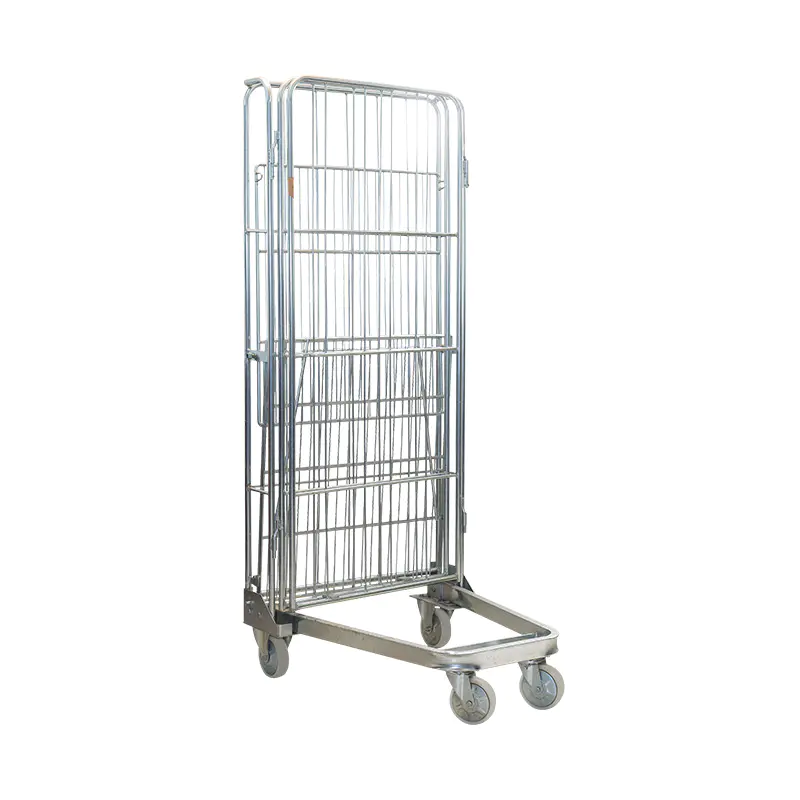
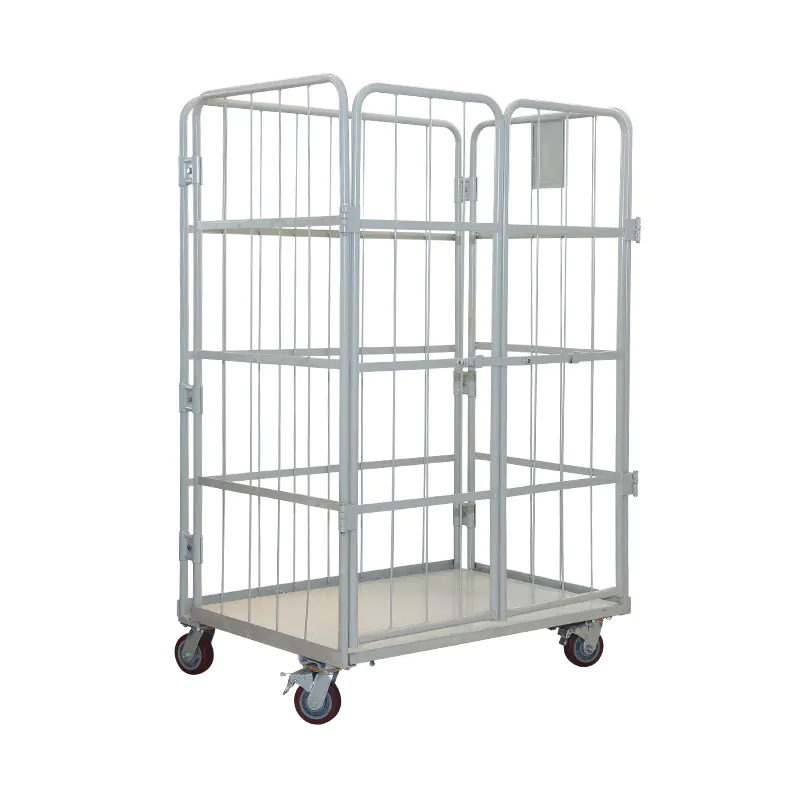
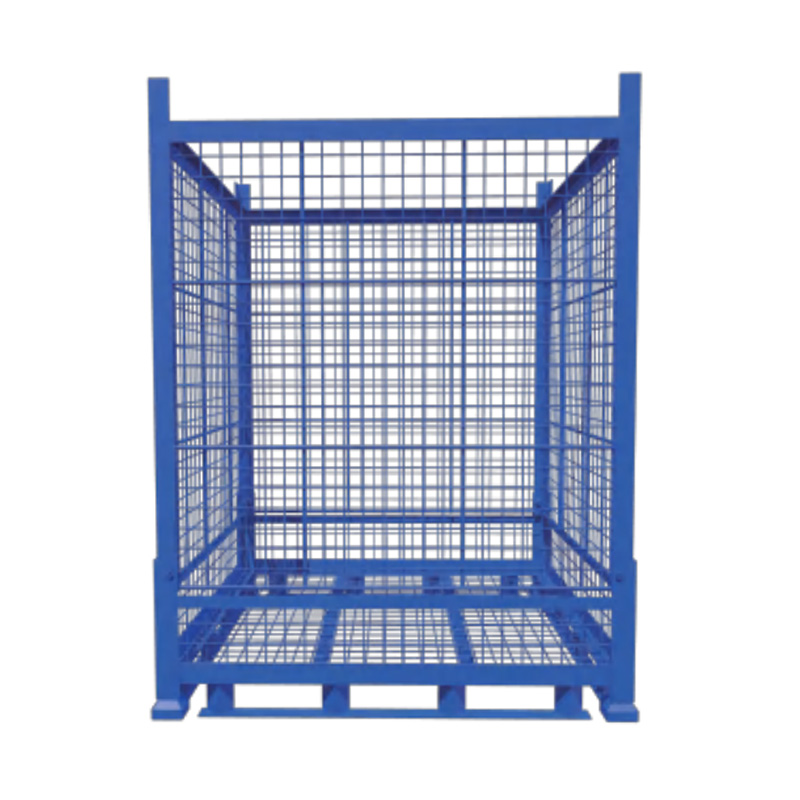
The four-post design is arguably the most common and widely recognized type of foldable and collapsible pallet cage. Its popularity stems from its straightforward design, reliability, and robust performance in a variety of settings. As the name implies, this design features four primary vertical posts, one at each corner of the unit. These posts are the cornerstone of the folding mechanism. In a typical four-post system, the two longer side walls are permanently fixed to the base and to the top frame. The two shorter end walls, however, are hinged at their connection to the base and sometimes at the top. To collapse the unit, the end walls are unlocked and folded inward, one after the other. This action often causes the side walls to drop down or pivot, lying flat on top of the folded end walls and the base.
The primary advantage of the four-post design is its mechanical simplicity. With fewer moving parts compared to more complex designs, it is generally easier for warehouse staff to operate without extensive training. This simplicity also contributes to its durability and longevity, as there are fewer potential points of failure. The robust construction of the four-post cage makes it ideal for heavy-duty applications, such as in the automotive industry for transporting metal components or in manufacturing for moving heavy parts between processes. Its design is well-suited for secure stacking when loaded, providing a stable and safe storage solution. However, one consideration with this design is its collapsed footprint. While it reduces in height dramatically, the footprint remains the same as the base size, which may still require significant floor space when storing a large number of empty units, though far less than assembled cages.
The Box-Type Collapsible Cage: Maximum Security and Rigidity
For applications demanding the highest level of security, structural integrity, and protection from dust, the box-type collapsible cage is often the preferred choice. This design is sometimes referred to as a solid-side container or a closed-container system, though it retains the fundamental foldable characteristic. Unlike the open mesh design of the standard cage, the box-type variant features solid steel panels for its walls. These panels can be made from corrugated steel sheet, pressed steel, or wire mesh with solid liners, offering a more enclosed environment for the contents.
The folding mechanism of a box-type foldable and collapsible pallet cage is necessarily more complex than the four-post design. It often involves a system where all four walls are hinged at their base. To collapse the unit, all walls are unlocked and folded down onto the base pallet in a specific sequence. Alternatively, some designs feature a “lifting” mechanism where the entire top frame is raised, allowing the walls to swing inward or outward before the structure is lowered into a flat profile. This design is engineered for situations where the contents must be fully shielded. It is excellent for containing small items that could fall through mesh walls, protecting goods from dust and moisture in outdoor or foundry environments, and providing enhanced security for high-value components. The solid walls also allow for easier and clearer labeling. The trade-off for this enhanced protection is typically a higher weight and a more intricate folding process that may require slightly more time and care from operators.
The Collapsible Cage with Drop-Down Gates: Enhanced Accessibility
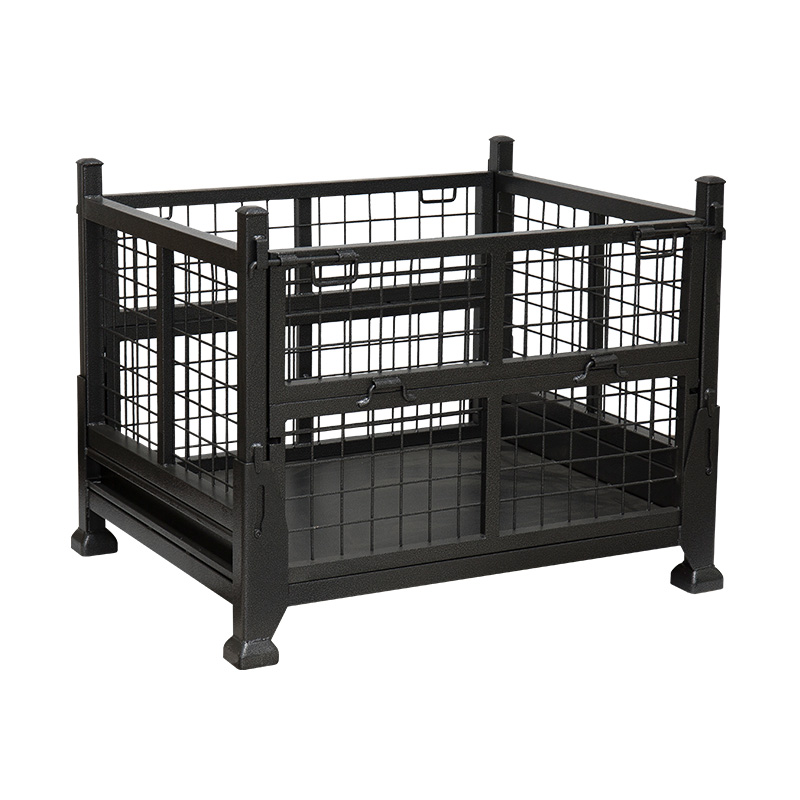
Accessibility is a critical factor in material handling efficiency. The standard design of a foldable and collapsible pallet cage can present a challenge for loading and unloading, particularly with bulk items or when using automated equipment. This is where the design with integrated drop-down gates offers a significant operational advantage. This type of cage incorporates one or more hinged sections in its walls that can be unlocked and lowered to create a large, unobstructed opening.
The most common configuration is a drop-down gate on one of the longer side walls. This gate is secured with robust latches in the upright position, forming a seamless part of the cage wall. When access is required, the latches are released, and the gate swings down, resting on hinges and creating a wide opening. This facilitates much faster and easier loading, especially with shovels, by hand, or from conveyor belts. It also simplifies the process of removing large or awkwardly shaped items. From a folding perspective, these gates are designed to integrate with the main collapse mechanism. When the gate is closed and latched, it functions as a standard wall panel during the folding sequence. This design is highly sought after in industries like agriculture for grains or produce, in recycling for handling scrap, and in any facility where manual or bulk loading is a frequent task. It merges the space-saving benefits of a collapsible design with the practical need for superior access, addressing a key buyer search term for easy access containers.
Specialized and Hybrid Design Variations
Beyond the three primary archetypes, the market for foldable and collapsible pallet cages includes several specialized and hybrid designs tailored for specific logistical challenges. These variations demonstrate the adaptability of the core concept to meet unique operational requirements. One such variation is the half-height or mid-height collapsible cage. This design features walls that are approximately half the height of a standard unit. It is not intended for high stacking but is perfect for storing lighter, bulkier items, for in-process workstations, or for goods that require high visibility and easy access without the confinement of a full-height cage. Its collapsed profile is naturally even slimmer, offering superior space savings.
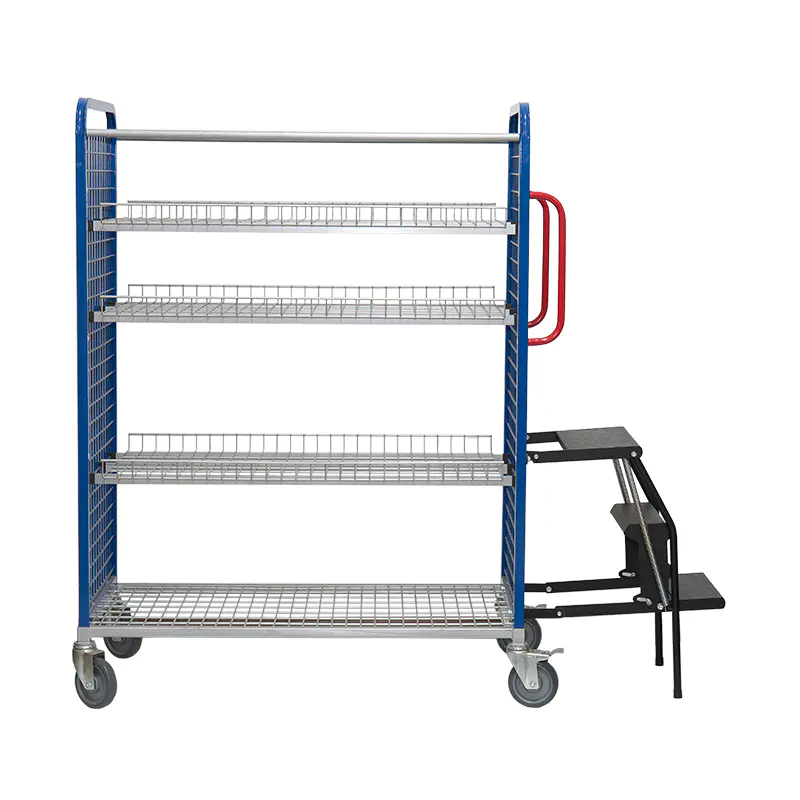
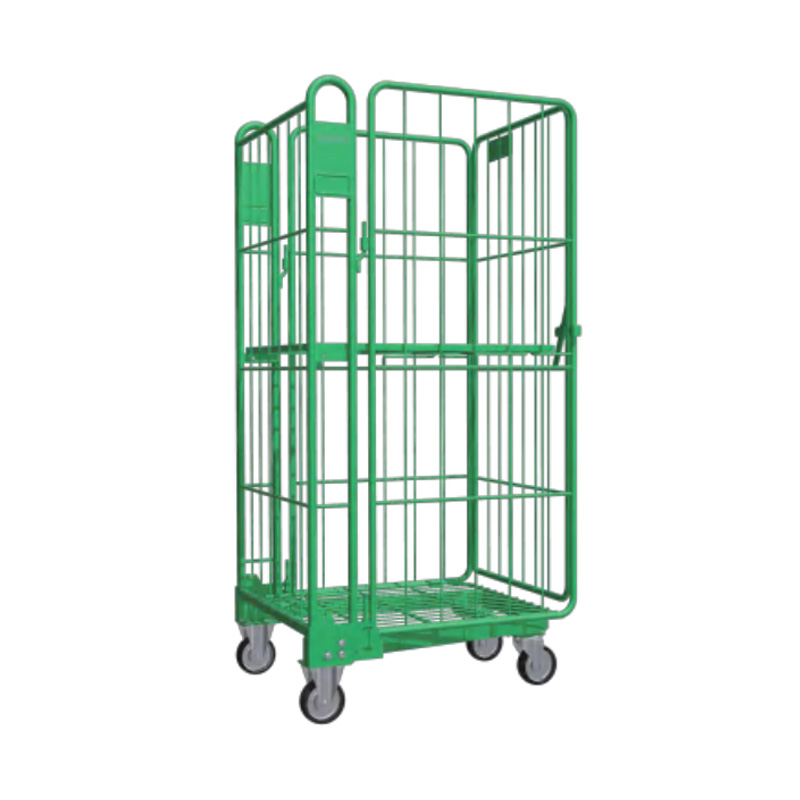
Another significant variation involves the base design. While a standard pallet base is common, some foldable and collapsible pallet cage units are equipped with a roll cage base, featuring casters or wheels. This transforms the static container into a mobile unit, ideal for order-picking operations or moving goods across a factory floor without requiring a forklift for every short-distance move. The folding mechanism is retained, allowing the mobile base to be stored compactly when not in use. Furthermore, hybrid designs exist that combine elements from different types. For instance, a box-type cage might be fitted with a drop-down gate, or a four-post cage might have a removable, rather than hinged, panel for flexibility. The existence of these specialized designs underscores the importance of thoroughly analyzing internal workflows before selecting a returnable packaging system.
Key Selection Criteria: Matching the Design to Your Application
Choosing the correct type of foldable and collapsible pallet cage is a strategic decision that impacts operational efficiency and total cost of ownership. The decision should not be based on price alone but on a careful evaluation of several key criteria against the specific demands of the application. The nature of the product being handled is the primary consideration. Heavy-duty applications with dense, high-weight items necessitate a robust four-post design with a high dynamic and static load capacity. For small parts, powders, or items requiring protection, a box-type design is more appropriate. For bulk goods like agricultural products, a design with a drop-down gate will drastically improve handling speed.
The material handling infrastructure is another critical factor. It is essential to consider the stacking capability of the cage when full and how it interfaces with existing racking systems, forklifts, and conveyor lines. The available space for storing empty containers will dictate the importance of the collapsed ratio; facilities with severe space constraints will prioritize designs that offer the flattest possible profile. Operational workflow is also key. How frequently will the cages be folded and unfolded? A simpler four-post mechanism might be more suitable for high-frequency cycling than a more complex box-type design. How important is access? If loading and unloading are a significant time component, a drop-down gate becomes a valuable feature. Finally, the environment of use must be considered. Standard wire mesh is suitable for most indoor environments, while corrosive or wet conditions may require cages with specialized coatings or materials.
The following table summarizes the primary design types and their typical applications:
| Design Type |
Key Mechanism |
Primary Advantages |
Ideal Applications |
| Four-Post Cage |
Hinged end walls fold inward, side walls collapse downward. |
Mechanical simplicity, high durability, excellent for stacking. |
Automotive parts, heavy machinery components, general manufacturing logistics. |
| Box-Type Cage |
All walls fold down onto base or utilize a lift-and-collapse mechanism. |
Maximum security, dust and moisture protection, contains small items. |
Small parts assembly, high-value goods, food processing, foundry and dusty environments. |
| Cage with Drop-Down Gate |
Features one or more hinged wall sections that lower for access. |
Superior accessibility for loading/unloading, maintains collapsibility. |
Agriculture, bulk goods, recycling, order picking, manual handling processes. |
| Half-Height Cage |
Standard folding mechanism on a lower-profile unit. |
Excellent visibility and access, very compact when collapsed. |
Work-in-progress (WIP) stations, lighter bulk items, in-store storage and display. |
The Operational and Economic Benefits of a Foldable System
The investment in a foldable and collapsible pallet cage system is justified by a compelling array of operational and economic benefits that extend across the supply chain. The most immediate and quantifiable advantage is the reduction in return freight and storage costs. Because empty cages can be folded to a fraction of their assembled volume, up to five times the number of units can be shipped back or stored in the same space. This directly translates to lower transportation expenses and more efficient utilization of valuable warehouse real estate.
From an operational standpoint, these containers enhance handling efficiency and product protection. Their rigid construction provides superior damage protection for contents compared to one-way packaging like cardboard boxes or wooden crates. The standardized dimensions of a foldable and collapsible pallet cage streamline logistics, making them compatible with automated warehouse systems and simplifying inventory management. Furthermore, adopting a system of returnable containers represents a significant step toward sustainable operations. By eliminating disposable packaging waste, companies can reduce their environmental footprint, which is an increasingly important factor for modern businesses. The long-term durability of a well-made cage means it can withstand years of use, spreading the initial investment over a long lifecycle and providing a superior return on investment compared to single-use alternatives. This makes the foldable and collapsible pallet cage a cornerstone of efficient, cost-effective, and sustainable logistics.



 Español
 русский
 عربى
عربى